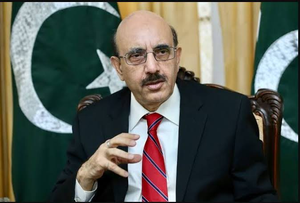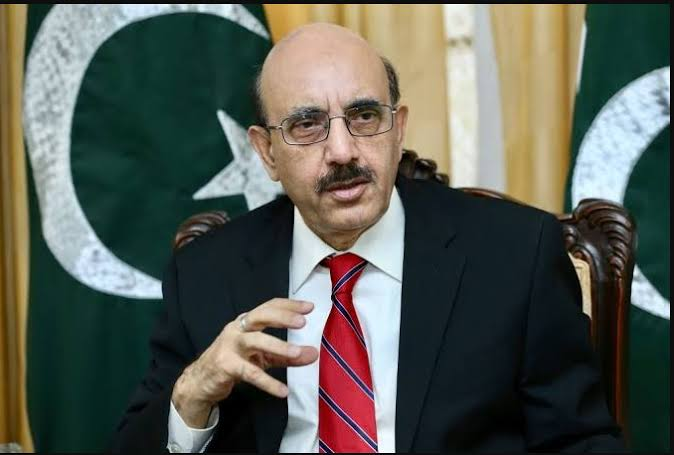
Riyadh (GNP): Continued Houthi attacks on Saudi Arabia are heightening regional instability, threatening critical economic infrastructure and disrupting international supply chains, according to Sardar Masood Khan. Khan is a former Pakistani ambassador to the United States, China and the United Nations, and a former president of Azad Jammu and Kashmir.
In a television interview, Khan said the strikes appeared intended to make Saudi Arabia feel insecure and push the region toward another theater of war. He welcomed Pakistan’s condemnation of the attacks and stressed that their effects reach far beyond Saudi Arabia. He said international markets, maritime trade and energy supplies are all affected, particularly around Bab al-Mandab and the Red Sea.
Khan said the nature of the Houthi campaign has moved beyond conventional military confrontation. By targeting economic installations, energy facilities and maritime routes, he said, the Houthis are waging asymmetric warfare. He argued that the aim is to undermine Saudi Arabia’s economic capabilities and international reputation.
He noted that attacks affecting facilities such as Aramco installations and Yanbu, along with critical shipping routes, threaten Saudi Arabia’s economic transformation under Vision 2030.
The risk grows with the Red Sea and the Strait of Hormuz, which Khan described as two critical global maritime and energy corridors. He cautioned that disruption to both could have serious consequences for the Gulf countries, the broader Middle East and the world economy. In his view, sustained attacks could further aggravate existing volatility in energy markets and supply deficits.
Khan stressed that Pakistan carries important responsibilities toward Saudi Arabia’s defense. He pointed out that Pakistan is a founding member of the Makkah Alliance, alongside Saudi Arabia and Türkiye. He said Pakistan remains committed to supporting Saudi security through defense cooperation, including the deployment of JF-17 aircraft, drones and air defense systems.
He added that recent regional conflicts have shown that even sophisticated and expensive defense systems cannot guarantee complete protection against asymmetric threats. For that reason, he said, military preparedness must complement diplomatic efforts and not replace them.
Also Read: DPM Dar Calls for Practical Initiatives to Boost Trade, Connectivity Across Region
Pakistan is pursuing diplomacy alongside its security support to prevent further escalation. Khan reiterated that a lasting solution to the conflict in Yemen must be political, Yemeni-led and inclusive of all relevant stakeholders. He said such a settlement must be owned by the Yemeni people.
On the wider regional conflict, Khan expressed the view that renewed diplomacy between Washington and Tehran is more likely than another military confrontation. He cited the Islamabad Memorandum of Understanding and the ongoing Qatar-mediated diplomatic efforts as important foundations for negotiations.
He also highlighted Pakistan’s engagement with Iran and urged Tehran to use its influence over the Houthis to stop the attacks on Saudi Arabia. Khan concluded that diplomacy remains the most viable path to ending the conflict, protecting regional stability and preventing further divisions within the Muslim world.

Sohail Majeed is a Special Correspondent at The Diplomatic Insight. He has twelve plus years of experience in journalism & reporting. He covers International Affairs, Diplomacy, UN, Sports, Climate Change, Economy, Technology, and Health.