D-8 ACTIVELY PARTICIPATES IN ANTALYA DIPLOMACY FORUM 2026
ANTALYA (GNP) : Led by Secretary-General Ambassador Sohail Mahmood, the Developing-8 Organization for Economic
Cooperation (D-8) delegation participated actively in the 5th edition of the Antalya Diplomacy Forum 2026, held from 17 to 19 April 2026. Other members included Ambassador Mustafa Özcan, Director, and
Muhammad Bilal Khan, Executive Assistant.
Convened under the auspices of the Turkish Ministry of Foreign Affairs, the thematic focus of ADF 2026
was: “Mapping Tomorrow, Managing Uncertainties.” Overall, the Forum had participation from 150
countries, 66 international and regional organizations, and more than 6,400 guests. These included 23
Heads of State and Government; 50 Ministers; and 87 senior representatives of international organizations.
In his interventions in the high-level panel, bilateral meetings, and media interactions, Secretary-General
Ambassador Sohail Mahmood strongly underscored the importance of dialogue and diplomacy,
multilateralism, and international cooperation and solidarity to address the myriad challenges emerging
from the rapidly transforming global and regional strategic landscape.
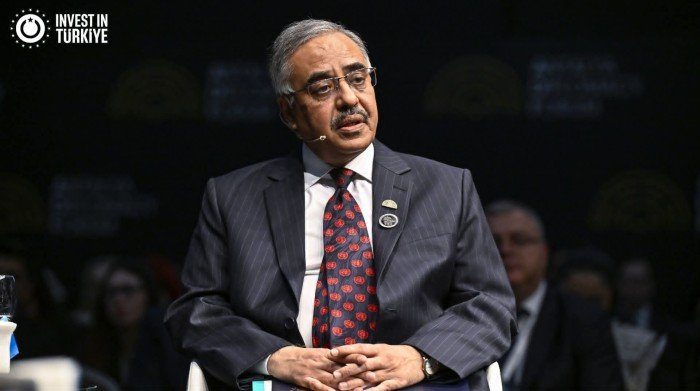
Participating in a high-level panel on “Investment Across Continents,” Secretary-General Sohail
Mahmood underscored the strong interplay between geopolitics and geoeconomics in shaping global
investment flows. He noted that strategies such as ‘near-shoring’ and ‘friend-shoring’ reflected a growing
emphasis on ‘diversification’ and ‘resilience’ and illustrated re-shaping of global value chains –
powerfully influenced by the evolving geopolitical dynamics, way beyond just the cost calculations.
From
the D-8 perspective, he highlighted the need for a balanced and forward-looking response — anchored in
sound domestic policy frameworks and reinforced through international cooperation — to sustain
investment momentum across developing economies.
Emphasizing the centrality of diplomacy, the Secretary-General underlined its critical role in creating a conducive external environment – by fostering stability, preventing conflicts, stressing adherence to
international law, emphasizing dialogue and diplomacy to resolve disputes, and supporting
multilateralism.
He further underlined that developing countries could enhance their attractiveness to investment by ensuring predictability, efficient facilitation, credible infrastructure, connectivity, and
trusted cross-border partnerships. In this context, he also highlighted D-8’s collaboration with the United
Nations Conference on Trade and Development (UNCTAD) in formulating “Guiding Principles for
Investment Policymaking,” reflecting the Organization’s commitment to practical and cooperative
approaches.
On the sidelines of ADF, Secretary-General Sohail Mahmood held a series of high-level bilateral meetings with dignitaries from D-8 Member States and key international partners. In his meeting with
Jeyhun Bayramov, Minister of Foreign Affairs of the Republic of Azerbaijan, the Secretary-General
commended Azerbaijan’s active and constructive role in advancing D-8’s agenda, with both sides
reaffirming their commitment to further strengthening institutional cooperation across a broad spectrum.
In discussions with Dr. Khalilur Rahman, Foreign Minister of the People’s Republic of Bangladesh,
appreciation was conveyed for Bangladesh’s contributions to enhancing collaboration across trade, youth
engagement, and institutional development, while both sides emphasized the importance of collective
efforts in addressing evolving global challenges. In the meeting with Saeed Khatibzadeh, Deputy
Foreign Minister of the Islamic Republic of Iran, the focus was on expanding sectoral cooperation,
particularly in academic and knowledge-based domains, alongside reaffirmation of shared commitments to strengthening the D-8 platform.
The Secretary-General also engaged with Prof. Dr. Ömer Bolat, Minister of Trade of the Republic
of Türkiye; Ambassador Asad Majeed Khan, Secretary-General of the Economic Cooperation
Organization (ECO); Ambassador Kairat Sarybay, Secretary-General of the Conference on
Interaction and Confidence-Building Measures in Asia (CICA); Ambassador Aftab Ahmad Khokhar,
Assistant Secretary-General for Science and Technology of the Organization of Islamic Cooperation
(OIC); Jamil Ahmad, Director, Intergovernmental Affairs, United Nations Environment Programme
(UNEP); and Nail Olpak, President of the Foreign Economic Relations Board (DIEK) of Türkiye.
In these engagements, discussions with the Minister of Trade of Türkiye focused on advancing trade
cooperation and operationalization of Permanent Secretariat of the D-8 Chambers of Commerce and
Industry in Istanbul; exchanges with Jamil Ahmad pertained to the environmental agenda of the D-8,
including avenues to strengthen collaboration with UNEP and the significance of the forthcoming COP31 to be hosted by Türkiye; discussions with Ambassador Aftab Ahmad Khokhar emphasized enhancing
linkages in the fields of science and technology, including expanded cooperation with OIC-COMSTECH.
Discussions with the ECO Secretary-General focused on exploring synergies in regional economic integration and trade facilitation; while exchanges with SG CICA dwelt on establishing formal
institutional collaboration. Engagement with DEİK emphasized strengthening private sector linkages and
promoting business-to-business connectivity across D-8 Member States.
In his media interactions, the Secretary-General inter alia highlighted the historical evolution of the D-8,
its founding vision, and its growing role as an important platform for South-South cooperation —
contributing to dialogue, partnership-building, and the promotion of inclusive and sustainable development. He also emphasized that ‘mapping tomorrow’ required strategic foresight, while leadership
was imperative for ‘managing uncertainties.’

Sohail Majeed is a Special Correspondent at The Diplomatic Insight. He has twelve plus years of experience in journalism & reporting. He covers International Affairs, Diplomacy, UN, Sports, Climate Change, Economy, Technology, and Health.