Nairobi (GNP): Kenya is dealing with its first-ever Ebola outbreak, with nine cases now confirmed. The government insists the situation is under control, but concern is rising that the virus could spread further.
All nine cases trace back to one man, the first patient, who travelled from the Democratic Republic of Congo (DR Congo) and died two weeks ago. Four of his relatives, three health workers and a hospital cleaner have since tested positive.
The patient’s journey explains why many Kenyans are worried. A map of his movements shows he spent weeks in DR Congo, including time in treatment and admission to hospital. He then travelled through Uganda before reaching Nairobi on 3 October. He was admitted that day, died on 5 October and was buried the next day.
Many Kenyans have asked how he spent time in the worst-affected region and passed through two more countries before his illness was identified. The concern is sharper because Kenya is a regional transport hub, and DR Congo faces a far larger crisis. More than 4,000 people have died there since the disease was confirmed in May, making it the second deadliest Ebola outbreak on record, with more than 9,500 cases.
The strain behind the outbreak is Bundibugyo, which is relatively rare. It has no approved vaccine or treatment, although trials are under way.
Kenya’s doctors’ union says border defences have gaps. The Kenya Medical Practitioners and Dentists Union (KMPDU) has pointed to lapses at several border points, including those with Uganda and Tanzania, and at the main airport. Deputy secretary general Dennis Miskellah said border and port facilities are grossly understaffed.
Health Director-General Patrick Amoth has tried to calm those fears. He said the eight patients still alive are improving and responding well to treatment.
The government has also moved to stop new cases arriving. Travellers from 10 countries considered high risk must fill in a digital surveillance form before boarding and show a QR code to port health officials on arrival. Those countries are DR Congo, Uganda, Tanzania, Rwanda, Burundi, Angola, Zambia, Ethiopia, South Sudan and the Central African Republic. Aircraft from those countries also face enhanced public health screening.
Inside the country, the response centres on tracing and isolation. Of the 135 people listed as contacts of the first patient, 134 remain in quarantine, which means about 99 per cent have been traced and isolated. The International Rescue Committee says the fact that every infection so far links back to the first patient shows Kenya’s early response is working.
Amoth has added that none of those contacts showed symptoms before quarantine. He says this makes the chance of onward spread very small. Ebola’s incubation period runs from two to 21 days, however, so those exposed may not fall ill for weeks.
Kenya’s health ministry says nearly 5,000 health workers have been trained, and treatment and isolation facilities have been set up across the country. A dedicated laboratory at the Kenyatta National Hospital Infectious Disease Unit now handles Ebola tests. Officials have also procured protective equipment, and the Africa Centres for Disease Control and Prevention (Africa CDC) and the World Health Organization (WHO) are supporting surveillance and community engagement.
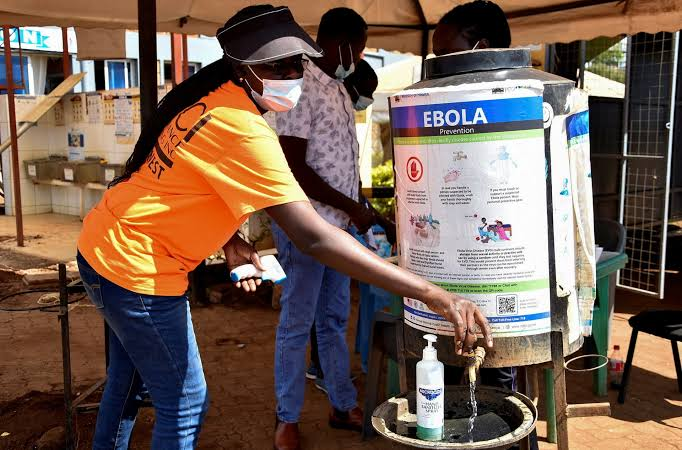
The public has been given a toll-free hotline, 719, to report suspected symptoms. Awareness messages stress handwashing and avoiding close contact with sick people. The ministry and the WHO have also asked Kenyans not to stigmatise contacts, warning that stigma can discourage people from reporting symptoms.
Also Read: HSA recognised as global centre of excellence Dr Mukhtar
Health worker safety remains the sharpest point of dispute. With three health workers and a cleaner among the infected, the KMPDU says the government is not doing enough. Miskellah says hospitals must receive protective equipment, particularly because patients may not disclose travel to affected areas. The International Rescue Committee has also called for continued funding for contact tracing, border screening and frontline training.
For now, Kenya remains open. Authorities have ruled out a national lockdown or general travel ban, and there are no restrictions on travel, trade or public gatherings. The United States has asked its citizens to reconsider travel to Kenya. The United Kingdom has warned its citizens to expect enhanced screening, and Canada has asked its citizens to monitor their health for 21 days. No country has banned its nationals from visiting Kenya.
Analysts have raised concerns about the effect on tourism and business, but there is no evidence of any impact yet. That could change if the outbreak reaches the wider population.
Amoth said, “The potential to spread to another person is very minimal.”