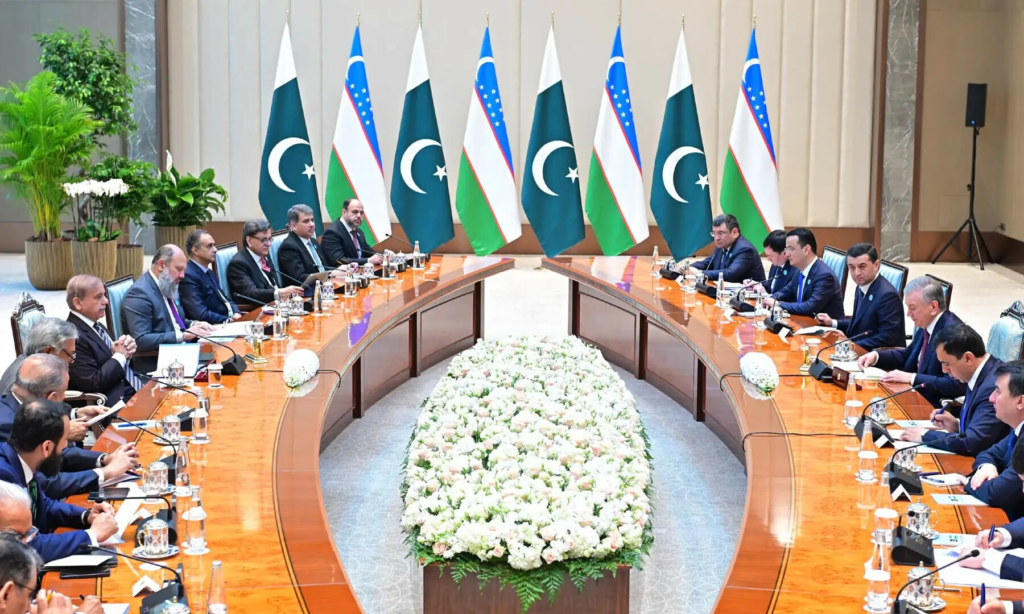
Islamabad (GNP): Pakistan and Uzbekistan have agreed to broaden their strategic Customs cooperation through the use of advanced technology, following a high-level bilateral meeting held on the sidelines of an international conference in Tashkent.
The Pakistani delegation, in the Uzbek capital to attend the conference organised by the United Nations Office on Drugs and Crime and the World Customs Organisation under their Passenger and Cargo Control Programme, was led by Federal Board of Revenue Member Customs (Operations) Syed Shakeel Shah.
During talks with Uzbekistan’s Customs Committee First Deputy Chairman, the two sides reviewed existing cooperative arrangements and outlined future priorities, focusing discussions on Customs digitalisation, transit cargo tracking, and intelligence-led enforcement.
Both delegations committed to pursuing technological integration through artificial intelligence and machine learning-based risk management, establishing National Targeting Centres, and improving real-time exchange of Customs information to strengthen trade security across the region.
The Pakistani delegation noted during the meeting that Uzbekistan holds the distinction of being the first country with which Pakistan has set up advance Customs information exchange through the Pakistan Single Window platform for both imports and exports, a development it described as a significant step in digital Customs cooperation between the two nations.
Building on that foundation, both sides agreed to extend their existing digital connectivity to cover transit trade information as well, a move expected to speed up and improve the quality of Customs data exchange, tighten border controls, cut clearance times, and support faster, more secure regional trade and transit.
Both delegations reaffirmed their commitment to deepening bilateral Customs cooperation through expanded digital connectivity, coordinated border management, the exchange of best practices, and wider adoption of modern Customs technology, steps they said would help strengthen supply chain security, ease legitimate trade, and advance regional economic integration.
Also Read: Pak-Iran ties entering new era of friendship, Amb Iran
The broader Tashkent meeting brought together senior Customs officials from across the region to discuss how such cooperation could support secure, seamless and technology-driven trade more broadly.
Discussions at the conference also extended to advancing trade facilitation through mutual recognition of Authorised Economic Operator programmes, recognition of regulatory documents between countries, wider use of AI-enabled risk management and data analytics in Customs clearance and enforcement, and stronger public-private partnerships aimed at supporting legitimate trade while curbing illicit cross-border activity.
To carry this agenda forward, participating representatives agreed to set up technical working groups tasked with drafting protocols in these priority areas, laying the groundwork for deeper digital integration, closer regulatory cooperation, and more efficient regional trade and transit going forward.

Managing Editor at Global News Pakistan (GNP), with a Bachelor's degree in International Relations from Riphah International University, graduated with a Gold Medal. Reach out at sabahtareengnp@gmail.com