Islamabad (GNP): Pakistan achieved a notable diplomatic milestone as Prime Minister Muhammad Shehbaz Sharif facilitated the signing of the Islamabad Memorandum of Understanding (Islamabad MoU), bringing the United States and Iran together in a landmark effortaimed at promoting dialogue, understanding, and peaceful engagement.
The agreement was signed by United States President Donald J. Trump and Iranian President Masoud Pezeshkian, with Prime Minister Shehbaz Sharif serving as mediator. The development was announced by Deputy Prime Minister and Foreign Minister Senator Ishaq Dar, who highlighted Pakistan’s constructive role in fostering communication between the two nations.
The Islamabad MoU represents an important step toward reducing tensions and encouraging diplomatic engagement between countries that have experienced prolonged disagreements on a range of political and strategic issues. By facilitating the agreement, Pakistan has demonstrated its commitment to promoting peace, dialogue, and cooperation at both regional and international levels.
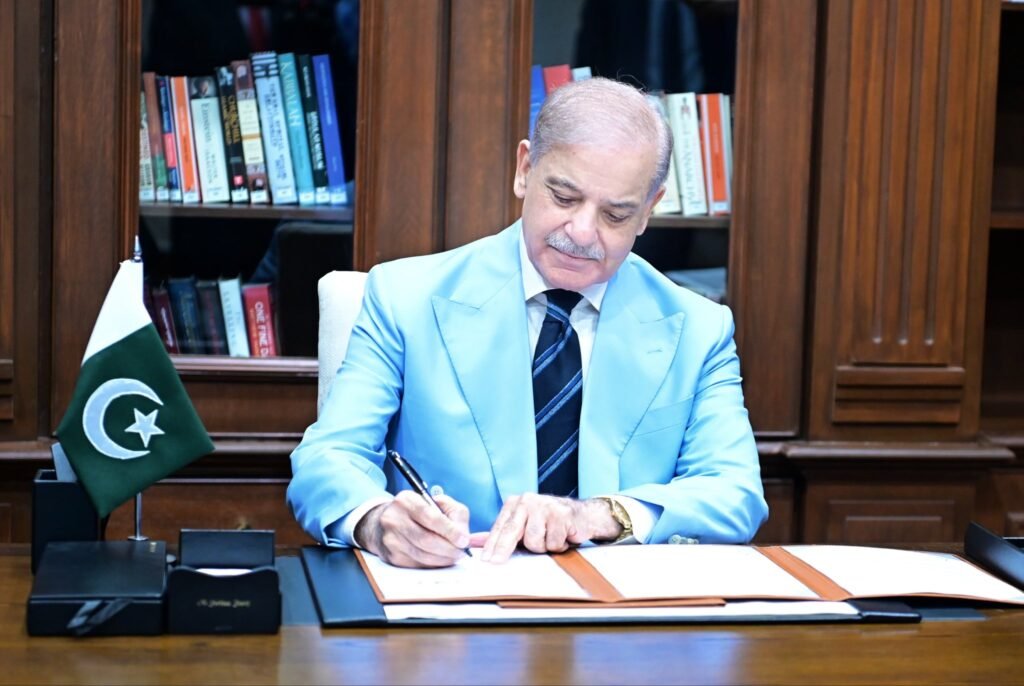
Prime Minister Shehbaz Sharif emphasized that diplomacy remains the most effective means of addressing differences and building trust among nations. He noted that meaningful dialogue can help create opportunities for mutual understanding and cooperation while reducing the risks associated with conflict and instability.
The Prime Minister reaffirmed Pakistan’s dedication to supporting peaceful solutions to international challenges through negotiation and constructive engagement.The successful conclusion of the Islamabad MoU shows Pakistan’s growing role as a bridge builder in international diplomacy. Over the years, Pakistan has consistently advocated for dialogue, respect for sovereignty, and the peaceful resolution of disputes.
The country’s efforts to facilitate communication between the United States and Iran underscore its belief that diplomatic channels remain essential for achieving lasting peace and stability.The signing ceremony in Islamabad highlights the confidence placed in Pakistan as a credible and responsible partner capable of contributing positively to international peace efforts.
The Islamabad MoU is expected to serve as a framework for continued engagement between Washington and Tehran, encouraging further discussions on issues of mutual concern and promoting a climate of cooperation.Foreign policy experts have described the development as a positive example of preventive diplomacy, where mediation and dialogue are used to address tensions before they escalate into larger conflicts. Like that, initiatives not only contribute to regional stability but also support broader international efforts that aimed at fostering understanding and reducing geopolitical uncertainties.
Pakistan’s diplomatic engagement in facilitating the Islamabad MoU is consistent with its longstanding foreign policy objectives of promoting peace, stability, and cooperation among nations. The country has repeatedly called for dialogue as the preferred mechanism for resolving disputes and has supported international initiatives that encourage consensus building and mutual respect.
Also Read: Dar, Turkiye FM discuss US‑Iran understandings
The Government of Pakistan believes that sustainable peace can only be achieved through constructive engagement and the willingness of all parties to work together toward common goals. In this regard, the Islamabad MoU serves as a testament to the importance of diplomacy in overcoming challenges and creating pathways for cooperation.
As the international community continues to face complex political and security challenges, Pakistan remains committed to playing a positive and proactive role in advancing dialogue and understanding. The successful facilitation of the Islamabad MoU shows the country’s dedication to peacebuilding and its determination to contribute to a more stable and cooperative global environment.
The Government of Pakistan welcomes this significant diplomatic achievement and expresses hope that the Islamabad MoU will pave the way for enhanced communication, confidence building, and peaceful relations between the United States and Iran in the next years .