
Islamabad (GNP): The Center for Diseases Control (CDC) at the National Institutes of Health (NIH) Islamabad has issued a formal advisory aimed at alerting relevant healthcare authorities to strengthen their preparedness frameworks for the prevention and management of heat and sun stroke cases.
The advisory highlights a worsening trend in Pakistan’s climate profile, with the country experiencing increasingly severe weather extremes driven by global warming, including more frequent and intense heat waves. Year on year, the scale and severity of heat wave impacts are growing, raising the risk of higher rates of illness and fatalities linked to heat stroke across the country.
Stressing the urgency of proactive intervention, the advisory calls for immediate preventive measures at both the individual and institutional level. Limiting direct exposure to sunlight and maintaining adequate fluid intake were identified as the most effective ways to reduce the risk of heat stroke complications.
Members of the public are advised to consume salt-containing foods to maintain electrolyte balance, and to wear hats along with light-colored, breathable, and loosely fitted clothing during periods of intense heat and high humidity.
The National Institutes of Health stands among Pakistan’s most respected public health institutions, with over four decades of engagement in multidisciplinary health activities spanning diagnostic services, research, and vaccine production.
The concept of a centralized national health body took shape in the early 1960s, culminating in the establishment of a National Health Center (NHC) in Islamabad in 1965. Over time, the Directorate of Nutrition Survey and several other health-focused research bodies were absorbed into the NHC framework.
These departments were subsequently unified and reconstituted as the National Health Laboratories (NHL – Islamabad). The organization was later elevated to autonomous status as the National Institutes of Health (NIH) under the Ministry of Health through Presidential Ordinance XLIII of 1980, a move designed to facilitate stronger international and regional collaboration, enable access to technical assistance, and enhance Pakistan’s participation in global disease control initiatives.
Also Read: Pak-Mauritius Agree to Boost Trade and Business Connectivity
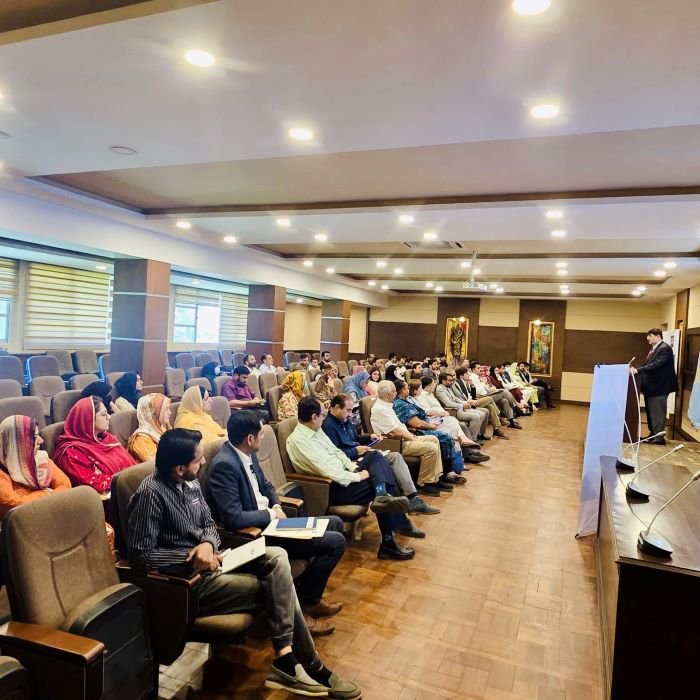
In a related development, NIH recently concluded a two-day consultative workshop conducted in collaboration with the Centers for Disease Control and Prevention (CDC), focused on Vertical Program Mapping and its integration into the Integrated Disease Surveillance and Response system.