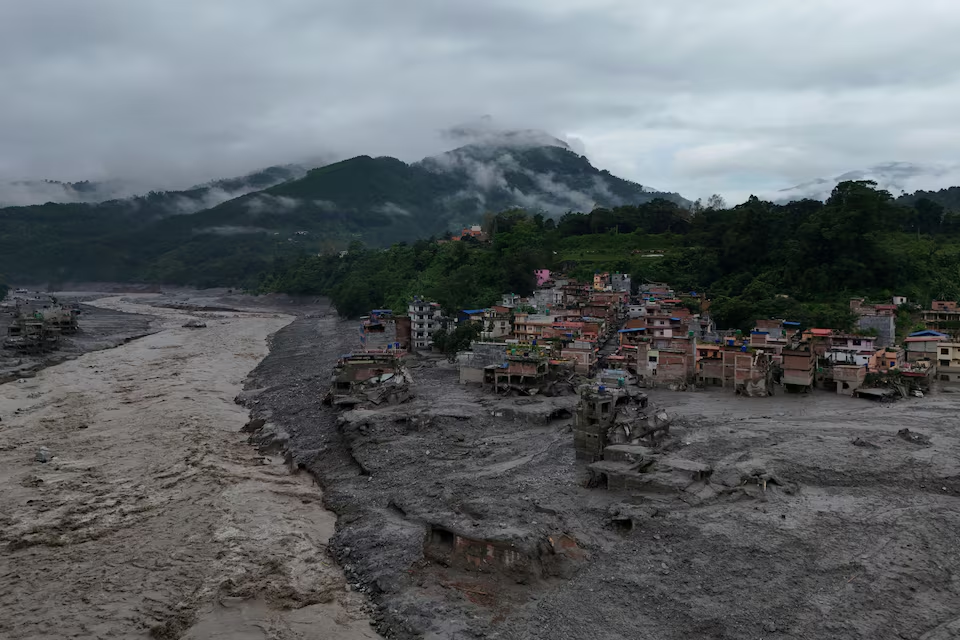
Trishuli (GNP): A flash flood and mudslide along the Nepal-Tibet border have killed at least 162 people, with hundreds of tourists and residents still unaccounted for as search operations enter a second day. The disaster struck the Rasuwa district, an area popular with trekkers and pilgrims, sending a wall of mud, rock, and water through towns and river valleys. Officials expect the death toll to climb further as recovery work continues in downstream areas including Chitwan and Nawalparasi East.
Nepal’s army has deployed 2,000 personnel for land and aerial search and rescue across the worst-hit Rasuwa and Nuwakot districts. The military has rescued 97 people trapped by the floodwaters, including three workers stranded inside the tunnel of the Trishuli A hydropower project.
Nepal’s police and armed police force have also joined the operation, though 28 police officers remain among those unaccounted for.
Nepal’s tourism board has said more than 400 foreign nationals are among 579 tourists reported missing, with figures including 47 from the United States, 34 from Australia, 33 from Britain, and 24 from Canada, alongside more than 100 missing from India.
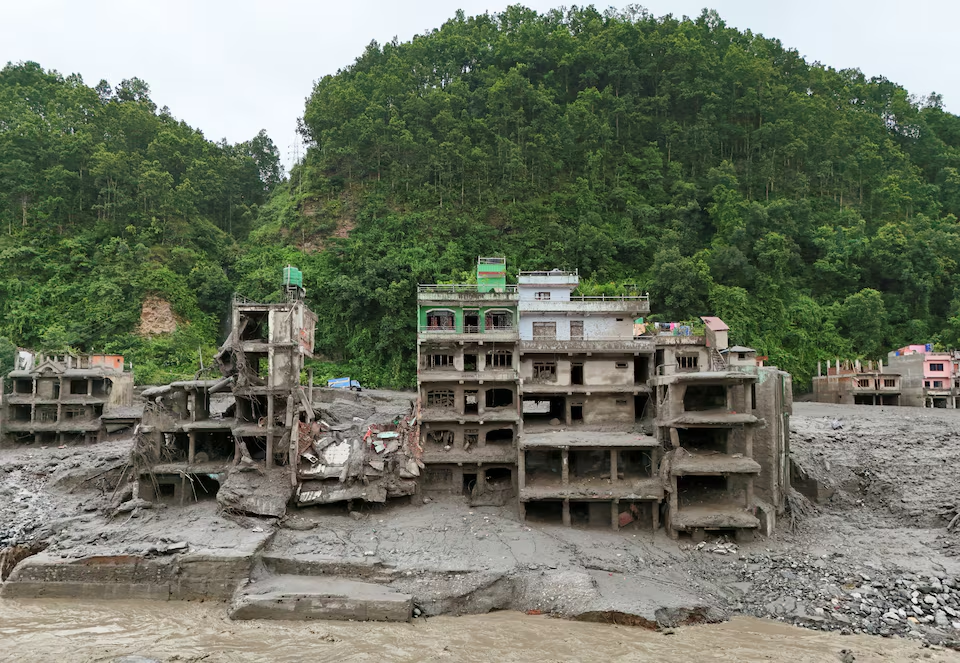
Many of the missing had been travelling as pilgrims toward Kailash Mansarovar, a high-altitude site in Tibet considered sacred across several faiths. One tour operator separately reported 47 members of its group missing, including guides, after contact was lost as they attempted to cross into Tibet.
On the Chinese side of the border, state broadcasting authorities have reported 558 people missing in Tibet’s Gyirong county, including 260 foreign nationals, though officials have not confirmed whether these figures overlap with Nepal’s tally. China has ordered an all-out rescue and relief effort in the region, where roads, communications, and power links have been cut off.
Also Read: 14 Newborn Babies Killed in PIMS Hospital Fire
Initial reports suggested an earthquake had triggered the flooding, but the United States Geological Survey (USGS) has since found that the seismic activity was instead generated by the collapse of glacial rock and ice, followed by a debris flow. Officials say further study is needed to determine what role climate-driven glacier melt in the Himalayas may have played in the disaster.
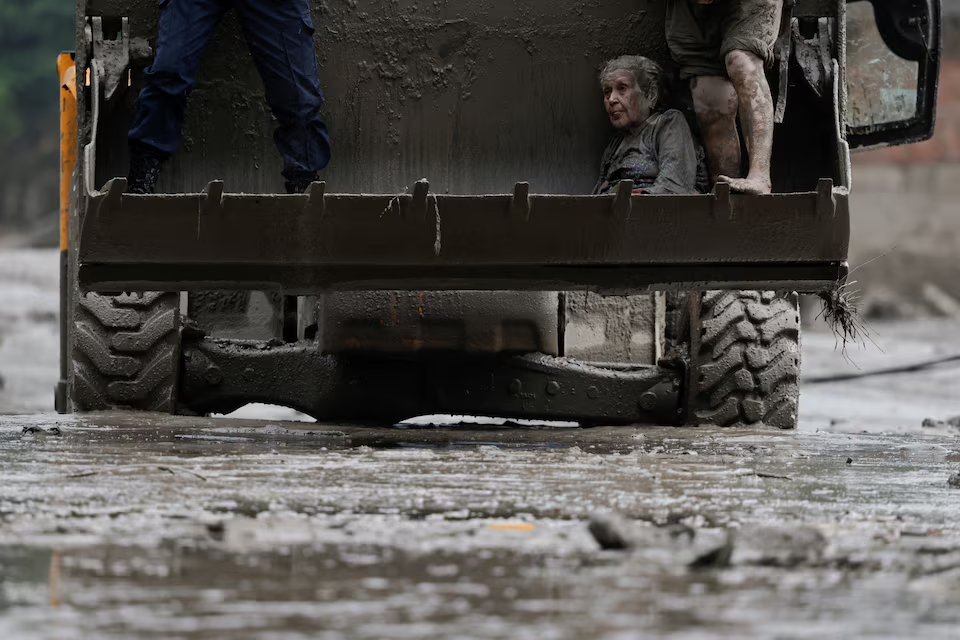
Several countries have pledged assistance. The United States has committed $500,000 in aid for emergency shelter, water, and sanitation, and is sending a disaster response adviser. India has supplied helicopters and relief material, while the United Nations (UN) has said its teams and partners are dispatching supplies and personnel to support affected communities. Roughly eight tonnes of relief supplies have already reached impacted areas.
Survivors have described scenes of devastation as floodwaters swept through their villages without warning. Recounting how he lost his wife in the flood, Says Keshav Prasad Baral, “It was a huge gush of mud coming straight towards us, and she was swept away.”

Managing Editor at Global News Pakistan (GNP), with a Bachelor's degree in International Relations from Riphah International University, graduated with a Gold Medal. Reach out at sabahtareengnp@gmail.com