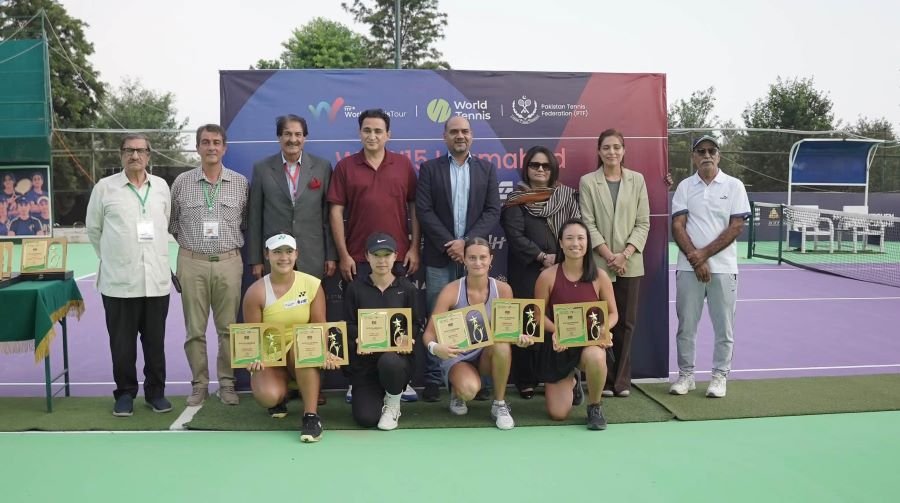
Islamabad (GNP): Pakistan’s women’s tennis players suffered a disappointing campaign at the second leg of the ITF W15 Islamabad tournament, with none progressing beyond the opening rounds of singles and doubles. The results have raised serious concerns about the standard of women’s tennis, player preparation and the effectiveness of the country’s development system.
On the opening day, Ushna Suhail conceded a walkover against Julia Khramtsova, while Türkiye’s Serife Pelin Sari defeated Meheq Khokhar 6-1, 6-1. Liliya Piskun beat Hajra Sohail 6-1, 6-0, while South Korea’s Jeong Moon defeated Mahin Qureshi 6-3, 6-0.
On the second day, Denmark’s Elena Jamshidi overwhelmed Romisa Malik 6-0, 6-0. In doubles, Kei Yau Cheung of Hong Kong and Sabrina Olimjanova of Uzbekistan defeated Romisa Malik and Hajra Sohail 6-2, 6-1. South Korea’s Jeong Moon and Japan’s Suzuna Oigawa also beat Mahin Qureshi and Ushna Suhail 6-2, 7-5.
The tournament was expected to provide Pakistani players with an opportunity to gain international experience and valuable ranking points on home soil. However, the early exits have exposed significant weaknesses in the country’s women’s tennis program. The reported ranking profile of the international field, with the highest-ranked foreign players outside the world’s top 600, makes the results particularly concerning.
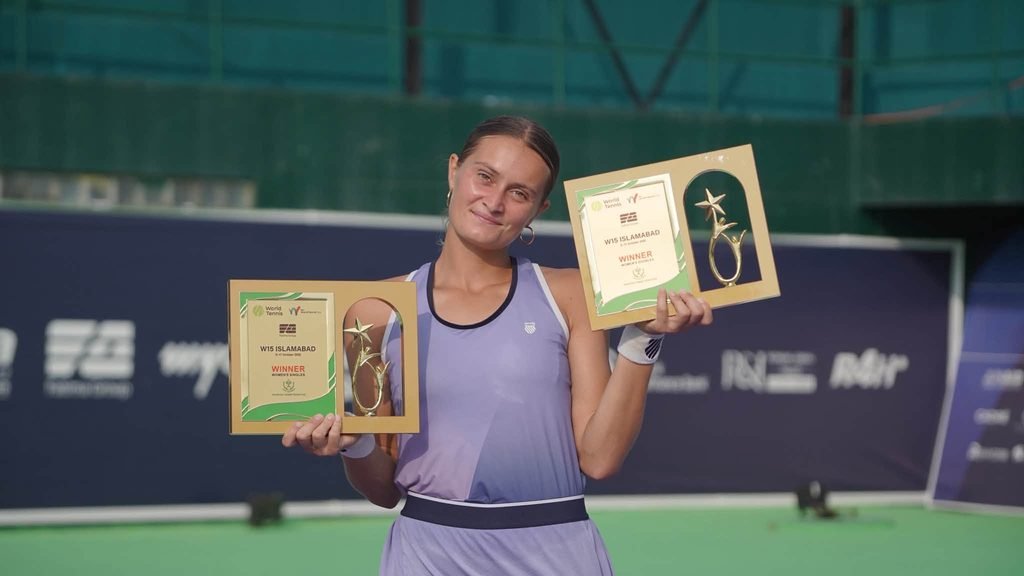
Another worrying aspect is the limited participation of Pakistani women. According to available participation figures, only five female players featured across the first two legs of the ITF W15 tournaments, raising questions about the depth of the domestic talent pool and the effectiveness of player development initiatives.
Observers believe the Pakistan Tennis Federation (PTF) needs to prioritize structured training camps, professional fitness programs, highly qualified experienced coaches and transparent, performance-based selection criteria. Criticism has also centered on the country’s wider tennis development system, including junior and men’s tennis.
The previous National Tennis Centre (NTC) model, associated with officials such as Asim Shafique and Noman Ul Haq, was viewed by supporters as a more structured approach to developing fresh talent and improving existing players. Questions remain about whether the current development framework is delivering comparable results.
While organizing international tournaments is a positive step, critics argue that such events cannot produce meaningful progress without sustained investment in player development. Funds should be directed towards year-round training, fitness, coaching and identifying promising young players. Pakistan’s recent 3-0 Davis Cup whitewashed defeat against Tunisia and an extremely disappointing Asian Games 2026 campaign have further intensified concerns about the country’s international tennis standards.
The latest results underline the urgent need for the PTF to move beyond tournament organization and publicity towards a comprehensive, accountable player development strategy. Without meaningful reforms and sustained investment in emerging talent, Pakistan risks further decline in international tennis.
Also read: Ahsan Iqbal Calls for Youth and Private Support to Revive Hockey
Following a series of defeats on the international stage, Pakistan tennis has never been historically this low across the board. The real measure of success should not be the number of tournaments hosted, but the number of players developed who can compete successfully at the international level.

Sohail Majeed is a Special Correspondent at The Diplomatic Insight. He has twelve plus years of experience in journalism & reporting. He covers International Affairs, Diplomacy, UN, Sports, Climate Change, Economy, Technology, and Health.