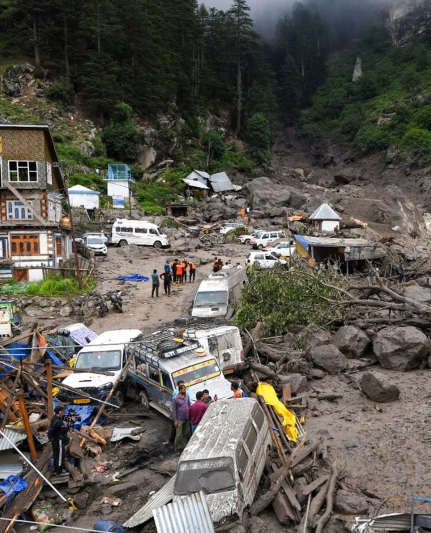
Kathmandu (GNP): Nepal Flood Rescue efforts have intensified as authorities race against time to locate workers trapped in mud filled tunnels following catastrophic flooding that has pushed the death toll close to 1,000.
Nepal has ramped up rescue operations in the wake of flooding that has taken place in the region. With flooding causing mudslides in various places, workers at hydroelectric construction sites are estimated to be trapped within the mud-filled tunnels.
The flooding has left destruction in its wake throughout Nepal and its neighboring regions, with the death toll crossing the 1,000 mark and many still missing.
The rescue teams have to struggle with damaged communication and transportation networks, as flooding has made travelling to the worst-hit areas tough.
The flooding has heavily damaged infrastructure as roads, bridges and power installations are impacted as places remain unreachable for rescue work.
Following the reports, it is confirmed that numerous personnel might have been in or around hydropower tunnels when the flooding happened. Hence, the Nepal flood rescue mission is primarily focused on dealing with these underground sites where no clear data exists and worries arise about oxygen, food and drinking water supplies for those who might still be in trouble in these places.
The lapse of time has exacerbated the urgency of the rescue mission. Experts state that the availability of air and water with food and other supplies is vital for the survival of people trapped in the tunnels. Members of the rescue team continue their attempts to reach survivors and remove the mud from blocked areas carefully.
Also Read: https://globalnewspakistan.com/presidents-envoys-visit-nepal-embassy-over-flood-devastation/
The authorities of Nepal mobilized rescue services and security agencies, there is also the international aid involved, which enhances the humanitarian response. The scale of the disaster reveals severe problems that mountainous localities face under severe weather conditions and devastating floods.
Pakistan also demonstrates solidarity with Nepal in this hard time. The replies from Pakistan can be found on the official website of the Prime Minister of Pakistan.
The Ministry of Foreign Affairs of Nepal has also been publishing official information and updates related to the crisis situation in the country through its communication channels.
Families of missing personnel are still waiting for news about their loved ones as rescue operations in Nepal proceed. Authorities are under a lot of pressure in their efforts to reach isolated areas and bring assistance to individuals blocked on unreachable premises.
The catastrophe has had very negative implications for local communities suffering losses, evacuations and devastation. Even though thousands of locals and tourists went missing and continued searches were being carried out in mud and ruins, the humanitarian crisis was extremely severe.
The officials are determining how rescue and recovery operations will continue moving forward, while ensuring that access to people stuck in hydropower stations is provided as quickly as possible. The days ahead are critical for those involved in emergency operations and searching for victims of the disaster.
The emergency response for the Nepal Floods has also put huge strain on emergency managers, as authorities try to cope with the immediate human consequences of the disaster. Rescuers are deployed in the affected regions and are trying to reach the areas hit by flooding and landslides, where the transport networks have been cut off and they cannot get the most basic services. In some locations, the damaged roads and bridges make it more complicated to transport essential equipment and supplies.
Along with the rescue operation, humanitarian efforts have been launched with the aim of helping those people who were displaced from their homes and lost their means of livelihood. The urgent needs are temporary shelters, food, drinking water, and medical help.
The government is also trying to discover the extent of damage caused by flooding to important public utilities and restore access to the areas deprived of basic services. Special attention is paid to the situation with the hydropower plants because some workers were involved in the operation of these plants.