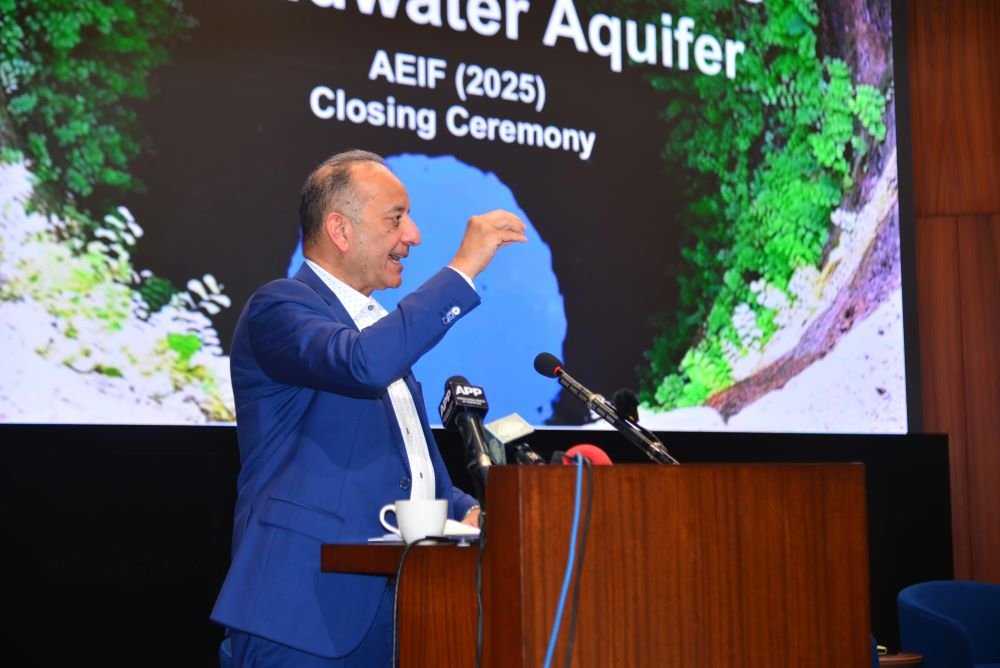
Islamabad (GNP): Federal Minister for Climate Change Musadik Masood Malik called for expanding groundwater recharge initiatives in Islamabad to tackle the city’s ongoing decline in groundwater reserves.
ScaleX Technologies Pvt. Ltd. held a closing ceremony to mark the completion of its Alumni Engagement Innovation Fund (AEIF) 2025 project, “Protecting Islamabad’s Groundwater Aquifer,” presenting its findings and reflecting on the future of groundwater management in the capital. The event was attended by Federal Minister for Climate Change and Environmental Coordination Dr. Musadik Malik and U.S. Acting Deputy Chief of Mission Andy Halus.
Led by ScaleX team members and U.S. exchange alumni Adnan Faisal and Sayaf Arbab, the project received backing from the U.S. Mission to Pakistan in collaboration with the Pakistan-U.S. Alumni Network (PUAN). Working alongside the Capital Development Authority (CDA), the team installed smart monitoring systems at two existing groundwater recharge sites, enabling real-time tracking of recharge activity, groundwater levels, rainfall and select water-quality indicators — demonstrating how recharge efforts can become more measurable and transparently managed.
The team shared its final report along with project outcomes and key takeaways, calling for a more structured approach that combines proper site selection, solid infrastructure, ongoing monitoring and regular maintenance. Attendees welcomed the project’s findings, with Dr. Malik stressing the importance of smarter groundwater management for building climate resilience.
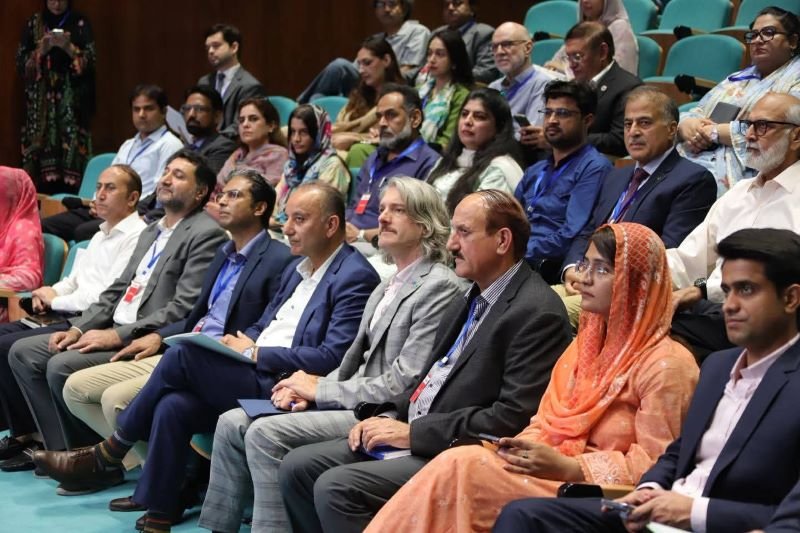
Speaking at the event, titled “Protecting Islamabad’s Aquifers,” held at the USEFP Auditorium, the minister noted that around 200 recharge wells had been built in the capital as part of an important pilot effort that now needs to be scaled up. He said the recharge interventions had produced an estimated 0.4-millimetre rise in the water table, compared to an ongoing decline of roughly 1.5 metres — underscoring, he said, the need to significantly expand recharge efforts to slow depletion and eventually reverse the downward trend. He described the recharge-well initiative as a meaningful step forward but cautioned against viewing it as a complete solution.
The minister also pointed to the need for better management of both surface and groundwater in the wake of recent heavy rainfall in Islamabad, noting that the capital had recorded around 200 millimetres of rain. He said several areas had experienced flooding as a result, and that relevant authorities had been instructed to respond accordingly.
Turning to water quality, Dr. Malik said treatment facilities were currently operating in both Rawalpindi and Islamabad, helping to reduce contamination levels, though he stressed that continued attention to water quality remained necessary. He also raised concerns over delays in establishing an additional water treatment plant, noting that the project had been pending for years despite repeated tendering attempts — a pattern of delay, he added, that extends beyond the CDA to other government departments as well. He noted that the project had recently seen some progress, with the tendering process now underway.
Dr. Malik also spoke about the importance of safeguarding Pakistan’s water interests and the role international treaties and legal frameworks play in ensuring water security, emphasizing that respect for such agreements is vital for regional stability and for protecting the rights of countries reliant on shared water resources. He reaffirmed Pakistan’s commitment to defending its water interests and to supporting a rules-based international order.
He further noted that the Ministry of Climate Change and Environmental Coordination had set up a Clean Environment Fund, designed to bring in private-sector participation and due diligence in support of environmental projects, saying the government aims to encourage innovation and greater private-sector involvement in addressing environmental challenges. He also expressed support for legislative measures encouraging groundwater recharge in new housing developments and on rooftops, saying that protecting water resources is essential to safeguarding communities and ensuring long-term water availability. He reiterated the government’s backing for efforts to protect Islamabad’s aquifers and strengthen water management more broadly.
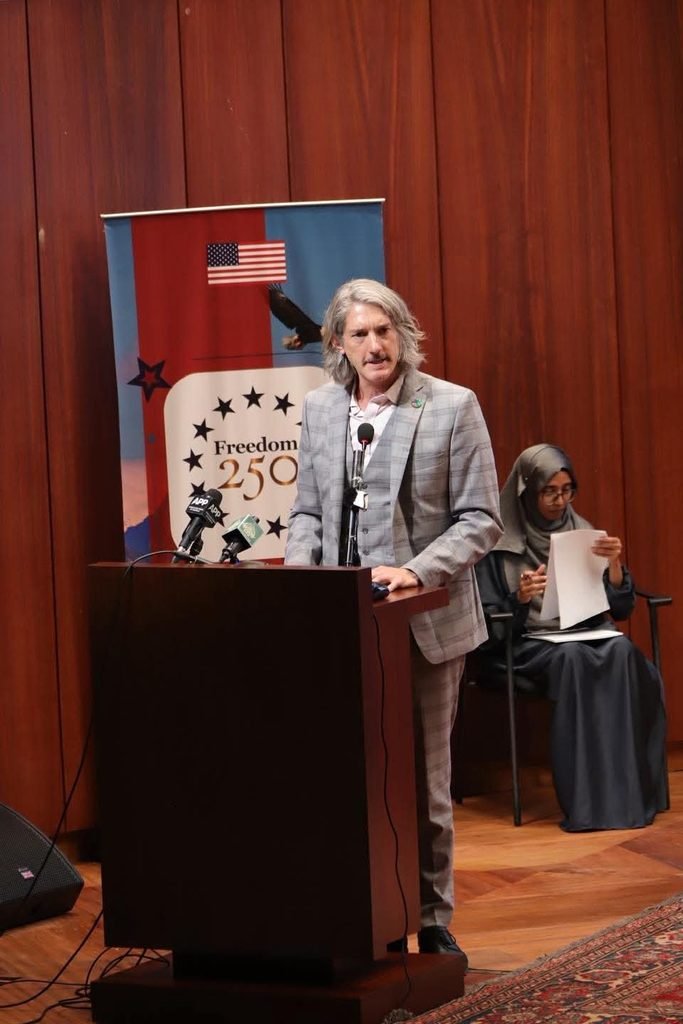
U.S. Acting Deputy Chief of Mission Andy Halus said the project reflected the strength of American innovation, noting that the collaboration between U.S. water experts, ScaleX and TiE illustrated how U.S. technology and expertise can directly support Islamabad’s water future.
Also read: Nepal Flood Rescue Efforts Intensify as Death Toll Approaches 1,000
The ceremony brought together representatives from government, industry, donor and development organizations, academia and the private sector, with discussions centered on strengthening coordination and building future partnerships to help manage Islamabad’s groundwater as a shared and increasingly vital resource.

Sohail Majeed is a Special Correspondent at The Diplomatic Insight. He has twelve plus years of experience in journalism & reporting. He covers International Affairs, Diplomacy, UN, Sports, Climate Change, Economy, Technology, and Health.