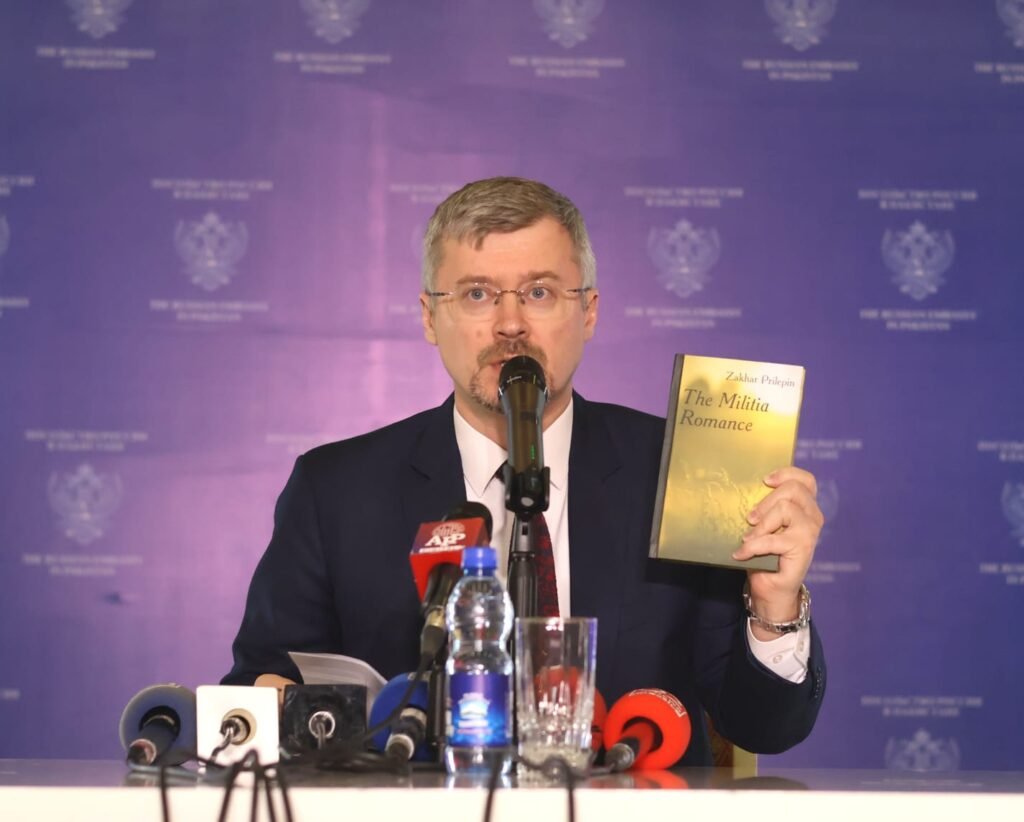
ISLAMABAD, May 19, 2026 (GNP): Russian Ambassador Albert P. Khorev convened his regular diplomatic briefing on Monday, outlining Moscow’s position on the ongoing situation in and around Ukraine, addressing key developments related to ceasefire efforts, humanitarian conditions, regional energy security, and areas of growing Pakistan-Russia diplomatic engagement.
Ceasefire and Peace Efforts
Ambassador Khorev stated that Russia observed a unilateral ceasefire from May 8 to May 11, coinciding with Victory Day commemorations marking the 81st anniversary of the end of the Second World War. He expressed concern that the humanitarian pause did not yield the reciprocal response Moscow had anticipated, noting that violations were recorded on multiple occasions during the truce period. A similar ceasefire was observed during Easter in April, which also failed to produce a sustained halt in hostilities. The Ambassador called for concrete and verifiable steps from all parties toward a negotiated resolution, emphasizing that repeated failure to honor limited humanitarian pauses raised serious questions about the prospects for a comprehensive and lasting peace agreement.
Humanitarian Concerns
Khorev highlighted what he described as growing humanitarian challenges within Ukraine, including concerns over civilian welfare, displacement, and the conditions faced by individuals caught in active conflict zones. He referenced reporting from Ukrainian civic institutions, including the country’s own human rights bodies, which had documented a significant rise in complaints related to the treatment of citizens during the ongoing conflict. The Ambassador called for greater international attention to the human cost of the war and urged all parties to prioritize the protection of civilian populations in accordance with international humanitarian law.
Mobilization and Civilian Impact
The Ambassador drew attention to reports concerning the conduct of military conscription within Ukraine, citing documentation from Ukrainian institutional sources indicating a sharp increase in complaints related to mobilization practices since 2022. He expressed concern over the reported impact on ordinary citizens and called for humane and lawful treatment of all individuals subject to conscription processes, noting that the international community had a responsibility to monitor civilian welfare in conflict-affected societies.
Western Military Support
Khorev noted that significant volumes of external military assistance had been directed toward Ukraine since 2022, with discussions reportedly underway regarding further support packages in 2026. He stated that the continued flow of military aid prolonged the conflict and reduced incentives for a negotiated settlement, reiterating Moscow’s position that a diplomatic solution remained the only viable path to lasting peace. Russia called on international partners to prioritize dialogue and de-escalation over military supply chains.
Regional Energy Security
The Ambassador expressed serious concern over the security of regional energy infrastructure, noting that disruptions to major gas and oil transit routes had created measurable economic consequences for several countries across the broader region, including Kazakhstan. He stated that attacks on critical energy infrastructure threatened not only bilateral energy relationships but the stability of supply chains serving multiple nations across Europe and Central Asia. Khorev called for the protection of shared energy infrastructure as a matter of collective regional responsibility and urged all parties to refrain from actions that could further destabilize energy supply routes.
Russia’s Position on International Legal Mechanisms
Ambassador Khorev reiterated Russia’s stated position that certain internationally proposed legal mechanisms related to the Ukraine conflict lack legitimacy in Moscow’s view. He called for conflict resolution efforts to be conducted within established and universally recognized multilateral frameworks, expressing concern that politically motivated legal instruments risked further polarizing the international community rather than advancing meaningful dialogue.
Children and Humanitarian Exchanges
On the matter of children affected by the conflict, Khorev noted that Russian-Ukrainian negotiations held in Istanbul in June 2025 had produced tangible progress on family reunifications. With mediation efforts facilitated by Qatar and the Vatican, a number of children had been successfully reunited with their families. The Ambassador expressed Russia’s continued willingness to engage in humanitarian exchanges and called for further international mediation to address the welfare of all children affected by the conflict.
Cultural Heritage
The Ambassador reiterated Russia’s longstanding position regarding archaeological artifacts from Crimea that were displayed at a museum in Amsterdam in 2014 and subsequently transferred to Ukrainian authorities rather than returned to the institutions from which they were originally loaned. He called for the matter to be resolved through dialogue, emphasizing that cultural and historical heritage must be protected and rightfully preserved.
Also Read: AIIB Signs $320 Million Loan Agreement for N-5 Highway
Pakistan’s Support Acknowledged
Ambassador Khorev expressed sincere appreciation for Pakistan’s continued support of the UN General Assembly resolution on combating the glorification of Nazism and related forms of racial intolerance, adopted in December 2025 with the backing of 119 member states. He described Pakistan as a valued and consistent partner in multilateral diplomatic forums and expressed hope that bilateral engagement between Islamabad and Moscow would continue to grow across areas of shared interest.