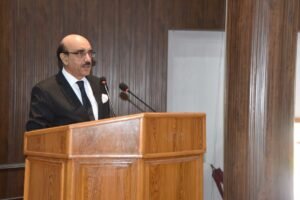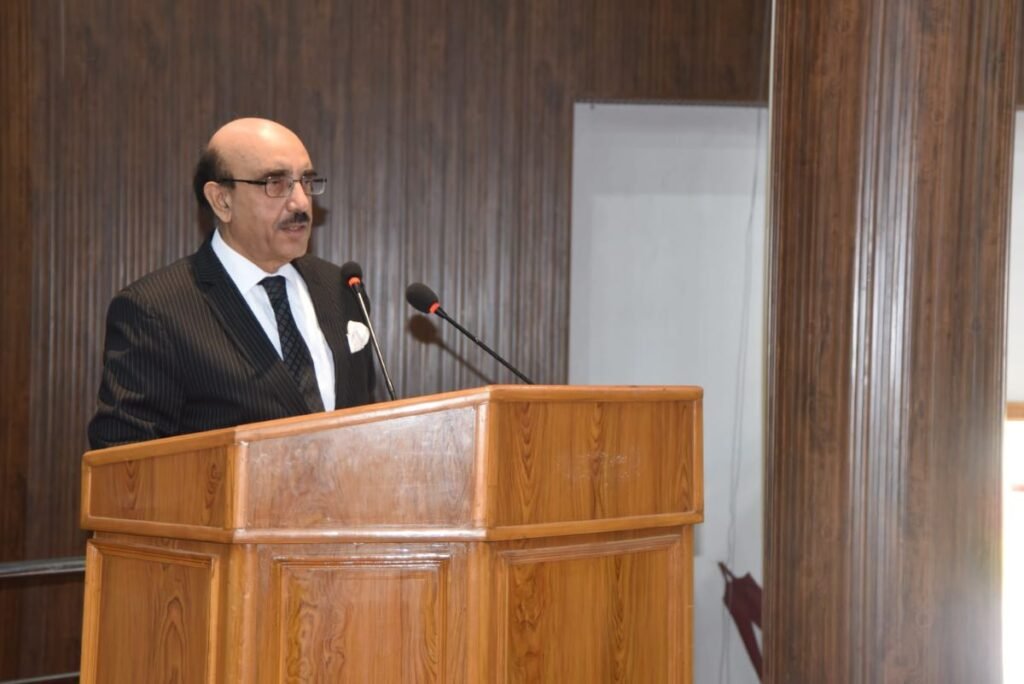
Muzaffarabad (GNP): Kashmir is central to peace and stability in the region, and the region’s future depends on justice, freedom and the Kashmiri people’s right to decide their own destiny, according to Sardar Masood Khan, a former Pakistani ambassador to the United States, China and the United Nations, and a former President of Azad Jammu and Kashmir.
He spoke at two separate seminars marking Kashmir Black Day on 27 October, organised by the Department of Kashmir Studies at the University of Azad Jammu and Kashmir and by Cadet College Muzaffarabad.
Khan told students, faculty, researchers and panellists that understanding the dispute starts with its history. He recalled that on 27 October 1947 Indian forces arrived in Jammu and Kashmir, an event he said changed the course of the dispute and the lives of its people.
He discussed the circumstances of 1947, including the controversy over the territory’s accession and the later internationalisation of the dispute at the United Nations. The people of Jammu and Kashmir, he said, must remain at the centre of any meaningful settlement, and he pointed to the international commitments tied to their right to decide the territory’s future. He also recalled the suffering and displacement communities experienced during the violence of 1947, saying historical awareness is essential to grasping the conflict fully.
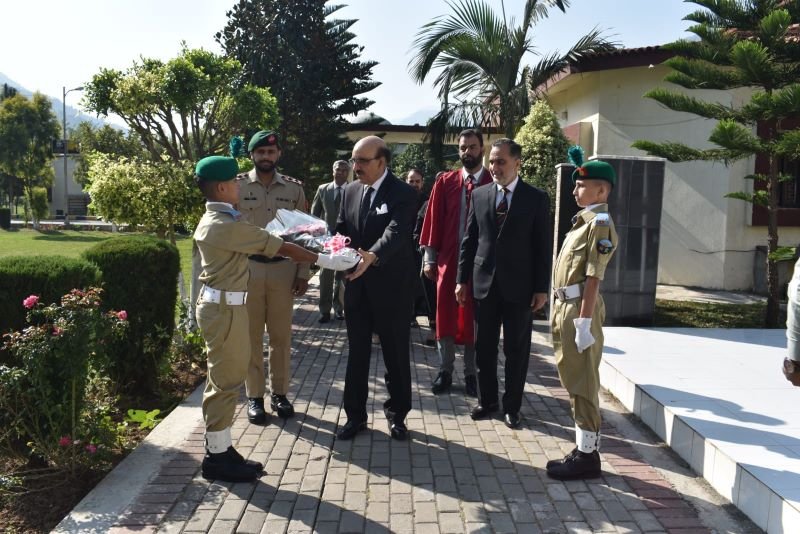
Khan voiced concern about continuing humanitarian and political difficulties in Indian-administered Jammu and Kashmir, especially after India’s actions of 5 August 2019 on the territory’s special constitutional status. He urged students and faculty to study historical records, international law and UN documents so they can form an informed view.
He described Azad Jammu and Kashmir and Gilgit-Baltistan as strategically important and acknowledged the sacrifices Kashmiris have made over generations. Peace in South Asia, he said, will be hard to achieve unless the dispute is addressed through a just and peaceful process.
Turning to the wider world, Khan encouraged students to look beyond regional borders and prepare for a changing global environment, stressing international cooperation, collective responsibility and principled diplomacy in tackling conflicts and humanitarian crises.
Also read: President, PM call for peaceful resolution of Kashmir dispute
He closed by urging young people to be courageous, think ambitiously and contribute to Pakistan’s progress through education, unity and leadership. National strength, he said, must rest not only on defence capability but also on economic development, technological advancement and institutional continuity.

Sohail Majeed is a Special Correspondent at The Diplomatic Insight. He has twelve plus years of experience in journalism & reporting. He covers International Affairs, Diplomacy, UN, Sports, Climate Change, Economy, Technology, and Health.