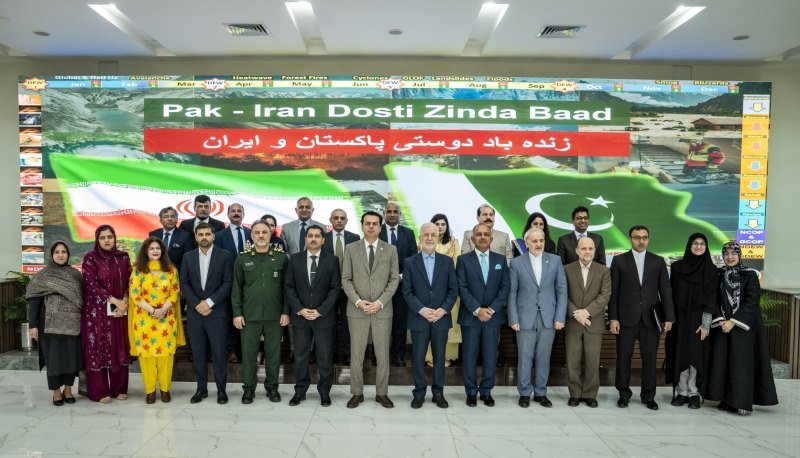
Islamabad (GNP): A high-level Iranian delegation led by Interior Minister Eskandar Momeni, accompanied by Minister of State for Interior Talal Chaudhry and Iran’s Ambassador to Pakistan Dr. Reza Amiri Moghadam, visited the National Emergencies Operations Centre (NEOC) at the National Disaster Management Authority (NDMA) headquarters in Islamabad.
NDMA officials briefed the delegation on the center’s capabilities and Pakistan’s evolving approach to proactive disaster management aimed at reducing recurring disaster risks.
NDMA Chairman Lt. Gen. Inam Haider Malik outlined the authority’s initiatives supporting regional cooperation and aligning with global disaster risk reduction strategies.
Overview of NDMA’s Capabilities
The delegation was briefed on recent improvements to Pakistan’s disaster management systems and plans to adopt next-generation technologies aimed at improving early warning capabilities and better coordinating responses among various agencies and resource providers.
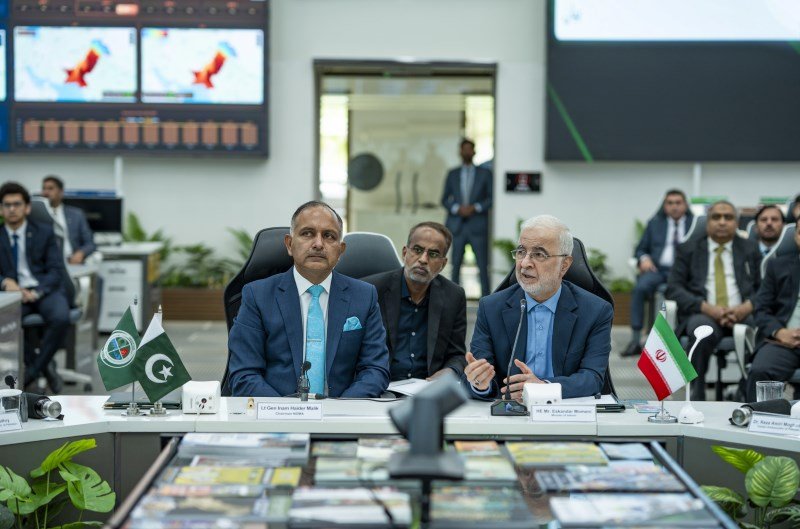
Officials also explained how NDMA coordinates with national security leadership, provides guidance frameworks for regional governments, and maintains connections with international academic institutions and humanitarian organizations. The briefing highlighted the value of multi-level coordination and resilient disaster response systems, touching on localized risk communication, early intervention planning, resource mobilization, and pre-arranged international support mechanisms for disaster relief.
The delegation was also shown a demonstration of “Disaster Lens 2026,” along with sequences from Pakistan’s Comprehensive International Simulation Exercises (CISE), designed to test coordinated emergency response capabilities.
Iranian Delegation’s Response
The visiting delegation praised Pakistan’s disaster management approach and expressed strong interest in continued collaboration between the two countries in this field. Momeni specifically commended NDMA’s progress in disaster risk management and emergency preparedness, expressing Iran’s interest in learning from Pakistan’s experience with early warning systems, institutional coordination, and the use of advanced technology in disaster response.
He noted that stronger cooperation and knowledge-sharing between the two neighboring countries could help strengthen regional resilience against natural disasters and climate-related risks.
Also read: Pakistan AI PMOS Introduces Smarter Digital Government Management System
Both sides agreed on the importance of deepening institutional ties and expanding cooperation to address emerging challenges linked to climate change and complex disaster scenarios.

Sohail Majeed is a Special Correspondent at The Diplomatic Insight. He has twelve plus years of experience in journalism & reporting. He covers International Affairs, Diplomacy, UN, Sports, Climate Change, Economy, Technology, and Health.