Tehran (GNP): Iran said Friday it would respond with devastating force to any new threats from Washington, after the United States pledged to impose the toughest financial penalties in its history with the stated aim of toppling the Iranian leadership.
The warning came a day after Treasury Secretary Scott Bessent said the sanctions package would be unveiled in full detail at a press conference on Monday, following President Donald Trump’s earlier threat of economic consequences against any country offering Iran financial support.
Major General Ali Abdollahi, chief of staff of Iran’s armed forces, said the country’s military stood ready across land, sea, air, air defence and cyberspace, and would meet what he described as new threats from the enemy with crushing and punishing retaliation.
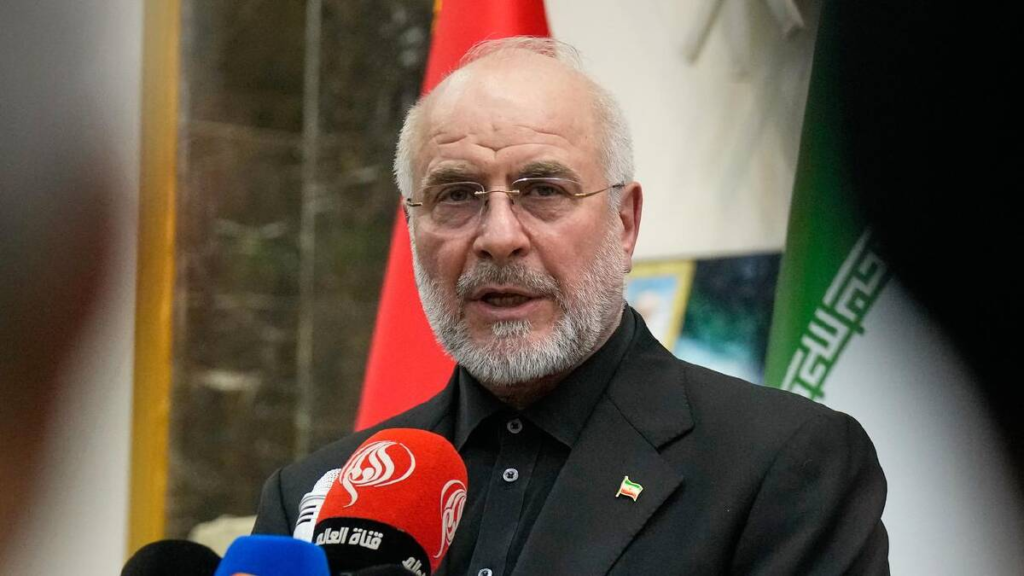
Iran’s parliament speaker, Mohammad Baqer Qalibaf, who has served as the country’s main negotiator in mediated talks with Washington, said the sanctions signalled that the United States had concluded it could not prevail through direct military confrontation, and accused Washington and Israel of waging economic and psychological warfare against Iran while calling for plans to withstand the pressure.
The sanctions threat has already rattled oil markets, with prices holding near a three-week high on Friday and on pace for a second consecutive weekly gain amid concerns over Gulf energy exports.
Bessent, addressing the market reaction directly, said he did not see a clear reason for oil prices to rise, arguing that a maximum-pressure economic campaign would likely reduce the chances of a return to large-scale military conflict rather than increase them.
The nearly six-month war has already claimed thousands of lives and disrupted shipping through the Strait of Hormuz, a waterway that carried roughly a fifth of the world’s traded oil before the conflict began, with two earlier ceasefire attempts between Washington and Tehran, reached in April and June, both having collapsed shortly after they were announced.
Iran’s foreign ministry rejected the sanctions before Bessent’s remarks were made public, describing the measures as economic terrorism that would not weaken the country’s determination to defend its independence and sovereignty.
Bessent described the broader strategy as a two-part approach combining the existing naval blockade on Iran, first imposed in April, with the new financial penalties, and said he believed the combined pressure would be sufficient to bring down the Iranian government.
Domestically, Trump faces continued pressure over high fuel prices linked to the conflict, which have weighed on his approval ratings and raised concerns within his party ahead of the November midterm elections.
Also Read: US Will Impose Toughest-Ever Sanctions on Iran, Says Bessent
Much of the sanctions strategy depends on cooperation from China, which purchases more than eighty percent of Iran’s exported oil according to 2025 industry data, though further economic pressure on Beijing carries risks of retaliation given its role as a major exporter of rare-earth minerals to the United States.
Bessent noted that a significant share of China’s energy needs are met by Gulf suppliers, suggesting Beijing has strong reason to align with Washington’s position, while a spokesperson for the Chinese embassy in Washington said sanctions and pressure would not resolve the underlying dispute and called instead for a political and diplomatic solution.
Trade sources said offers of Iranian crude to Chinese buyers have already declined and prices have risen this week, as a US blockade on Iranian ports reimposed on July 13 continues to cut into Tehran’s shipments.

Managing Editor at Global News Pakistan (GNP), with a Bachelor's degree in International Relations from Riphah International University, graduated with a Gold Medal. Reach out at sabahtareengnp@gmail.com