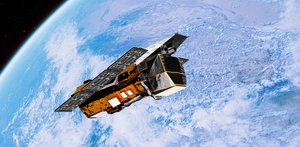
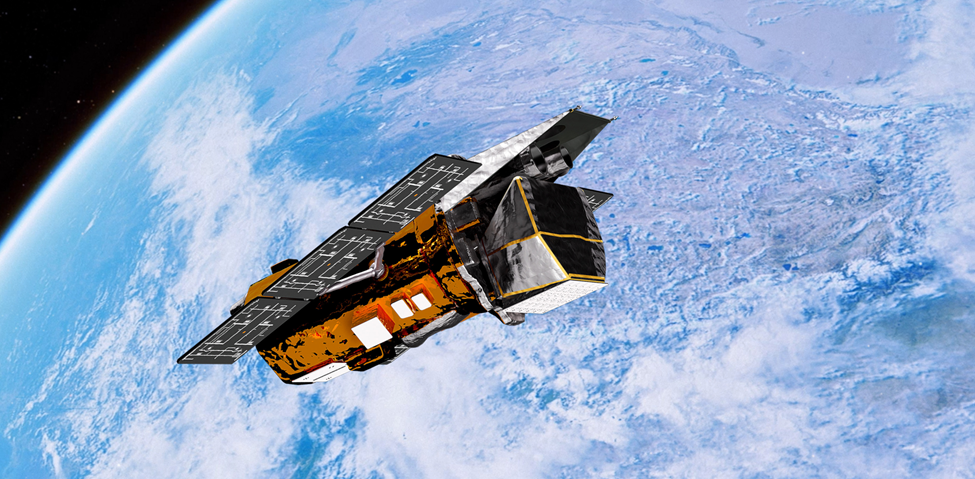
NASA’s Swift Observatory ends its nearly 22 year mission, making some groundbreaking astronomical discoveries and a substantial collection of scientific data.
NASA’s Neil Gehrels Swift Observatory has concluded after expanding over two decades. It was launched on 20 October 2004, initially for a 2 year plan. For the final observation, it dropped 275 kilometres over Earth, but had issues in keeping a stable view of the autonomy targets. After the official mission concluded, it reentered earth’s proximity on 4 November, at 7:39 am in Sumatra, Indonesia. There were two milestones achieved, end of observation in October and spacecraft’s reentry on earth in November.
Swift was set up to determine the gamma-ray bursts, minor and significant cosmic events, then passed on the instruments to detect and note their fading afterglows. This was done through three telescopes, each covering different dimensions: the gamma-ray, X-ray, ultraviolet and the optical wavelengths. According to NASA’s references, Swift had the ability to burst in a minute which would alert the observatories, helping researchers to conduct investigations before traditional telescopes would target them.
Swift had observed an estimated 2,000 gamma-ray bursts, and NASA reports that the actual number is higher. Moreover, it assessed more than 1400 supernova explosions, monitoring galaxy activities and black holes disrupting the stars. This data has produced 7000 papers based on space and scientific studies.
The theory of gamma-ray bursts, due to merging of neutron stars, was supported by an event in May 2005, when Swift recorded the afterglow of a short gamma-ray burst that lasted 0.03 seconds. Swift was attributed more than a telescope, it connected the space based events to ground observatories.
Despite an end to this, the scientific value will be carried by the public archive which are the 22 years of data, about 12 terabytes and containing nearly 1.5 million images taken from Optical and Ultraviolet Telescope. This information is open for researchers to compare them with contemporary discovery, so the research would continue. The archived observations will be helpful for the decades to come.
Changing Landscape of Astronomical Research
Retirement of Swift shows the importance of international cooperation in modern astronomy. This Mission was conducted with the alliance of Italy and the United Kingdom. The alerts and data that was collected through Swift helped several observatories as the scientists could dive deep to understand the astronomical event from its evidence. In relation to this, the joint project of France and China SOVM is a major development.
The activities started in 2025, while it was officially launched in June 2024 There are four instruments made in this spacecraft which note and analyse the gamma-ray bursts. According to the Gamma-Ray Coordinate Network of NASA, SVOM could transmit scientific alerts in less than 30 seconds. Hence, the functions of SVOM are not similar to that of the Swift but it’s a suitable example when understanding how international collaboration could help in modern astronomical research.
Also Read: United States Deep-Sea Mining Plans and the New Geopolitics of Ocean Minerals
There were efforts to keep Swift operational and in business, but they were not successful. NASA and its commercial partner Katalyst Space had made a program to shift the satellite to a higher orbit. The process required capturing the spacecraft and boosting its orbit. However due to some technical issues the operation was not executed. This was accepted as a valuable experience for NASA in conducting future spacecraft operations. It shows that the end of this mission was not based on the technology or instrumental reasons, the evolving space environment played a huge role in exposing the limitations of such operations.
This raises an important question, if scientific success has become limited to launching new missions? The spacecraft was designed for 2 years but remained operational for 22 years. It assisted several scientific publications and gave new dimension to the valuable research.
The end of Swift means, end to the rapid response observation facility that helped researchers gather information of sudden and unexpected cosmic events. Other observatories such as SVOM could cover the gaps to a limit, as the operational priorities are different. This is a major reason why no existing mission could be considered a substitute for Swift.
This case reflects on the importance of interconnected scientific systems rather than individual missions towards space agencies. If there exists shared alert networks and the research archives are accessible to multiple researchers from all over the world, it would bridge the gap. Gaining data and discoveries is not the only aim but missions should also be conducted in the real time astronomical events. The real challenge now is if the space agencies focus on collective scientific responsibility rather than the rapid response of one state.