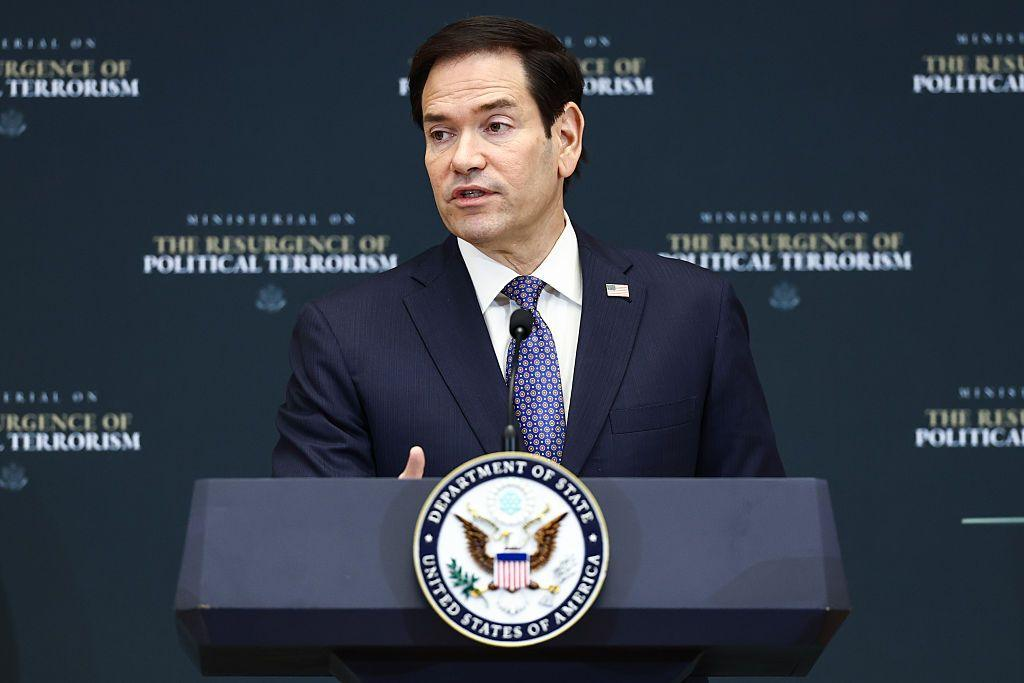
WASHINGTON (GNP): Criticism of the ICC intensified after U.S. Secretary of State Marco Rubio accused the International Criminal Court (ICC) of attempting to expand its authority beyond internationally accepted legal limits, arguing that the court threatens American sovereignty and judicial independence.
In a statement posted on his official social media account, Rubio said the ICC seeks to become “the unaccountable arbiter of a new global law,” claiming it aims to prosecute and arrest American citizens without the consent of the United States. He argued that such actions undermine national sovereignty and the constitutional principles governing the U.S. legal system.
Rubio further stated that the United States would firmly oppose any attempt by the ICC to exercise jurisdiction over American citizens without authorization. He emphasized that Americans should only be subject to the country’s own judicial institutions, adding that Washington would continue defending its legal independence against what it considers international overreach.
The remarks reflect the long-standing position of successive U.S. administrations regarding the International Criminal Court. Although the United States participated in negotiations establishing the Rome Statute, it has never become a State Party to the treaty and does not recognize the ICC’s jurisdiction over U.S. nationals unless accepted under specific legal circumstances.
The Secretary’s comments come amid continuing disagreements between Washington and the Hague-based court over investigations involving U.S. allies and American personnel. U.S. officials have repeatedly argued that the country’s judicial system is fully capable of investigating alleged misconduct without external intervention.
Legal experts note that the ICC was established to prosecute individuals accused of genocide, crimes against humanity, war crimes, and the crime of aggression when national courts are unable or unwilling to do so. Supporters of the court argue that it plays a critical role in promoting international justice and accountability, while critics contend that its jurisdiction and prosecutorial powers require clearer limitations.
The latest statement is expected to further fuel international debate over the balance between national sovereignty and international criminal justice. Several countries strongly support the ICC as an independent judicial institution, while others remain cautious about expanding its authority over non-member states.
Also Read, Global News Pakistan: Commerce Minister says Pakistan Values Deep Ties with Egypt
The International Criminal Court (ICC) was established under the Rome Statute, which entered into force in 2002. Headquartered in The Hague, Netherlands, the court investigates and prosecutes individuals accused of genocide, crimes against humanity, war crimes, and the crime of aggression.
The United States signed the Rome Statute in 2000 but never ratified the treaty and later informed the United Nations that it did not intend to become a party. Since then, U.S. administrations have maintained varying degrees of cooperation with the ICC while consistently opposing any jurisdiction over American citizens without U.S. consent.
The debate surrounding the ICC remains one of the most significant issues in international law, highlighting tensions between global accountability mechanisms and the principle of state sovereignty. Analysts expect discussions over the court’s authority to continue as international conflicts generate new legal and diplomatic challenges.