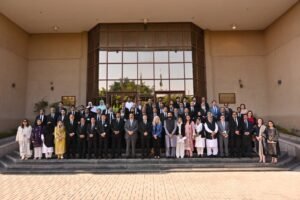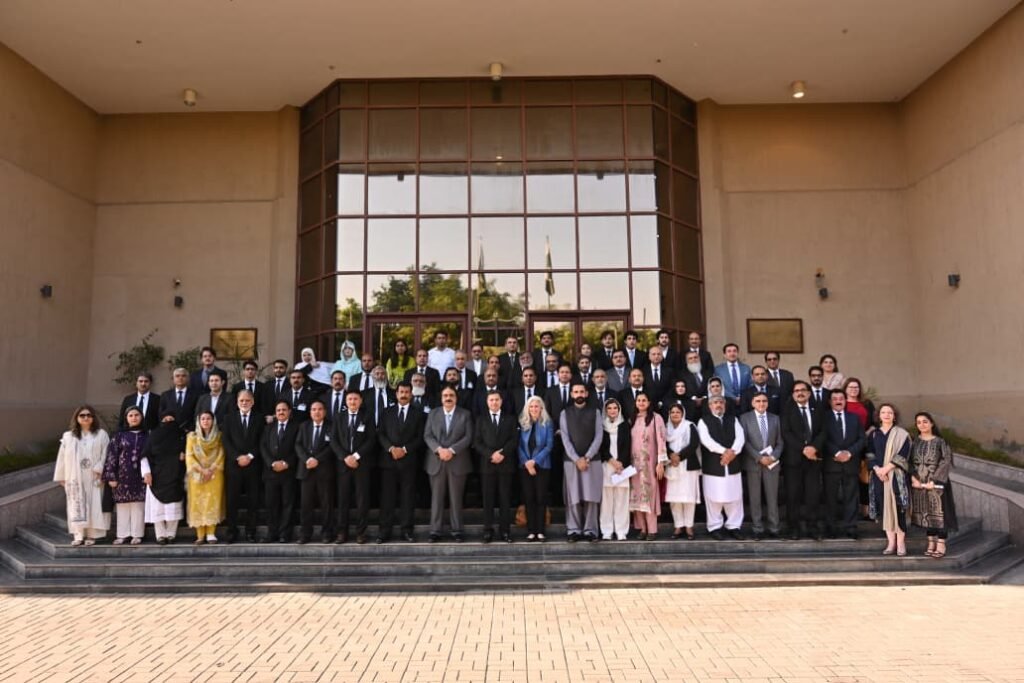
Islamabad (GNP): Pakistan has taken a significant step toward improving children’s access to justice with the opening of an Interactive Resource Centre (IRC) and Model Child Court at the Federal Judicial Academy (FJA) in Islamabad. The facility gives judicial professionals a permanent, hands-on setting in which to learn how justice systems can better respond to the needs, rights and best interests of children.
The project was organised jointly by the FJA, UNICEF and Group Development Pakistan (GDP). It builds on earlier work to introduce child-friendly court practices in Pakistan and supports the aims of UNICEF’s Reimagine Justice for Children (RJ4C) programme. Through demonstration and practical learning, the Model Child Court shows how child-sensitive spaces, procedures and professional conduct can help children take a meaningful part in court proceedings while their rights and needs are respected.
The centre has seven connected spaces: age-appropriate waiting areas, a child-friendly courtroom, a media room set up for video-link testimony, a Juvenile Justice Committee and Alternative Dispute Resolution room, judges’ chambers and the Interactive Resource Centre itself. The design aims to create a safer, less intimidating environment that protects children’s dignity and privacy during proceedings.
Beyond its physical design, the facility will serve as a training resource for judges and other justice system actors nationwide. Using case-based learning and simulations, participants will build skills in holding child-friendly hearings, applying diversion principles, enabling children’s participation in family proceedings and handling testimony by video link. It is also meant to help develop judicial trainers and to act as a reference model for provincial judicial academies and courts.
Pernille Ironside, UNICEF Representative in Pakistan, said every child is entitled to justice that sees them first as a child. Children who come into contact with the law must be protected in line with their best interests and have their voices heard. Meeting those needs, she said, takes more than good intentions and requires child-centred professional expertise.
Justice Miangul Hassan Aurangzeb, Advisor to the FJA Board of Governors, described justice for children as both a constitutional and a moral obligation, and said every interaction a child has with the system must uphold their dignity, protect them from harm and recognise their best interests and evolving needs. The centre and court, he said, are important steps toward putting child-centred principles into judicial practice, and sustained, structured training can help build a system that is sensitive to children and earns their trust.
FJA Director General Jehanzeb Shinwari said the academy, together with UNICEF and GDP, is advancing child-friendly justice. The new facilities will strengthen practical judicial training and promote an inclusive, effective and child-sensitive system, with the goal of justice that protects every child’s dignity, rights and best interests.
Also read: Sherry Calls for Ring-Fenced Carbon Tax
The initiative supports Pakistan’s implementation of the UN Convention on the Rights of the Child, including the principles of the child’s best interests, the right to be heard and to take part in decisions affecting them, and protection from violence and harmful justice practices, with safeguards applied in all court proceedings involving children. It also complements domestic law, including the Juvenile Justice System Act 2018, by focusing on the knowledge, skills and institutional practices needed to turn legal protections into real outcomes for children.

Sohail Majeed is a Special Correspondent at The Diplomatic Insight. He has twelve plus years of experience in journalism & reporting. He covers International Affairs, Diplomacy, UN, Sports, Climate Change, Economy, Technology, and Health.