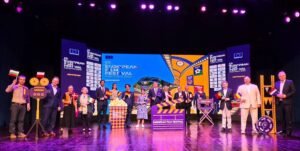
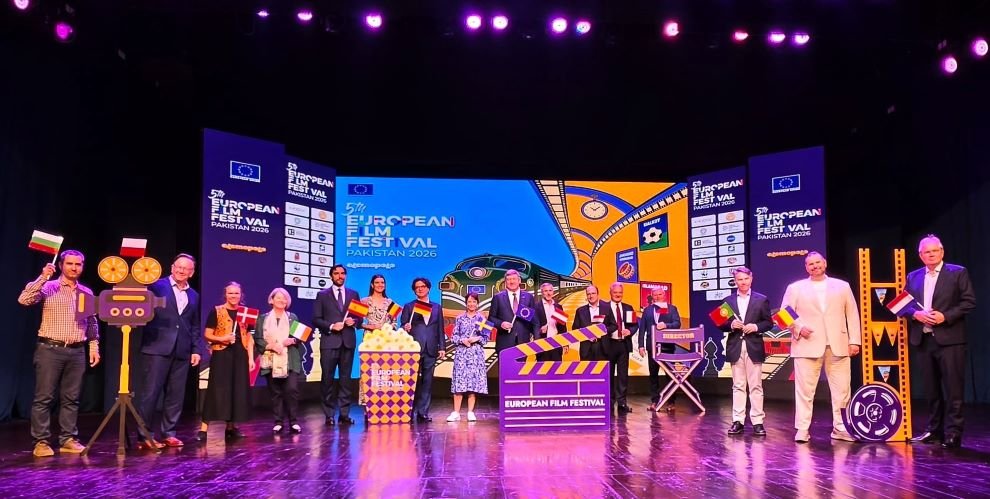
Islamabad (GNP): The Delegation of European Union to Pakistan, together with Olomopolo Media, hosted the fifth edition of the European Film Festival Pakistan (EUFF) at the Pakistan National Council of the Arts (PNCA).
What began as a single film screening has grown into a two-day, multi-city event showcasing award-winning European cinema alongside Pakistani filmmaking, drawing a broad audience of young people, students, and families to a festival environment designed for cinephiles of all backgrounds.
Curated by Olomopolo Media under the EU’s sponsorship, the festival featured European feature films, documentaries, and experimental short films, alongside a selection of Pakistani shorts. The programme also included live performances, activities for children, interactive art installations, and an industry-focused session for filmmakers.
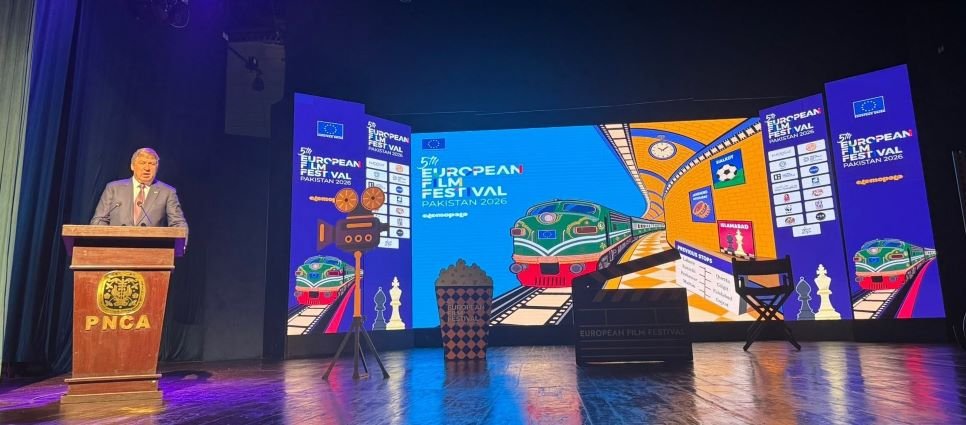
In his opening remarks, EU Ambassador to Pakistan Raimundas Karoblis reflected on cinema’s power to illuminate pressing global issues — from climate change and economic instability to conflict and rapid technological change — noting that film and art help audiences grasp what’s at stake and spark meaningful conversation. He said the festival’s films don’t offer easy answers but instead invite reflection, which he described as art’s true strength: challenging viewers to think and see the world differently.
Karoblis drew a parallel to the European Union’s own origins, built from the aftermath of war into a union centered on peace and shared prosperity — a vision he said remains just as relevant today. Addressing current geopolitical tensions, he reaffirmed the EU’s support for a just resolution to Russia’s war against Ukraine, noting that this year’s festival includes a Ukrainian film made possible through cooperation with the Ukrainian Embassy.
He also acknowledged that one planned film — a multi-country EU co-production dealing with themes of freedom, sovereignty and rule of law — was not cleared by Pakistani censors, a decision he linked to foreign-policy considerations involving another country. He expressed hope the film could eventually be shown in an EU member state instead.
The Ambassador described this year’s lineup as spanning themes of friendship, resilience, sustainability and hope across genres including comedy, drama, documentary and animation, highlighting several European co-productions as examples of cross-border creative collaboration. He noted that a dedicated Children’s Film Day would introduce younger audiences to the festival, and thanked attendees and EU member states for supporting the event.
Olomopolo Director Kanwal Khoosat called this year’s edition a significant milestone, noting that by its conclusion, EUFF will have toured 11 Pakistani cities, presenting stories in multiple European languages alongside films in five of Pakistan’s regional languages. She described the festival as an ongoing effort to expand cultural exchange and creative dialogue across borders and languages, and expressed gratitude for the EU’s continued partnership in bringing the festival to Pakistani audiences.
This year’s Islamabad edition ran September 12–13 at PNCA, featuring film screenings alongside a stand-up comedy and improv showcase and a children’s programme built around a family-friendly European film paired with storytelling and music.
The festival targets young audiences, families, film industry professionals, cinema enthusiasts, and members of the diplomatic community, with goals centered on broadening cinematic engagement, using film to bridge cultures, and creating shared spaces for community interaction.
First launched in Pakistan in 2021, the travelling festival has since visited Gilgit, Quetta, Peshawar, Gujrat, Faisalabad, Multan, Lahore, Karachi and Islamabad, consistently emphasizing cultural exchange through film.
This year’s Cultural Heritage segment featured “Khusal Goes to the Kalasha Valleys” in English and Pashto, “Journey to the Centre of Karez” in English and Balochi, and “The Magic of Making Glaciers in Gilgit-Baltistan” in English and Burushaski.
Children’s programming was a particular focus, including an interactive storytelling hour led by “Suno Kahani Meri Zubani” (SKMZ) and origami sessions for younger attendees. Several schools brought students to the festival, including Nova Heights Montessori, Little Star Grammar, Marium School Foundation, Speed Education School, Islamabad Model School for Girls, Pehli Kiran, Islamabad Model College for Boys, Bardasht School, and Nisbat.
Also read: Princess Diana’s Iconic ‘Revenge Dress’ Heads to Auction for Up to $300,000
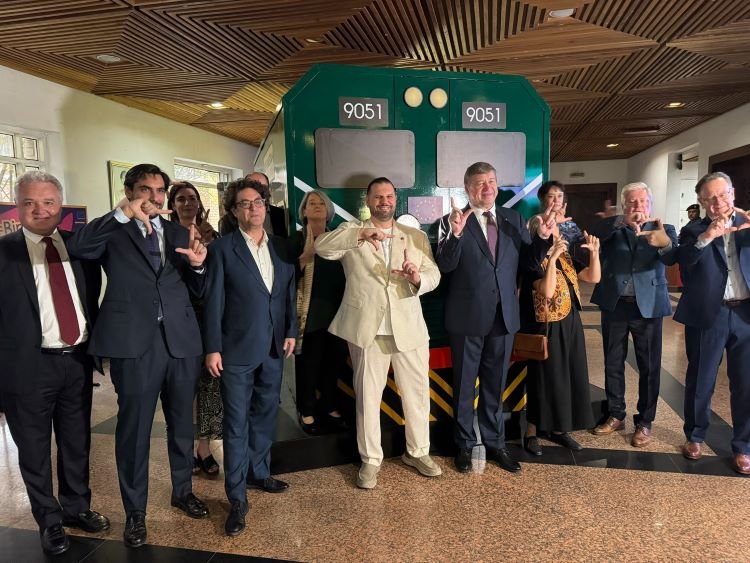
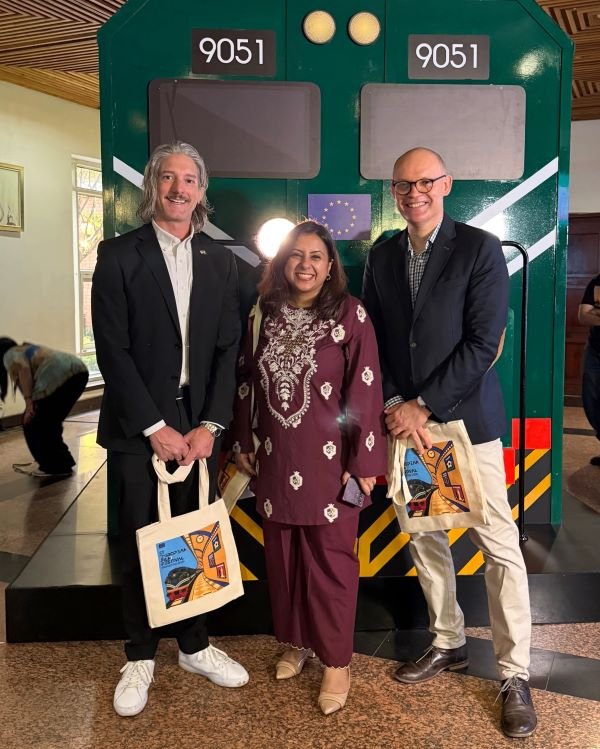
The French-Czech feature “Living Large,” an award-winning animated comedy exploring coming-of-age themes like body image and bullying, drew particularly large crowds. Interactive attractions added to the festival’s appeal across age groups, including the EUFF-Pakistan Express — a photogenic train-themed structure hosting screenings, storytelling corners and a photo booth — the Human Slot Game, where volunteers revealed filmmaker trivia with a chance to win festival pins, and the Doodles Mural: Life in Technicolours, a large collaborative coloring installation for younger visitors.

Sohail Majeed is a Special Correspondent at The Diplomatic Insight. He has twelve plus years of experience in journalism & reporting. He covers International Affairs, Diplomacy, UN, Sports, Climate Change, Economy, Technology, and Health.