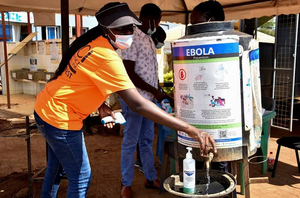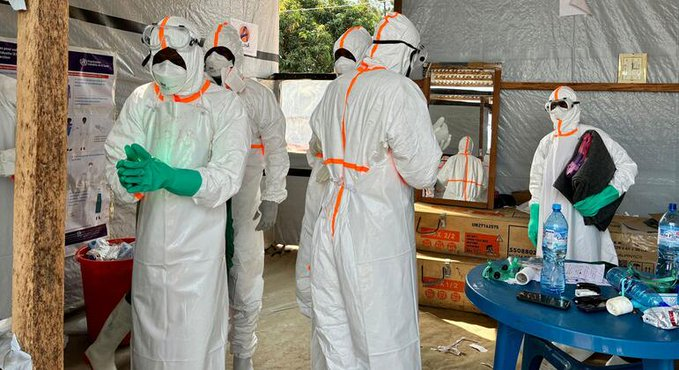
New York (GNP): The deadliest Ebola outbreak in the history of the Democratic Republic of the Congo continued spreading rapidly this week, prompting United Nations responders to renew urgent appeals for international support as existing funding for the response nears exhaustion.
Since the outbreak was declared on May 15, a total of 5,290 people have been infected and 2,516 have died, according to the latest health authority data. Of the confirmed cases, 1,152 people have recovered while nearly 840 remain in isolation or hospitalized, with a fatality rate of 47.6 percent and contact follow-up at 82.9 percent.
Julien Harneis, UN Senior Ebola Coordinator, said the response is only funded for the coming weeks and warned that any delay in funding and implementation makes the epidemic more difficult and more expensive to stop.
Speaking from the outbreak’s epicentre in Bunia, Ituri province, Harneis said the disease is growing exponentially, with half of all recorded deaths occurring in just the past 20 days. He noted the outbreak has now spread across an area larger than France and is expanding faster than the response effort can keep pace with.
The scale of the crisis has taken a direct toll on frontline workers. Three months into the outbreak, 160 healthcare workers have contracted Ebola, and 43 of them have died. Harneis explained that beyond the threat posed by the virus itself, healthcare workers have also faced attacks from local youths, with ambulances burned and stoned and healthcare facilities targeted.
He described operating conditions on the ground as extremely difficult, recounting a recent attempt to reach an Ebola hotspot that took three hours to cover just 60 kilometres, but affirmed that humanitarian and medical assistance will continue until the outbreak is brought under control.
Also Read: Punjab Opens Pakistan’s First Heart Transplant Centre
Compounding the response’s challenges is a severe lack of basic social services across the six eastern provinces affected by the outbreak, Ituri, North Kivu, South Kivu, Haut-Uélé, Tshopo, and Bas-Uélé, a consequence of decades of violence in the resource-rich region.
Gaps in coordinated government healthcare services and a limited banking infrastructure have created further complications. Harneis said the banking system in the affected areas barely functions, making it difficult to pay frontline workers on time, a situation that has fueled significant frustration among response teams.
The United States has contributed 80 million dollars to the DRC government to expand bed capacity and support safe burial practices, among other measures. However, Harneis noted that broader cuts to humanitarian aid over the past two years have reduced the operational capacity of aid organizations by more than 30 percent.
Despite these constraints, several UN agencies continue working alongside DRC authorities to contain the outbreak, including the World Health Organization, the World Food Programme, the UN Children’s Fund, and the UN migration agency, alongside partners such as Médecins Sans Frontières.
Harneis described Ebola as an invisible threat that moves through communities suddenly, causing widespread fear as people fall ill and loved ones die around those affected.