BOGOTA (GNP): A powerful Colombian earthquake struck the western part of the country on Monday, causing widespread destruction, deaths, and injuries while rescue teams searched damaged buildings for survivors. The magnitude 7.4 earthquake was also felt strongly in Bogotá and neighboring areas, prompting evacuations and emergency response operations.
The earthquake struck at approximately 7:30 a.m. local time, with its epicenter near San José del Palmar in the department of Chocó, according to reports citing Colombian authorities and the U.S. Geological Survey. The epicenter was located roughly 400 kilometers west of Bogotá. The USGS estimated the earthquake’s depth at approximately 107 kilometers.
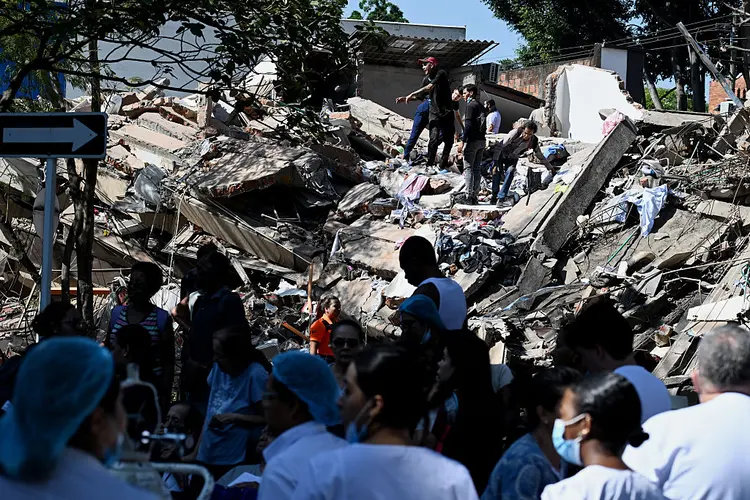
The powerful tremor was felt across a large area of Colombia and in neighboring Ecuador. Residents in several cities rushed outside as buildings shook, while authorities ordered or encouraged evacuations from vulnerable structures. The earthquake caused significant damage in parts of western Colombia, with buildings collapsing and residents becoming trapped beneath debris.
The death toll increased rapidly as emergency workers reached affected communities. Reuters reported that more than 100 people had been killed, while other reports later placed the number at more than 130. The number of casualties remained subject to revision as rescue operations continued and authorities assessed remote and heavily damaged areas.
Pereira and other cities in western Colombia were among the areas reporting significant casualties and structural damage. Rescue workers, police officers, firefighters and volunteers were deployed to search collapsed buildings and assist affected residents. In some locations, emergency teams used specialized equipment to remove rubble and locate people who could still be trapped underneath damaged structures.
The Colombian government began coordinating emergency measures as authorities assessed the scale of the disaster. Damage to residential buildings and infrastructure created additional challenges for emergency responders, particularly in communities close to the epicenter.
Also Read: Language, Culture Strengthen Pak-China Ties, Khichi
The Servicio Geologico Colombiano, the country’s geological agency, monitors seismic activity through its national seismic network. Colombia is vulnerable to earthquakes because of its location within a region affected by significant tectonic activity. Historical records maintained by the agency show that powerful earthquakes in western and other parts of the country have previously been felt across large distances, including in Bogota and Cali.
The earthquake’s relatively deep focus was significant because it allowed seismic waves to travel across a wide area. Strong shaking was reported far from the epicenter, including in Colombia’s capital. The event demonstrated how an earthquake originating in a relatively remote region can have consequences for major urban centers.
Authorities also faced the challenge of assessing damage in areas where access can be difficult. Rescue operations following major earthquakes often require rapid coordination between national and local authorities, medical services, security agencies, and community volunteers.
The disaster has also renewed attention to earthquake preparedness and the resilience of buildings and infrastructure. Colombia’s experience demonstrates the importance of seismic construction standards, emergency planning, public awareness and rapid-response capabilities.
From an international relations perspective, major natural disasters can create opportunities for humanitarian cooperation. International organizations, neighboring states and humanitarian agencies can provide technical assistance, emergency supplies, medical support and disaster-management expertise when national resources are under pressure.
The Colombia Earthquake therefore represents not only a major humanitarian emergency but also a significant test of the country’s disaster-response institutions. As rescue operations continue, authorities are expected to focus on locating survivors, providing medical assistance, sheltering displaced residents and evaluating damaged infrastructure.
The final human and economic impact of the earthquake will become clearer as emergency teams reach more affected communities and complete their assessments. For now, the priority remains saving lives, assisting survivors and restoring essential services across the affected areas.