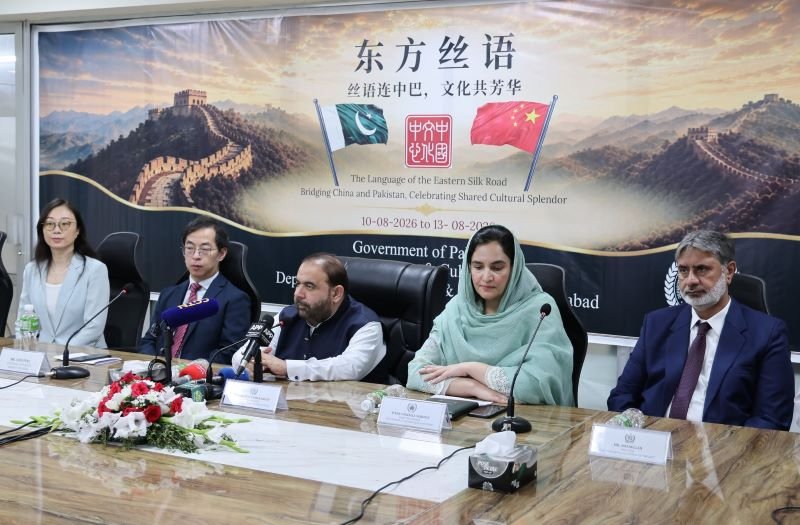
Islamabad (GNP): Federal Minister for National Heritage and Culture Aurangzeb Khan Khichi said language and cultural exchange play a key role in strengthening people-to-people connections and deepening the friendship between Pakistan and China.
Speaking at the opening of the Chinese Language and Chinese Culture Experience Course at the Department of Archaeology and Museums (DoAM), Khichi described the Pakistan-China relationship as an all-weather strategic partnership marked by deep mutual friendship.
The course, organized under the initiative “The Language of the Eastern Silk Road – Bridging China and Pakistan,” is a joint effort between the China Cultural Center in Pakistan and DoAM, with support from the Pakistan-China Cultural and Economic Promotion Association.
Khichi noted that while political and economic cooperation between the two countries — including through the China-Pakistan Economic Corridor — remains strong, the foundation of the relationship ultimately rests on cultural exchange and personal connections between citizens. He described language as a gateway to understanding a nation’s character and traditions, saying the course would offer a lasting platform for cultural exchange between Chinese and Pakistani youth.
He explained that participants would learn basic Chinese phrases, greetings, and everyday expressions, alongside exposure to Chinese calligraphy, festivals, and cuisine, helping build a deeper appreciation for Chinese culture and history. He said such initiatives help foster mutual respect and lasting friendships between the two peoples, thanking the Chinese Embassy, DoAM, and course instructors for organizing the program and encouraging young participants to serve as ambassadors for Pakistan-China friendship.
Chinese Embassy Cultural Counsellor Chen Peng spoke about the importance of cultural exchange and heritage preservation, noting the historical connection between Pakistan and China through the Silk Road. He highlighted the cultural ties between the Gandhara civilization and China’s Dunhuang region, describing Gandhara art as a notable example of the blending of Eastern and Western artistic traditions.
Chen pointed to recent cooperation in archaeology and heritage preservation between the two countries, referencing a 2023 exhibition of 173 Pakistani cultural artifacts at Beijing’s Forbidden City, which he described as the largest Gandhara art exhibition held to date.
He also mentioned ongoing collaboration between DoAM and Peking University, including plans for a joint laboratory focused on preserving Taxila’s cultural heritage.
He described China’s approach to cultural cooperation as rooted in respect for the diversity of different civilizations, expressing willingness to share technical expertise in heritage preservation — including 3D scanning and digital preservation techniques — with Pakistani experts, while also learning from Pakistan’s own cultural traditions.
Chen also referenced the “Gandhara Guardians” project, a joint initiative between Chinese and Pakistani scholars focused on using education and community engagement to protect historical sites, and expressed hope for continued collaboration between the two countries on archaeological excavation, heritage digitization, and World Heritage site management.
DoAM Director General Syeda Tanzeela Sabahat welcomed the initiative, describing it as an opportunity to bring together Chinese and Pakistani participants through shared language and cultural learning, expressing hope that the program would help build stronger mutual understanding between the two nations.
The Chinese Language and Chinese Culture Experience Course runs from August 10 to 13, bringing together around 50 Chinese and Pakistani participants, including students and staff.
Spanning six sessions, the program aims to establish an ongoing platform for cultural exchange between the youth of both countries, introducing them to Chinese language, calligraphy, festivals, and cuisine.
Also read: Forging Unity Under Law, Building a Brighter Future Through Cooperation
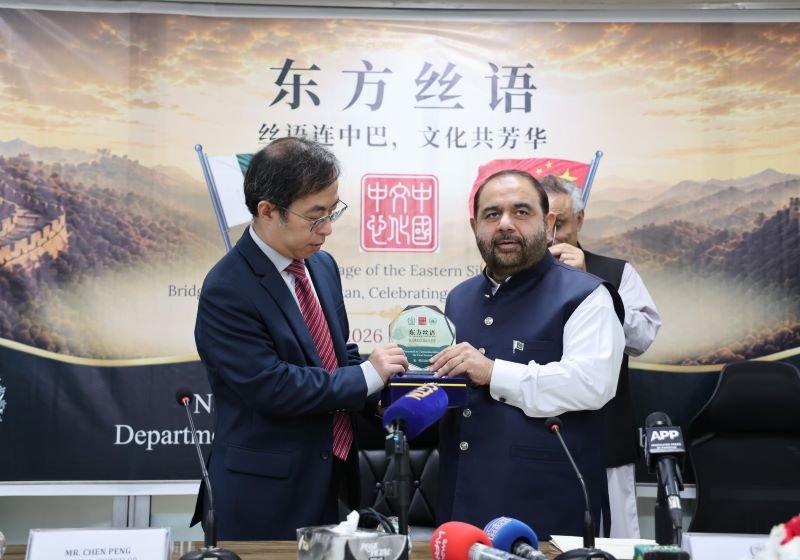
The ceremony concluded with the formal opening of the course and an exchange of commemorative plaques between Chinese and Pakistani representatives.

Sohail Majeed is a Special Correspondent at The Diplomatic Insight. He has twelve plus years of experience in journalism & reporting. He covers International Affairs, Diplomacy, UN, Sports, Climate Change, Economy, Technology, and Health.