Seoul (GNP): South Korea and the five Central Asian states are preparing for a landmark summit that experts say could push technology, critical minerals and industrial cooperation to their highest level yet. The inaugural Central Asia-Republic of Korea Summit, to be held at the heads-of-state level, is expected to place manufacturing localisation, regional connectivity and engineering training at the centre of talks between the two sides.
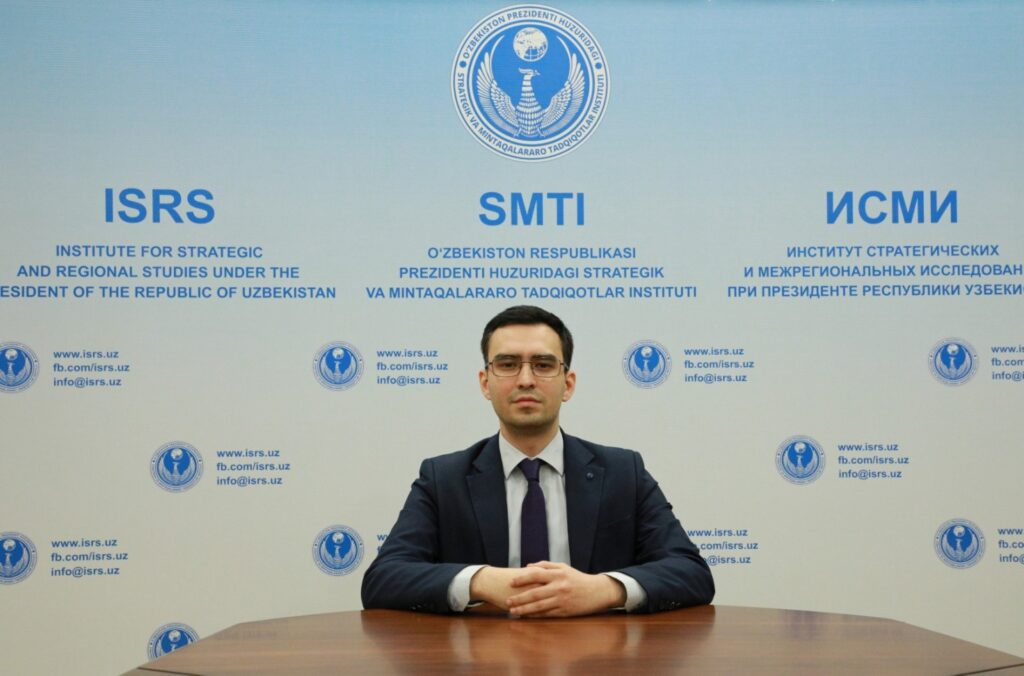
Bekzod Normatov, Leading Research Fellow at the Institute for Strategic and Regional Studies under the President of Uzbekistan, said the summit marks a shift from decades of ministerial-level engagement towards a format capable of matching the scale of ties that have already been built.
He noted that a multi-layered system of contacts already exists, spanning political, economic, parliamentary, business and humanitarian channels, built up through the Republic of Korea-Central Asia Cooperation Forum established in 2007, its Permanent Secretariat added in 2017, an Economic Council running since 2020, a parliamentary speakers’ format launched in 2023 and an inaugural Think Tank Forum convened in 2024.
According to Normatov, the move to a leaders’ summit reflects growing recognition on both sides that earlier mechanisms no longer correspond to the scope of cooperation now required, particularly across trade, investment, energy, critical minerals and supply chain resilience.
He described the complementary strengths each side brings to the table, pointing to South Korea’s advanced technology, capital and expertise alongside Central Asia’s resource base, expanding markets and access to emerging high-tech demand.
Critical minerals cooperation, Normatov said, stands out as one of the most promising areas, given the region’s substantial reserves paired with South Korea’s processing and industrial application capabilities. Discussions are already under way to establish a regular ministerial mechanism under a “C5+K” industry format, while bilateral cooperation with Uzbekistan is focusing on artificial intelligence in industry alongside concrete investment projects.
Normatov cautioned that the partnership should not be reduced to simple raw material exports, arguing instead for a model spanning the full production chain, from geological exploration through to deep processing and finished goods manufacturing. He said, “Localization of manufacturing, technology transfer, training of engineers… would be far more promising.”
He further stressed the importance of treating the format as a genuinely regional mechanism rather than five separate bilateral tracks, given shared regional interest in industrial modernisation, transport connectivity, digitalisation and water and energy efficiency. Areas such as cross-border production chains, digital logistics, energy infrastructure and water-saving technologies were cited as natural candidates for joint regional projects.
Resilience featured prominently in Normatov’s assessment, with recent global disruptions to transport, energy and production chains underscoring why Central Asia is seeking to build internal capacities such as alternative trade routes, localised manufacturing and a trained technical workforce, alongside continued investment inflows. He identified South Korea as a potential key partner in supporting that resilience.
Also Read: BRICS Leaders Back Traditional Medicine in Delhi Pact
Looking ahead, Normatov outlined several practical priorities: a joint portfolio of critical mineral processing projects, a financing mechanism for regional initiatives, expanded artificial intelligence and industrial digitalisation cooperation, joint water-saving technology programmes and a significant increase in engineering and technical training.
He argued the summit’s success should ultimately be judged not by the number of documents signed, but by whether it shifts relations from trade and investment towards joint manufacturing, technology and human capital development.
Uzbekistan, he added, already maintains a special strategic partnership with South Korea and could act as an initiator in helping that bilateral experience take on a regional dimension. Normatov said, “Such an approach will make it possible to infuse the format with concrete substance.”