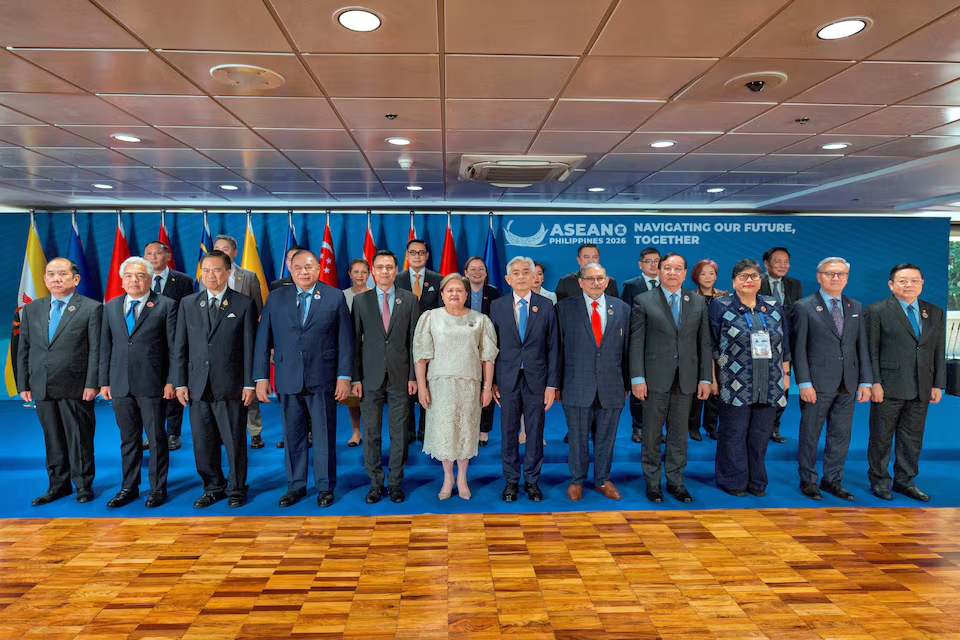
MANILA (GNP): Foreign ministers from the Association of Southeast Asian Nations (ASEAN) expressed deep concern over escalating hostilities in the Middle East as they gathered in Manila this week, with the crisis overshadowing a diplomatic agenda already crowded with regional challenges, including Myanmar’s civil war and unresolved South China Sea tensions.
The 11-member bloc’s ministers, meeting alongside major international partners, held discussions against the backdrop of renewed conflict between the United States and Iran, which has raised fears over energy supplies passing through the Strait of Hormuz and stoked concerns over inflation and global growth. Risks intensified further after Yemen’s Iran-aligned Houthi movement announced a naval blockade on Saudi Arabia, opening what officials described as a potential new front in the conflict with implications for global energy supplies and trade beyond the Gulf.
In a statement issued after a closed-door meeting, the ministers said they were “deeply concerned that these developments severely undermine the ongoing efforts of key mediators and diminish the prospects for a peaceful resolution through dialogue and diplomacy.” Southeast Asia, a major oil-importing region with a combined gross domestic product of $3.8 trillion, has sought to fast-track an ASEAN oil-sharing mechanism to mitigate the impact of the supply crunch.
Beyond the Middle East crisis, ASEAN ministers held consultations Tuesday on the conflict in Myanmar, where the bloc’s peace initiative continues to falter five years after a military coup plunged the country into a civil war that has killed an estimated 100,000 people. Officials were also expected to discuss efforts to finalize a South China Sea code of conduct between ASEAN and China, a process now approaching a decade without resolution.
Tensions between the Philippines and China sharpened ahead of an anticipated meeting between Philippine Foreign Affairs Secretary Maria Theresa Lazaro and Chinese Foreign Minister Wang Yi on the sidelines of Wednesday’s ASEAN meetings. The friction followed accusations from the Philippine military that Chinese Coast Guard personnel struck a Philippine Navy member with a baton near the disputed Second Thomas Shoal on Monday. Philippine President Ferdinand Marcos Jr. summoned China’s ambassador in Manila on Tuesday, hours after Manila’s envoy in Beijing was similarly summoned.
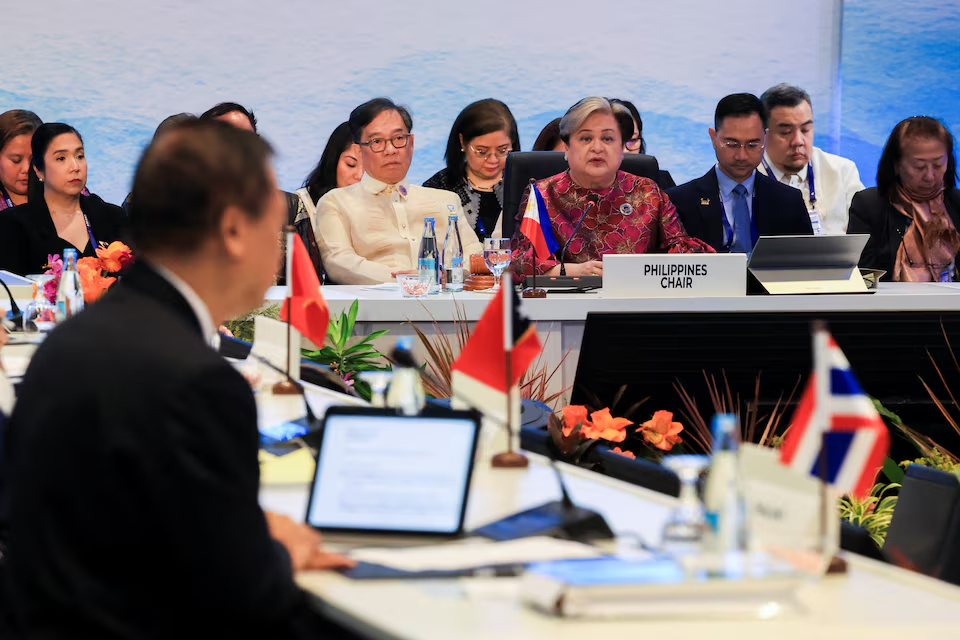
Speaking with ASEAN Secretary-General Kao Kim Hourn in Manila, Wang Yi said “certain forces within the Philippine military and police deliberately engaged in provocations and created maritime incidents,” adding that such actions served the interests of “external forces” and undermined China-Philippines relations. He said the South China Sea issue should not obstruct China-ASEAN relations and that Beijing was willing to work with the bloc to “eliminate interfering factors.” Separately, China’s foreign ministry said ASEAN was not a forum for discussing bilateral maritime disputes and called on the Philippines, as the bloc’s rotating chair, to “promote dialogue and cooperation” rather than prioritize its own political interests.
The United States, for its part, condemned what it called China’s “dangerous and aggressive” actions, describing them as part of “China’s troubling pattern of provocation against lawful Philippine maritime operations.” U.S. Secretary of State Marco Rubio, writing in an opinion piece published in Philippine newspapers upon his arrival in Manila, reaffirmed Washington’s commitment to freedom of navigation, warning that such freedom was “by no means guaranteed” and that regional states would face “dire new threats to their sovereignty, security and economic futures” should the waters fall under the control of a power willing to use commerce as a geopolitical weapon. Rubio also reiterated that a 2016 arbitral ruling invalidating China’s expansive South China Sea claims remained “final and binding,” a position China does not recognize.
Rubio and Wang are expected to join the broader ASEAN-led meetings in the coming days, with representatives from India, Japan, Australia, South Korea, Russia, Britain and the European Union also attending.
Also Read: D-8 Adopts Istanbul Declaration Ahead of COP31
The Manila meetings illustrate the widening gap between ASEAN’s stated role as a consensus-driven regional forum and the reality of a bloc increasingly squeezed by great-power rivalry it did not create. The Middle East crisis, a conflict far from Southeast Asian shores, is nonetheless reshaping the bloc’s immediate economic priorities, as reflected in the push to fast-track an oil-sharing mechanism, a sign that energy security concerns are now driving regional coordination as much as, if not more than, traditional diplomatic issues like Myanmar or the South China Sea.
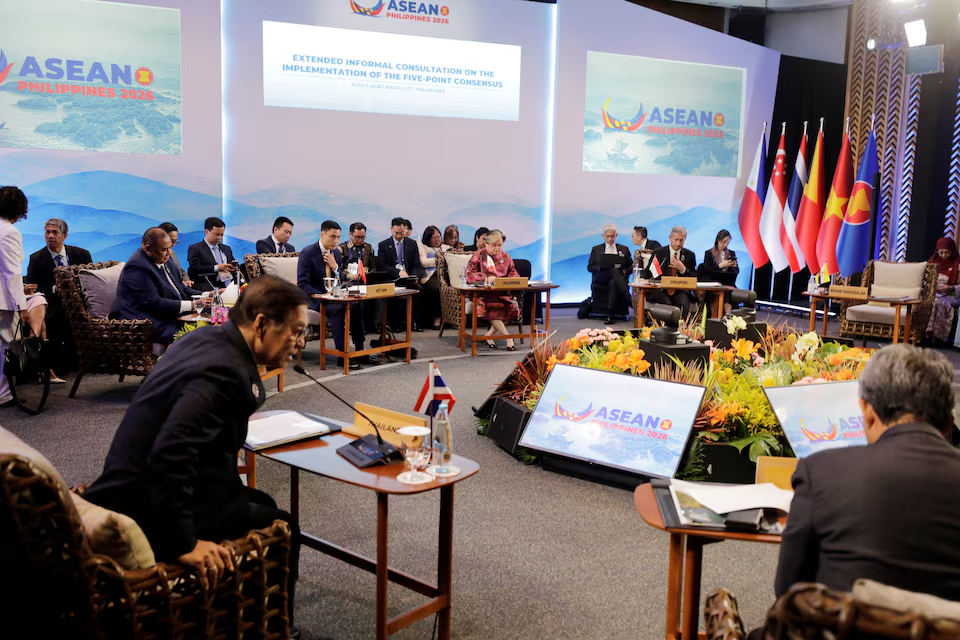
Beijing’s insistence that ASEAN is “not a forum” for bilateral maritime disputes, set against Washington’s pointed intervention through Rubio’s op-ed, suggests both powers are treating the Manila meetings less as a neutral gathering and more as a stage for competing narratives aimed at Southeast Asian audiences. For the Philippines, hosting the meetings while simultaneously managing a fresh maritime confrontation with China places Manila in a difficult position: balancing its role as ASEAN’s rotating chair, which requires projecting neutrality, against its bilateral security concerns, which point toward closer alignment with Washington.

Managing Editor at Global News Pakistan (GNP), with a Bachelor's degree in International Relations from Riphah International University, graduated with a Gold Medal. Reach out at sabahtareengnp@gmail.com