
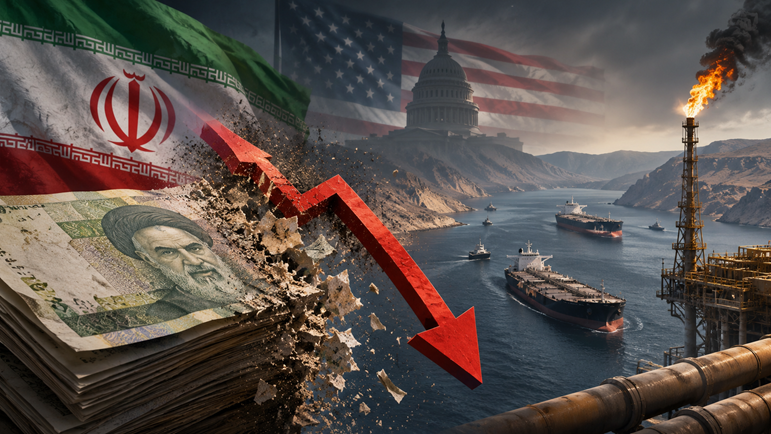
Iran’s rial has fallen to a record low, following the recent US sanctions and disrupted oil export, worsening the state’s economic crisis.
Iranian rial is at 2.856 million per US dollar, on 24 November 2026, which marked a new low. Another tracker has estimated 2.848 million riyals, which reflects the rapid decline. These are not the official Iranian administered exchange rate but the open market rates. Regardless, it holds importance as they suggest rapid decline of the currency. The current fall occurred a day after the United States declared new sanctions on financial networks that are used by Iranian businesses and agencies to access foreign currency.
This depreciation has occurred at a time of severe inflation. As per Iran statistical Centre, during the month of Maher that ended in October, the consumer prices increased 88.7% annually, while the average inflation of the last 12 months was 76.8% percent. The prices of everyday essentials such as food, beverages and tobacco were increased at the rate of 113.4%. This crisis is not just an issue of the currency market but has highlighted the wider economic stability of Iran.
On 23rd November 2026, US treasury imposed sanctions on more than two dozen front companies, exchange houses and individuals. According to the American authorities these networks facilitate the Iranian Shadow banking system. The US Financial Crime Enforcement Network identified nearly 14.7 billion dollar financial activity from January 2025 to August 2026, linking it to the shadow networks of the Iranian banking system.
The assessment also involved the financial networks of the United Arab Emirates, Hong Kong and Singapore. There were almost 2.6 billion dollar flagged transfers identified from the banks of China to UAE. It cannot be credit illegal, but they were reported as suspicious activities, according to the American government
The fall of rial reflects on the ongoing conflicts and trade crises in contemporary international relations. According to the World Bank, the intensified sanctions, regional conflict, water and energy crisis along with the trade interruptions has increased the pressure on Iran’s economy. The World Bank has warned further increase in inflation and food security if imports remain disrupted. As stated by the UK House of Commons Library briefing, the decline on Iranian ports due to US blockade has resulted in fall of oil exports.
Also Read: International Space Cooperation beyond Nasa’s Swift Mission
Regional Instability Moving Beyond Borders
Due to the international financial and energy networks of Iran the crisis has effects beyond its borders. According to the UK briefing, China receives approximately 90% of Iran’s oil export. The decrease in Iran’s oil exports and the instability surrounding the Strait of Hormuz has complicated the energy planning of several countries who depend on the suppliers of the Gulf region. However, the effects on the global energy prices would depend on the ability of alternative supplies and if the disruption period extends further.
The record low value of Iranian real could not be declared an outcome of Washington’s announcement alone. The recent American measures might have increased the pressure but according to the available evidence, the crisis are a result of persistent inflation, inaccessibility of foreign currency, decrease in oil exports and uncertainty regarding the trade routes. The World Bank has highlighted the structural limitations and energy shortages. The real concern is if this pressure could bring a change in the Iranian political structure and domestic policies without causing economic insecurity.