Human and food insecurity have become a serious threat for African states, as prolonged armed conflicts and political instability have led to the starvation of millions.
On 20 November 2026, the World Food Programme (WFP) released a warning about the reduction of humanitarian assistance due to the decline in global funding.
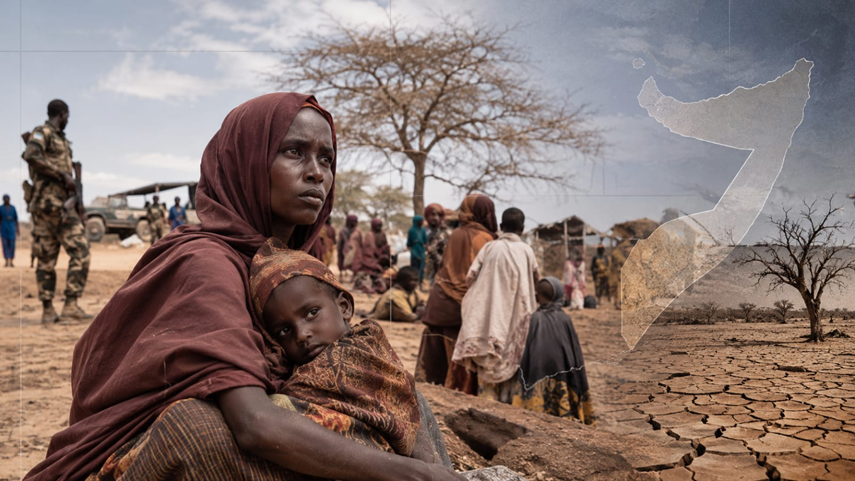
The crisis in Somalia has become alarming. The WFP requires $162 million by March 2027 to sustain its life-saving assistance efforts. This crisis shows that food security is not just a matter of agriculture or economy, but a fusion of political instability, violence and the failure of domestic institutions.
In traditional security, state integrity and military strength are the primary goals, whereas contemporary crises show that human security and matters such as hunger cannot be separated from national security.
Armed Conflicts and Climate Change as the Causes of Food and Human Insecurity
According to the Integrated Food Security Phase Classification (IPC) assessment of September 2026, the situation worsened from October to December 2026, with nearly 5.4 million people estimated to face crisis-level hunger, of whom 1.5 million face emergency-level food insecurity.
The prolonged violence and insurgency of Al-Shabaab in Somalia have weakened state authority and control over its territory. Agricultural production has been disrupted, and the situation has created hurdles for humanitarian organisations trying to reach the affected areas.
Climate change: Climate-related shocks have made the existing problems in Somalia more serious. The country has been a victim of severe droughts, with the threat of upcoming El Niño-associated flooding. Moreover, the Baidoa district also faces a potential threat of famine.
Climate change is not the direct cause of the situation, but it has intensified the vulnerability of the political and economic system. According to estimates from the Food and Agriculture Organization (FAO), the lean season from April to July 2026 saw a hunger crisis affecting approximately 7.8 million people.
Human Security as a Non-Traditional Security Concern
The example of Somalia shows the limitations of conventional security and its approaches. Through the lens of traditional security, territorial integrity and regime stability are important. Such unconventional crises are often overlooked when the prestige of a state is not considered threatened, since domestic matters do not threaten a state’s sovereignty or its power and influence in the international arena.
Also Read: United States Deep-Sea Mining Plans and the New Geopolitics of Ocean Minerals
Through the lens of human security, protecting individuals against hunger, displacement, economic crisis and disease becomes the core concern of security. If a state is able to protect its borders but the conditions of its people have worsened, the government is answerable. This has been incorporated into human rights frameworks and customary international law.
According to the World Health Organization (WHO), in August 2026 six countries of the Greater Horn of Africa experienced serious food insecurity crises, with 37.8 million people affected by hunger. Emergency funding from organisations alone cannot solve the political and institutional problems.
International organisations should not limit themselves to short-term food distribution. They should establish sustainable solutions by strengthening local agricultural systems, rebuilding infrastructure and supporting displaced populations, in addition to providing humanitarian assistance in conflict-affected areas. In conflict-affected regions such as parts of Africa, diplomatic engagement and conflict-negotiation efforts should be prioritised to address the violence and bring a lasting end to its political causes.