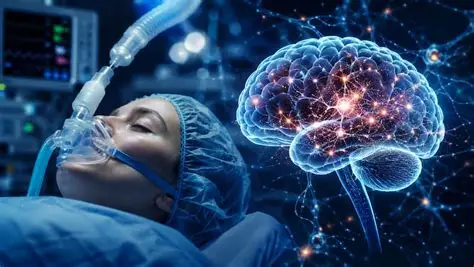
Houston (GNP): Scientists at Baylor College of Medicine have revealed that the human brain does not shut down under general anesthesia, as was long believed. Instead, it keeps listening, keeps understanding language, and even tries to guess what word is coming next in a story, even when the person is completely unconscious and unaware of what is happening around them.
What makes this study different is how it was done. Doctors were already operating on epilepsy patients who were fully asleep under anesthesia, and they got a rare chance to place tiny advanced sensors called Neuropixels directly into the hippocampus, the deep part of the brain that handles memory. This cannot normally be done in a living person who is awake, so it was a one-of-a-kind opportunity.
While the patients were out, the team played simple sounds and then full stories, and watched what hundreds of brain cells were doing in real time.
At first, they played the same tone again and again with a strange tone in between. Even under deep anesthesia, the brain cells noticed the odd one out. Slowly, those cells got even better at catching the strange sound, which means the brain was actually learning without consciousness.
Then came the real surprise. When the stories were played, the hippocampus started firing differently for nouns, verbs and adjectives. It was not just hearing noise, it was sorting language by meaning.
The most mysterious finding is that the brain appeared to predict the next word before it was even spoken, as if it was trying to finish the sentence on its own.
Also Read: Early Studies Show GLP-1 Drugs Slowing Biological Ageing
Doctors say the result changes what is known about consciousness. This does not mean patients are awake during surgery, but it does mean unconsciousness is not a blackout. The brain stays active and keeps analysing the world.
The team now wants to check whether the same happens in sleep or coma. The work could one day help scientists build better devices for people who cannot speak after brain injuries.
Dr Sameer Sheth of Baylor, who led the research published in Nature, said, “The brain is doing much more behind the scenes than we fully understand.”