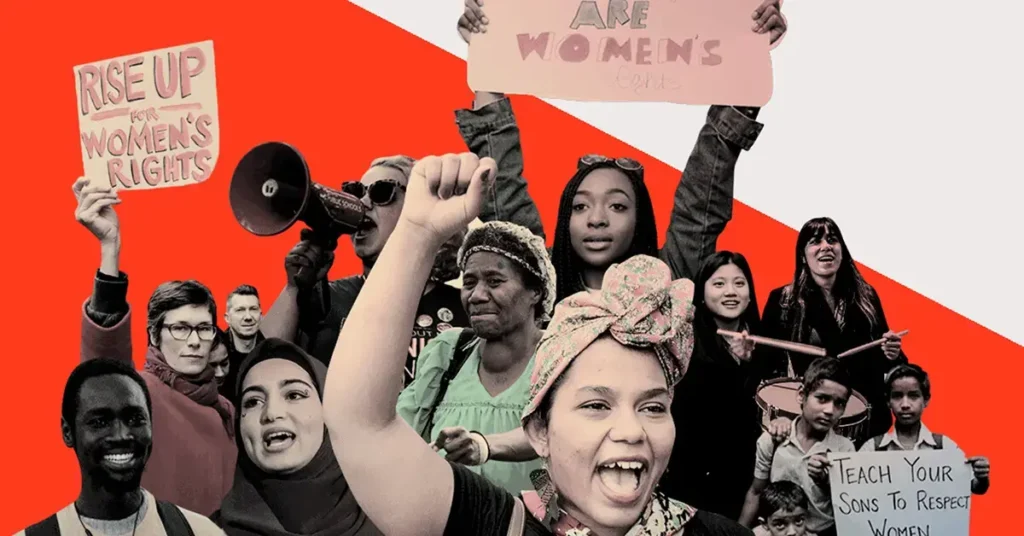
New York (GNP): UN Women is calling for equal power and access to decision making as world leaders gather for the 81st session of the United Nations General Assembly, emphasizing that women’s meaningful participation in political, economic and social decision-making remains central to achieving equality.
In a message shared ahead of and during the UN General Assembly high-level week, UN Women highlighted the continuing consequences of women’s exclusion from positions of power.
The agency’s message stresses that formal commitments to equality are not sufficient if women remain systematically underrepresented in the institutions and decisions that shape societies.
The issue is being raised as world leaders gather in New York for the 81st session of the General Assembly.
The UN General Assembly’s high-level week is taking place from September 18 to 28, with the general debate and related meetings providing a major platform for governments to discuss international priorities.
UN Women’s campaign message centres on the principle that equality requires access to power and decision-making, rather than representation that exists only in principle.
The agency argues that women and girls need meaningful opportunities to participate in decisions affecting their lives and communities.
This includes representation in political institutions, leadership positions, workplaces and other areas where policies and priorities are established.
The issue of women’s political representation remains a major international development concern. Women continue to face barriers to entering and advancing within political institutions and leadership structures in many parts of the world.
The United Nations has identified gender equality and women’s empowerment as fundamental components of sustainable development.
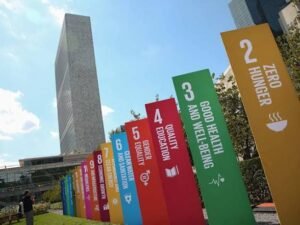
Sustainable Development Goal 5 calls for achieving gender equality and empowering all women and girls, while other SDGs also address inequalities affecting women’s access to education, employment, health and economic opportunities.
UN Women’s latest message places particular emphasis on the relationship between representation and power.
Also Read: UN Calls for Equal Pay for Women Worldwide
Having women present in institutions does not necessarily guarantee equal influence over decisions. Meaningful participation involves having opportunities to shape policies, priorities and outcomes.
The organization is therefore using the General Assembly platform to highlight the broader question of who has access to decision-making and whose perspectives are reflected in public institutions.
The theme also connects with wider discussions taking place throughout the UN General Assembly and its SDG Media Zone.
The 2026 SDG Media Zone programme includes sessions on women peacekeepers, feminism and artificial intelligence, leadership and other issues connected with inclusion and global development.
Women’s participation in peace and security is one area where the question of decision-making has particular significance.
The UN has repeatedly highlighted women’s role in peacebuilding and conflict prevention, while women peacekeepers and women in security institutions can contribute perspectives and experiences that might otherwise be underrepresented.
The changing technology landscape is another area highlighted by the UN’s 2026 programme. Artificial intelligence is increasingly affecting employment, education, information, public services and economic activity.
Discussions around feminism and AI therefore raise questions about whether emerging technologies will reproduce existing inequalities or create opportunities for broader participation.
Leadership is also part of the discussion. The SDG Media Zone’s programme includes a session examining the kind of leadership needed in the current global environment, linking leadership with broader questions of social progress and international cooperation.
UN Women’s message comes within a wider international effort to assess progress on the Sustainable Development Goals.
The United Nations has reported that only a portion of SDG targets are currently on track or making moderate progress, underscoring the need for accelerated action across the development agenda.
Gender equality intersects with many of those goals. Women’s access to education, employment, healthcare, economic resources and political participation can influence outcomes well beyond SDG 5.
Equal participation is also connected to poverty reduction, decent work, stronger institutions and inclusive economic development.
The discussion is particularly relevant as governments prepare and implement policies affecting the future of work, digital transformation, climate adaptation, healthcare and social protection.
Decisions in these areas can have different effects on women and men, making representation in policymaking an important part of inclusive governance.
UN Women’s call for equal power therefore extends beyond the number of women occupying formal positions.
It concerns whether women have genuine opportunities to participate in decisions and whether institutions remove barriers that prevent their full participation.
For women and girls, greater access to leadership and decision-making can also have implications for younger generations. Visible representation can broaden perceptions of who can occupy positions of authority and contribute to more inclusive institutions.
As world leaders gather for the UN General Assembly, UN Women is using the international platform to reinforce its message that equality requires more than formal recognition.
It requires meaningful participation in the places where decisions are made. The discussion is expected to remain part of the broader UN agenda as governments, international organizations and civil society examine progress toward gender equality and the Sustainable Development Goals.