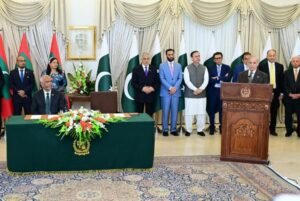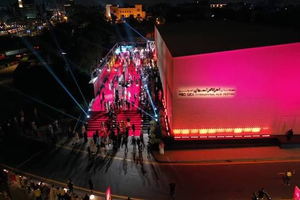
On August 26, one of the presentations at the Center for Islamic Civilization in Tashkent brought an Uzbek scholar and a technology executive together to discuss artificial intelligence and old manuscripts. The following morning, visiting journalists were in Samarkand, walking through the Imam al-Bukhari Complex and learning about the work of the School of Hadith Studies.
The forum moved between those two settings all week. One was concerned with preserving and teaching a centuries-old scholarly tradition. The other asked what happens when that tradition meets AI, film, television and social media.
This was the central concern at the International Media Forum “Islamic Civilization: New Perspective – New Discoveries,” held in Uzbekistan during the final week of August. Its programme was crowded: Qur’anic calligraphy, documentary films, digital avatars, publishing projects, historical research, Islamophobia and journalism all appeared on the agenda.
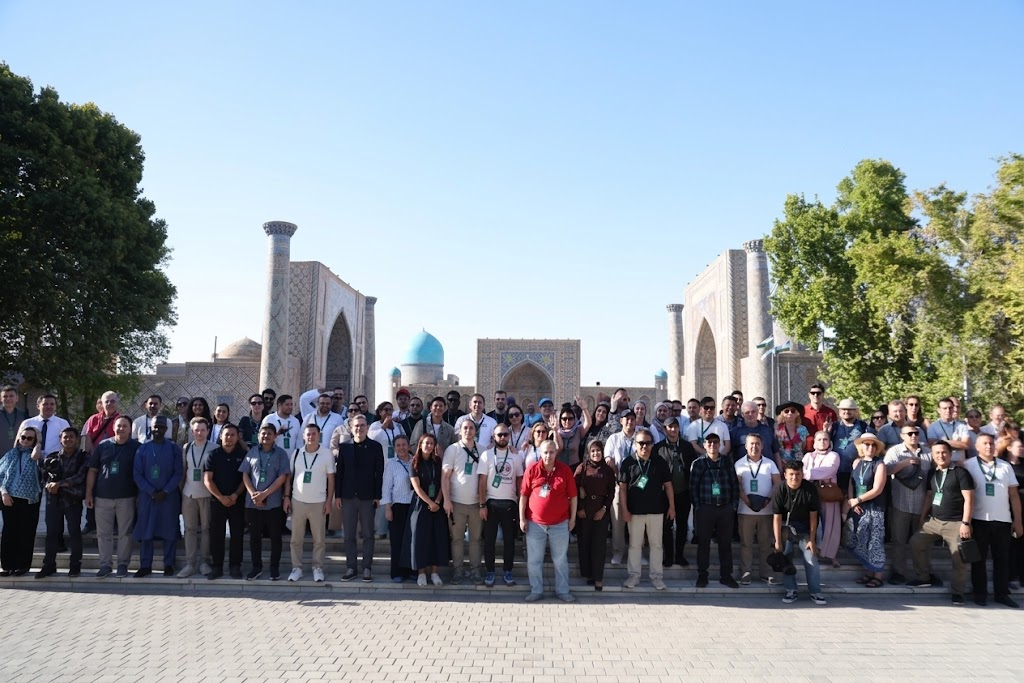
UzA reported that just under 300 people from 43 countries took part. The guest list included reporters, media managers, producers, academics and technology specialists. Official events were held in Tashkent and Samarkand as part of a programme scheduled for August 24-29.
Large international forums often try to cover too much. This one probably did as well. Yet the mixture made sense because the problem being discussed does not belong to one profession. A historian may establish what a manuscript says. A journalist or filmmaker still has to decide how to explain it to somebody who has never heard of the text, the author or the period.
That second part is where many heritage projects struggle.
More than a museum event
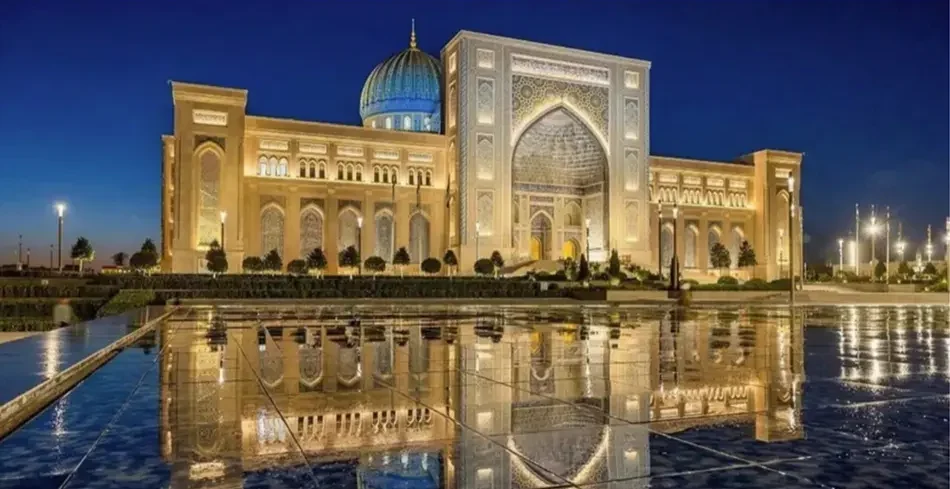
Uzbekistan has spent years building the Center for Islamic Civilization near the Hazrati Imam complex in Tashkent. The project began under a presidential decree issued in 2017. Its scale is unusual: the site covers ten hectares and the building has more than 42,000 square metres of usable space, according to the President’s official website.
The building is large enough to command attention before a visitor sees a single exhibit. Size, however, is the easy part to understand. The more interesting question is what kind of institution will operate inside it.
The Center holds exhibitions, manuscripts and research facilities, but the forum showed that it also wants to become a media platform. That means producing material for people who will never enter the museum. It also means working with organisations that know how to reach audiences in different countries and languages.
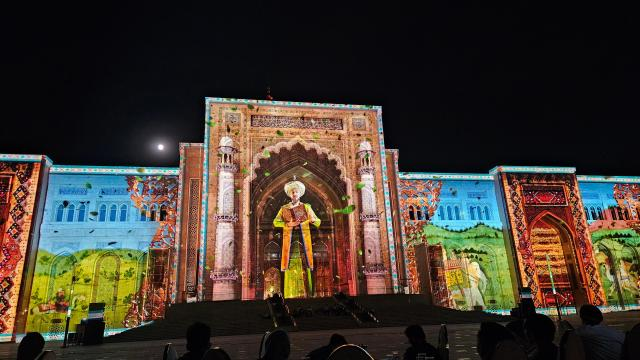
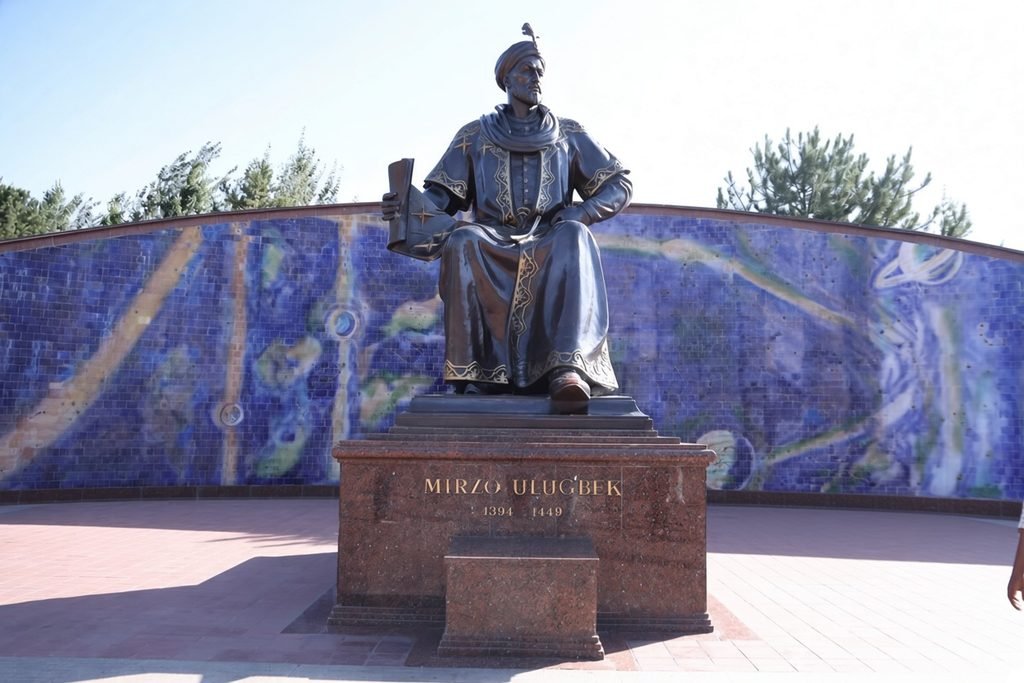
This is important for Uzbekistan because Central Asia still occupies an uncertain place in popular accounts of Islamic history. People across the Muslim world know the names of Imam al-Bukhari, Al-Khwarizmi, Al-Biruni and Ibn Sina. Far fewer know much about the towns, teachers, libraries and intellectual networks around them.
The usual response is to repeat that these scholars made major contributions to humanity. Repetition does not necessarily create understanding. Al-Khwarizmi becomes much more interesting when a viewer sees the problem he was trying to solve and the scholarly environment in which he worked. The same applies to Ibn Sina. Calling him a great physician is correct, but it is only the beginning of a story.
The forum’s focus on film, books and digital media was therefore not a side programme added to a historical event. It addressed a gap between academic knowledge and what reaches the public.
The technology discussion needs rules
The most eye-catching ideas involved AI and immersive media. Digital tools can help catalogue large collections, compare texts and make rare material available without repeated handling of a fragile original. A virtual exhibition can reach a classroom in Karachi, Jakarta or London at a fraction of the cost of sending the collection abroad.
Those advantages are real. The risks are easy to overlook when a demonstration looks impressive.
Old manuscripts are difficult even for trained specialists. Handwriting varies. Pages may be damaged. A word may carry a technical meaning that has no simple equivalent in modern English, Uzbek or Urdu. Software can suggest a reading, but it cannot turn a disputed passage into a settled fact.
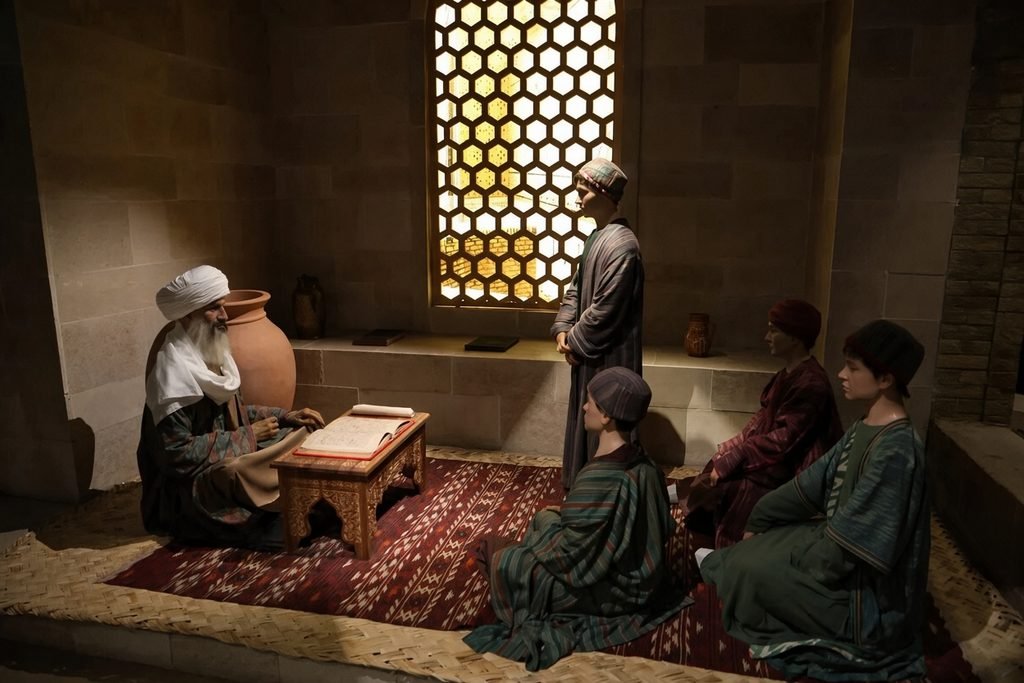
The same problem becomes more visible with digital historical characters. If an avatar is built to speak as a famous scholar, who writes the answers? Which sources are used? What happens when historians disagree? A visitor may assume that a confident voice on a screen is repeating documented words, although part of the response is a modern reconstruction.
The forum raised the right subject, but the next stage should deal with these ordinary editorial questions. Digital projects need source notes. Reconstructions should be labelled. Scholars should review the material before release, and corrections should remain visible afterward.
On August 26, the programme placed the AI discussion alongside work on the Katta Langar Qur’an and a project presenting 114 examples of Qur’anic calligraphy. UzA’s account of the session also mentioned documentary film, publishing and a discussion on media responses to Islamophobia.
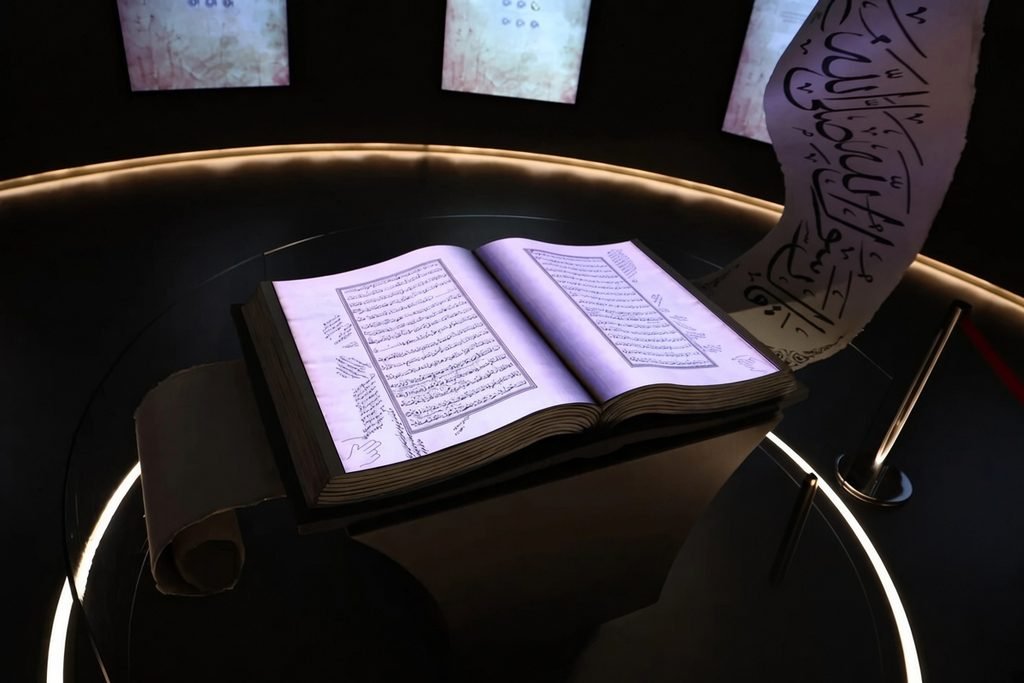
It was an unusual combination, but a useful one. The manuscript is not made less important by being digitised. The digital copy is not trustworthy merely because it looks clear on a screen. Each requires careful work behind the image.
The missing middle between scholars and audiences
Much of the forum dealt with historical figures. That is understandable. People are more likely to begin with a life story than with a broad lecture on several centuries of intellectual history.
There is a weakness in this approach, especially when every figure is presented as a flawless genius. The audience meets the same character in different clothing: brilliant from childhood, misunderstood by others and eventually recognised by the world. Real lives are messier and usually more memorable.
A good documentary about Imam al-Bukhari, for example, would not need to rely only on praise. It could show how hadith scholarship developed, why chains of transmission mattered and how scholars assessed the reliability of reports. That gives viewers something to follow. It also helps them understand why his work continues to carry authority.
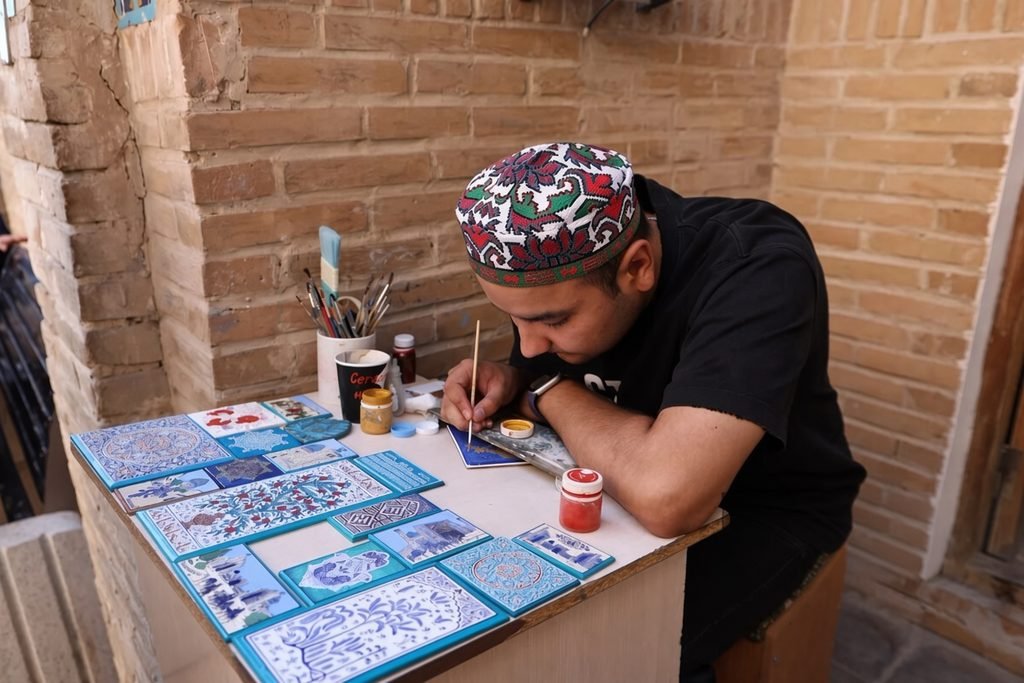
The same method works for science. Instead of saying that Central Asian scholars advanced astronomy, a short film can recreate one measurement and show the instruments, calculations and mistakes involved. A podcast can follow the journey of a manuscript from one library to another. An interactive map can show how a text crossed regions and languages.
These formats do not simplify history automatically. They simplify it badly only when the production team starts with a message and treats evidence as decoration.
The Center has access to researchers, collections and international media contacts. Its most valuable role may be bringing those groups together early, before a script or exhibition is already finished.
Students need work, not another audience seat
Young people appeared frequently in the forum programme. International media professionals held meetings linked to universities, and the Center discussed cooperation with journalism education.
Masterclasses are useful, but they are easy to forget. A student listens to a prominent editor for an hour, takes a photograph and returns to the same classroom routine the next day.
Paid reporting assignments would leave more behind.
The Center and its media partners could select small teams of student journalists from several countries and give them access to one collection or research project. Each team would have an editor and a subject specialist. Their work could be published as short documentaries, written features, podcasts or visual explainers in several languages.
The result would not have to be ceremonial. A team might investigate why two museums describe the same object differently. Another could trace how an unverified story about a scholar became popular online. Students would learn interviewing, source checking and production while the Center received material made for an audience close to their own age.
That would answer one of the forum’s repeated questions about younger viewers. Instead of guessing what they want, let some of them report the story.
Why the discussion matters in Pakistan
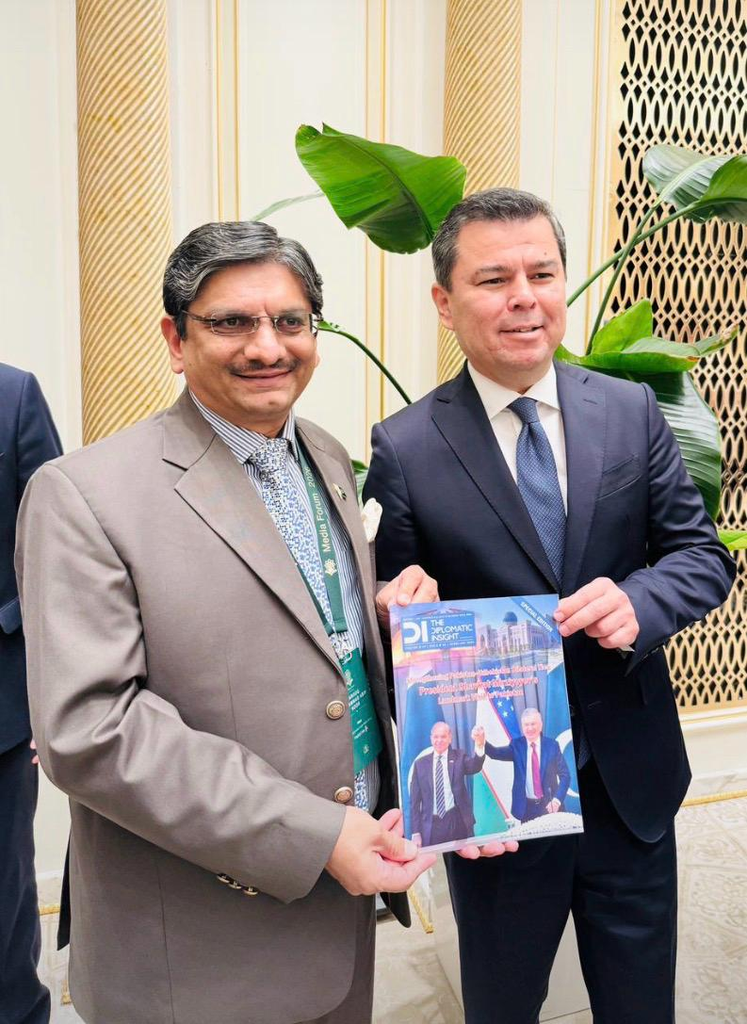
Pakistani media organisations took part in the Tashkent gathering, and the connection is not difficult to see. The scholars discussed at the forum are already present in Pakistan’s religious, educational and cultural life. Their names are familiar in mosques, schools and universities, even when the historical setting around them is not.
Uzbekistan has the sites, collections and research institutions. Pakistan has a large Urdu-language audience, active television and digital news industries, publishing experience and its own community of Islamic scholars. A joint project could use those strengths without turning into another official documentary filled with formal speeches.
One practical starting point would be a multilingual series on how knowledge moved between Central and South Asia. Another could follow the history of a single text now studied in both regions. The subject does not need to be monumental. A narrow, well-researched story is often more convincing than a film that promises to explain an entire civilisation.
The same principle applies to news coverage. Reports from international forums usually end with a list of speakers and a sentence about strengthening cooperation. Readers rarely learn what was agreed, who will do the work or when anything will be published.
Media partners can ask those questions because they are participants and reporters at the same time. Their coverage will be more valuable if it returns to the projects several months later.
Also Read: Tashkent Media Forum Advances Global Dialogue on Islamic Heritage
Samarkand brought the discussion back to people
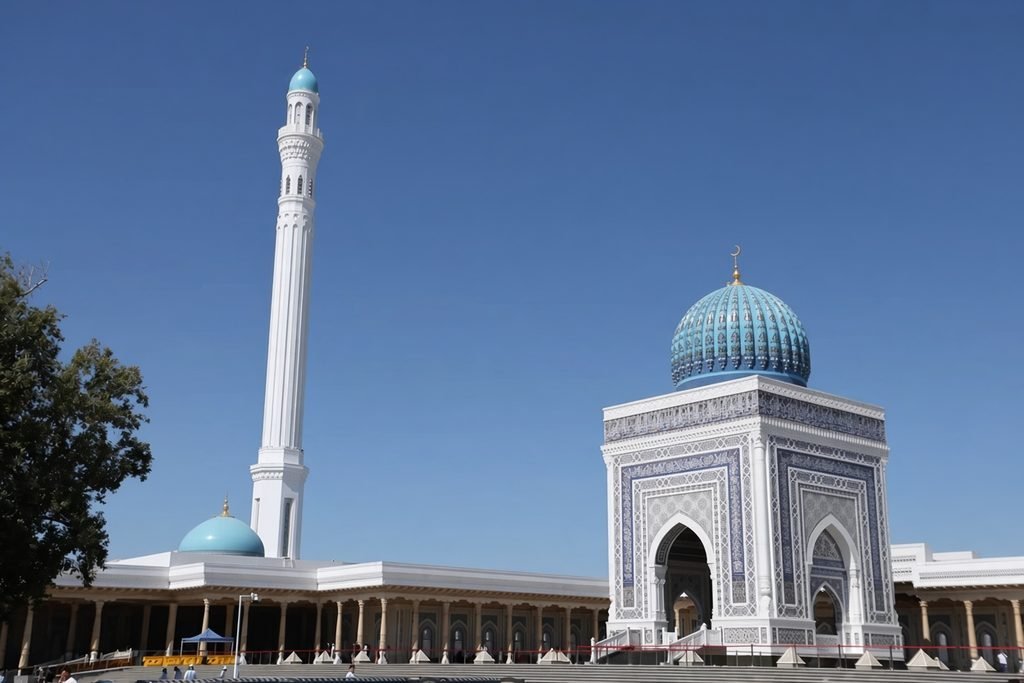
The August 27 trip to Samarkand gave participants a different view of preservation. At the Imam al-Bukhari Complex, they were dealing with a place of pilgrimage, study and memory rather than an item on a production schedule.
They also visited the School of Hadith Studies. The Center’s report on the trip says students there study the Qur’an, hadith, tafsir, fiqh, aqidah and Islamic history, together with foreign languages and modern research approaches.
This is the part that digital exhibitions cannot replace. A collection needs people who can read it. A historical film needs somebody able to catch an attractive but inaccurate claim. Translation requires more than exchanging one word for another.
The media enters after that work has begun, not before it. Its purpose is to help the knowledge travel without stripping away the context that gives it meaning.
What should be checked next year
The available public material says a great deal about panels, presentations and visiting organisations. It says less about deadlines and finished products. That is normal during a forum, but it should not remain normal afterward.
By this time next year, there should be straightforward answers. Which films entered production? Did any of the publishing projects reach readers? How much collection material became searchable? Were young reporters commissioned? Did work appear in Urdu, Arabic, Turkish or other languages? Which foreign outlets continued to consult Uzbek researchers after the event?
The answers may be modest. That is fine. Three completed projects are worth more than thirty announcements that never leave a conference hall.
The Tashkent forum was strongest when it treated media as part of heritage work, not simply as a way to publicise it. It put historians, journalists, producers and technology specialists in the same programme and gave them a reason to speak to one another.
Now the presentations have to turn into work that people can actually watch, read, search and question.
If that happens, the forum will be remembered for more than its guest list. If it does not, it will become another well-covered event about the need for better coverage.