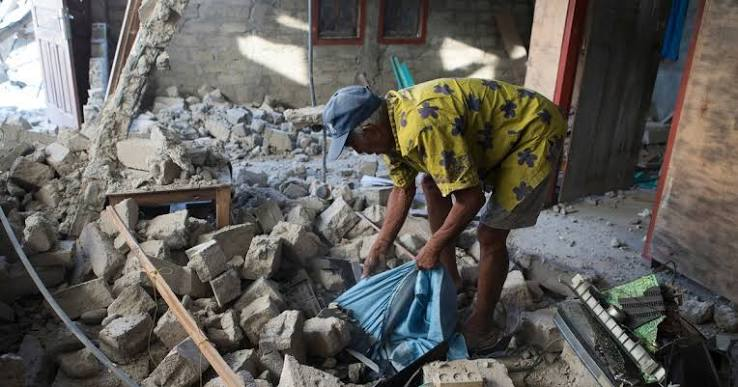
Flores (GNP): An 84-year-old woman has been found alive in the ruins of her home three days after a powerful earthquake struck eastern Indonesia, offering a rare moment of relief in a disaster that has killed at least 73 people and displaced nearly 60,000 others.
Paulina Pobi was pulled from the collapsed bamboo remains of her house in Nitunglea village on Tuesday, after a landslide triggered by the quake had blocked access to the area and left her trapped since the initial disaster on Saturday.
The 7.7-magnitude earthquake struck off Indonesia’s Flores island on Saturday morning, injuring more than 900 people in addition to the confirmed death toll, and setting off a rescue operation that continued for days across the affected region.
Sikka regency police official Bambang Supeno confirmed that Pobi had since been evacuated safely and taken to the nearest health centre for treatment, marking the end of an ordeal that local officials described as almost unbelievable.
Local official Rudolfus Riba explained that Pobi’s paralysis had left her unable to move or call for help, delaying her discovery until the fourth day after the quake. Says Riba, “Because she was paralysed, she couldn’t move or speak, so it wasn’t until the fourth day that her family finally found her.”
He added that despite days without food or water, she had sustained no injuries. Says Riba, “She is in good health; there were no injuries at all. She was just a bit weak because she hadn’t eaten or drunk anything for days,” calling her survival “almost like a miracle.”
While Pobi’s rescue offered a moment of hope, the broader recovery effort across Flores remains difficult. Grocery stores, petrol stations and other shops have begun reopening on the island, though debris continues to cover many streets as search teams keep digging through rubble for possible additional victims.
Indonesia’s disaster mitigation agency reported that 398 tons of aid, including food, tents, shelters and public donations, have been transported to affected communities, though the mountainous terrain and roads damaged by the shallow quake have slowed distribution. Disaster agency spokesperson Berton Panjaitan said the government has expanded the use of military aircraft, ships and personnel to reach remote areas still cut off from support.
Also Read: WHO Highlights Community Health Volunteers’ Role in Ebola Prevention
More than 3,000 aftershocks have been recorded since Saturday, with at least 86 strong enough to be felt by residents, according to Indonesia’s geological agency, leaving many survivors too afraid to return to their damaged homes.
Regional police chief inspector general Rudi Darmoko said the psychological toll of the disaster is significant. Says Darmoko, “These refugees are not only physically injured, but they also have mental health issues that we must not ignore, especially for children.”
Indonesia experiences frequent seismic activity due to its position on the Pacific “Ring of Fire,” a zone of intense earthquake and volcanic activity stretching from Japan through Southeast Asia and across the Pacific Ocean. The country’s history includes the 2004 magnitude 9.1 earthquake off Sumatra, which triggered a tsunami that killed approximately 220,000 people across the region, including about 170,000 in Indonesia.