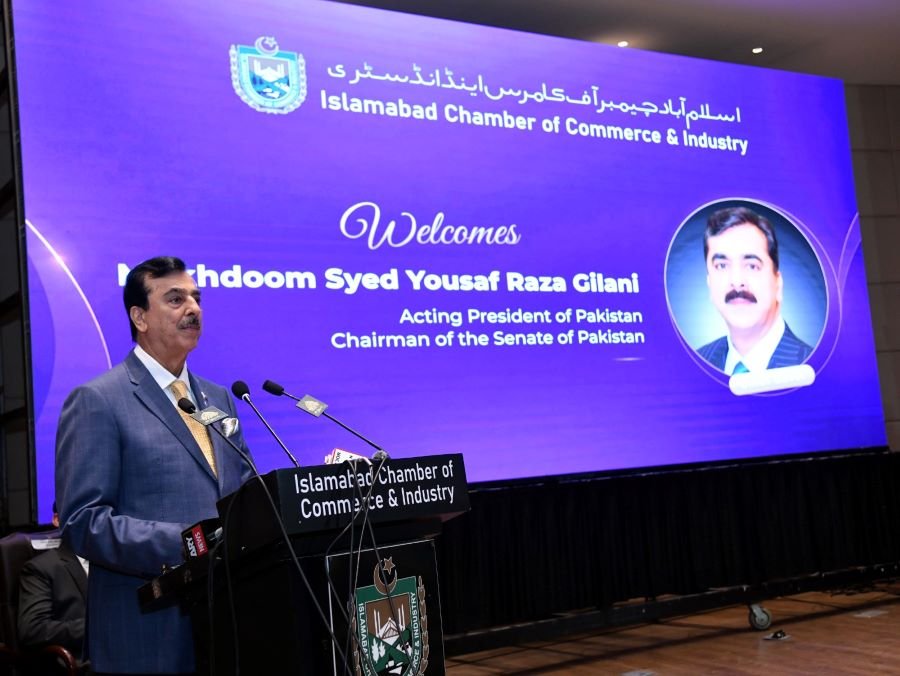
Islamabad (GNP): Acting President Syed Yousaf Raza Gillani urged for equal representation of women as a means to fully harness Pakistan’s economic capabilities.
Speaking at the Pakistan Women Leadership & Policy Summit 2026, hosted by the Islamabad Chamber of Commerce & Industry (ICCI), Gillani stated that Pakistan cannot achieve its full potential in democracy, economic advancement, or social unity without women playing an equal role in shaping the nation’s institutions, economy, and direction.
He noted that involving women in leadership and decision-making roles is fundamental to creating an inclusive, forward-moving society. According to Gillani, women deserve genuine opportunities to engage in public institutions, economic ventures, and policy formation, as their input can improve decision-making and reinforce democratic values.
The Acting President called for policy frameworks that support women’s growth in business, employment, education, technology, and civic life. He said the country must keep dismantling obstacles that hold women back and make sure that development strategies account for the needs and ambitions of every segment of society.
Gillani framed women’s empowerment as more than just a matter of fairness — describing it instead as a critical engine for economic and national growth. He commended the private sector and organizations like ICCI for advancing women’s economic inclusion and fostering spaces for constructive dialogue, expressing optimism that the summit would yield actionable ideas to enhance women’s roles in shaping Pakistan’s future.
ICCI President Sardar Tahir Mehmood remarked that women’s leadership has evolved from being a social inclusion issue to becoming a strategic imperative for Pakistan’s economic transformation. He insisted that women be given equal access to entrepreneurship, jobs, technology, policymaking, and leadership positions, and called on policymakers to dismantle systemic obstacles limiting their economic participation. He warned that Pakistan cannot pursue sustainable, inclusive growth while overlooking a substantial share of its workforce potential.
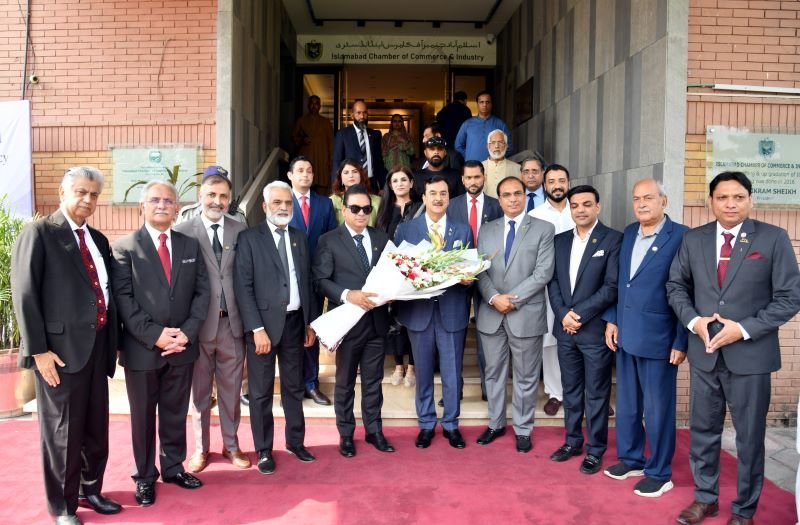
He further pointed to the mounting difficulties facing Islamabad, especially around funding for the capital’s development. He argued that Islamabad deserves a fair allocation under the National Finance Commission (NFC) Award, noting that the city should not be shortchanged on fiscal resources even as it faces rising demands for infrastructure, municipal services, and urban growth. A just fiscal arrangement for Islamabad, he said, is necessary to meet its expanding development needs and keep pace with national progress.
Panel discussions covered topics including women’s leadership, policy representation, economic empowerment, entrepreneurship, and institutional reform, along with the importance of building an environment conducive to greater female participation in development.
Speakers stressed the value of inclusive policymaking, leadership training, equal access, and closer cooperation between government, business, academic institutions, and civil society to convert women’s potential into real economic and social progress.
ICCI Senior Vice President Tahir Ayub served as stage secretary for the event. The ICCI Vice President delivered the vote of thanks, expressing appreciation to Acting President Gillani for attending. Kashif Qureshi, Chairman of the ICCI Standing Committee on Social Mobilization and Communication, and Vice Chairperson Muqaddas Choudhry also spoke at the event.
Also read: Food security lies at the heart of FAO’s mandate, James
Also present were ICCI former President Mohammad Ejaz Abbasi, Executive Members Fatima Azim, Zulqurnain Abbasi, and Imran Minhas, along with former Senior Vice President Khalid Chaudhry.

Sohail Majeed is a Special Correspondent at The Diplomatic Insight. He has twelve plus years of experience in journalism & reporting. He covers International Affairs, Diplomacy, UN, Sports, Climate Change, Economy, Technology, and Health.