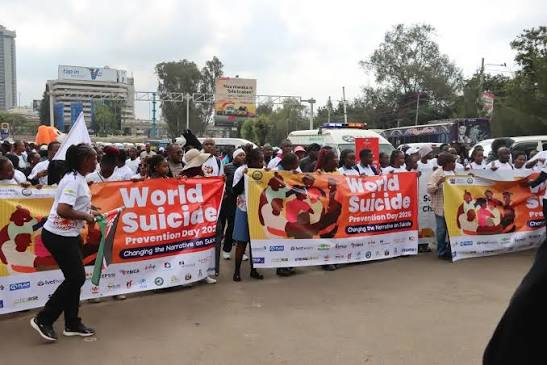
Geneva (GNP): The World Health Organization has renewed its global call for suicide prevention as the world marked World Suicide Prevention Day on September 10, closing out the third and final year of the triennial theme “Changing the Narrative on Suicide.”
This year’s theme carries the call to action “Start the Conversation,” urging governments, institutions and communities to challenge harmful myths, reduce stigma, and foster open, compassionate discussion around suicide.
According to WHO, more than 720,000 people die by suicide every year, making it the third leading cause of death among people aged 15 to 29 globally in 2021. Each death carries lasting social, emotional and economic consequences for families, friends, workplaces and communities.
The burden falls disproportionately on lower-income countries, with WHO data showing that 73 percent of global suicides occurred in low- and middle-income countries in 2021, underscoring that suicide is a worldwide public health challenge rather than one confined to wealthier nations.
WHO notes that suicide is influenced by a complex mix of social, cultural, biological, psychological and environmental factors across a person’s life course. While suicide is closely linked to mental disorders such as depression and alcohol use disorders in high-income countries, many suicides also happen impulsively during moments of acute crisis, often triggered by financial difficulty, relationship breakdown or chronic illness.
To address this, WHO’s LIVE LIFE initiative recommends four evidence-based interventions: limiting access to common means of suicide, encouraging responsible media reporting, building socio-emotional life skills among adolescents, and ensuring early identification and follow-up care for people affected by suicidal behaviour.
Also Read: Polio Vaccine Refusals Spread to Rawalpindi’s Affluent Neighbourhoods
WHO has identified stigma as one of the biggest barriers to progress, noting that fear and taboo around discussing suicide openly prevent many people from seeking help. Currently, only 38 countries report having a national suicide prevention strategy in place.
Data quality remains another significant obstacle, with only around 80 WHO member states holding vital registration data reliable enough to accurately estimate suicide rates, a gap that WHO says likely leads to significant under-reporting globally.
World Suicide Prevention Day was established in 2003 by the International Association for Suicide Prevention in partnership with WHO, and continues to unite governments, organisations and communities each year around the shared belief that suicide is preventable.