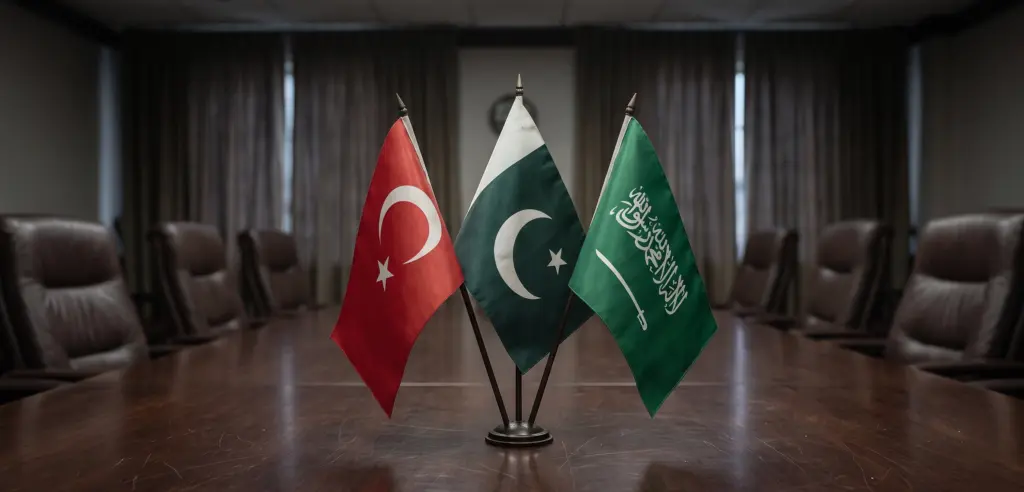
Islamabad (GNP): The foundational principle of the Mecca Joint Defence Agreement remains intact, and the alliance is not in jeopardy despite the complex security and diplomatic challenges created by the Houthi attacks on Saudi Arabia, said Sardar Masood Khan, Former Ambassador of Pakistan to the United States, China and the United Nations, and former President of Azad Jammu and Kashmir.
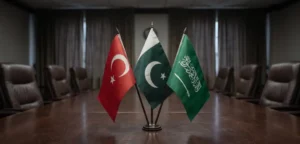
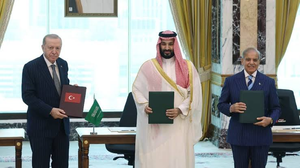
Writing in Al Jazeera Arabic, Sardar Masood Khan said Pakistan was bound by two defence agreements with Saudi Arabia: the 2025 Pakistan-Saudi Strategic Mutual Defence Agreement and the Mecca Joint Defence Agreement between Pakistan, Saudi Arabia and Türkiye. Both agreements contain a collective-defence principle under which an armed attack against one of the signatory states is regarded as an attack against all.
He said the practical application of the Mecca Agreement had now become an immediate question following Houthi attacks on Saudi territory and along the Red Sea and Bab-al-Mandab Strait. The situation, he noted, has created a difficult diplomatic challenge for Pakistan, which has simultaneously maintained close ties with Saudi Arabia while pursuing a mediatory role between Iran and the United States.
Sardar Masood Khan stressed that the founders of the alliance had provided conceptual clarity by defining its purpose as collective deterrence rather than an offensive or aggressive arrangement. The agreement envisages military exercises, greater interoperability, defence procurement and joint defence production. He also noted that the alliance was not conceived as a sectarian bloc, did not include a nuclear weapons component and was not directed against any particular country. The agreement itself does not name an adversary.
However, he pointed out that strategic ambiguity remains regarding the precise trigger and threshold for Pakistan’s military intervention. The alliance is still in its formative phase and is undergoing institutionalisation before becoming fully operational. Nevertheless, Pakistan has for decades contributed to Saudi Arabia’s security, including through personnel, training and defence cooperation.
Sardar Masood Khan said the Mecca Agreement could already be considered partially, if not fully, operative, based on Pakistan’s public commitments and deployments under its existing defence arrangements with Saudi Arabia. He added that the collective-defence principle was neither cosmetic nor merely performative and would remain central to the alliance.
He said the Houthi attacks had complicated regional diplomacy, particularly as Saudi Arabia had sought support from different partners while the United States had pursued its own engagement with the Houthis. The reported and disputed claims regarding an attack on Makkah had further heightened sensitivities across the Muslim world.
Sardar Masood Khan described Pakistan’s position as a diplomatic tightrope: it must stand firmly with Saudi Arabia while continuing its efforts to mediate between Iran and the United States, as well as between Iran and Saudi Arabia.
Also read: The Mecca Pact’s Moment of Truth
He concluded that the ultimate objective should be an end to the multi-front conflict and genuine rapprochement between Riyadh and Tehran. “No country will win on the battlefield,” he said, stressing that diplomacy could provide solutions beneficial to all sides.

Sohail Majeed is a Special Correspondent at The Diplomatic Insight. He has twelve plus years of experience in journalism & reporting. He covers International Affairs, Diplomacy, UN, Sports, Climate Change, Economy, Technology, and Health.