The restoration of our country’s sovereignty in the difficult political and economic conditions of the 1990s took place against the backdrop of profound geopolitical changes. At the same time, the domestic political and military crisis created the need to develop an effective foreign policy, whose primary goal was to create favorable international conditions to ensure security, protect national interests, and achieve the country’s strategic development goals.
Over the past 35 years of independence, the country has strengthened its position on the global stage as a full-fledged actor in international relations and made significant contributions to resolving important regional and global issues. One of the most important achievements of the republic’s foreign policy since independence is the international recognition of the Leader of the Nation, President of the Republic of Tajikistan Emomali Rahmon, as an outstanding and proactive politician.
Over the past 20 years, the President has made significant contributions to addressing pressing issues facing the international community, putting forward constructive initiatives of global significance. These initiatives have strengthened the foundations for the formation and development of Tajikistan’s foreign policy and significantly enhanced the country’s international prestige.
In particular, among the most important achievements of Tajikistan’s foreign policy are international initiatives in the areas of water resources, glacier protection, climate change, and sustainable development, which have significantly enhanced Tajikistan’s international reputation and influence.
In the first decade of independence, Tajikistan faced serious political, military, social, and economic challenges that posed a real threat to the strengthening of national statehood and the protection of state sovereignty. Following the signing of the General Agreement on the Establishment of Peace and National Reconciliation (1997), a new stage in the development of Tajik statehood began.
This process created a favorable foundation for protecting national interests, expanding international cooperation, and promoting Tajikistan’s sustainable development. It also attracted attention and earned high praise in the search for solutions to global problems, including as an advocate for the peaceful resolution of international conflicts.
Even at the height of the civil war in Afghanistan, Tajikistan’s President Emomali Rahmon emphasized the need for a swift end to the armed conflict and the initiation of peace talks between the warring parties, calling on the international community to assist in restoring peace and stability in the country.
Peace and stability in Afghanistan, Palestine, and other political conflicts around the world defined his policies. In 1998, at a session of the UN General Assembly, the President of Tajikistan proposed creating a “security belt” around Afghanistan to combat drug trafficking and strengthen regional security. This initiative helped draw the international community’s attention to transnational threats.
Tajikistan’s consistent position on the situation in Afghanistan, the Palestinian issue, and other international crises has always been based on the need to restore peace and stability, strengthen dialogue, and strengthen international cooperation.
Continuing Tajikistan’s peacebuilding policy is a new proposal by the President of the Republic of Tajikistan at the 79th session of the United Nations General Assembly (2024). At this meeting, the Leader of the Nation proposed the adoption of a special resolution proclaiming the “Decade for Consolidating Peace for Future Generations.” It was adopted by the UN General Assembly on June 25, 2026.
The adoption of the UN General Assembly resolution proclaiming 2027-2036 the International Decade for Consolidating Peace for Future Generations is an important event in the current agenda of international peace and security. In this context, UN Secretary-General Antonio Guterres sent a congratulatory message to the President of the Republic of Tajikistan, the Honorable Emomali Rahmon, on the occasion of the International Decade for Consolidating Peace for Future Generations (2027-2036).
One of the most important diplomatic events since our country proposed a “Decade of Peacebuilding for Future Generations” in the Central Asian region was the resolution of the border issue in the Fergana Valley. On March 1, 2025, the heads of state of the Republic of Tajikistan, the Republic of Uzbekistan, and the Republic of Kyrgyzstan met in Khujand, resulting in the signing of the Khujand Declaration. This document marked the beginning of a new stage of political and regional cooperation, emphasizing the importance of mutual trust, integration, and constructive engagement in strengthening peace and stability in Central Asia.
During the meeting, a Protocol on the Exchange of Ratifications of the Treaty between Tajikistan and Uzbekistan on Alliance Relations and a Protocol on the Exchange of Ratifications of the Treaty between Tajikistan and Kyrgyzstan on the State Border were signed. Simultaneously, the heads of state signed the Treaty on the Approximation of the State Borders of the three countries and the Khujand Declaration on Eternal Friendship.
These documents provide an important legal and political basis for strengthening friendship, good-neighborliness, and multilateral cooperation in the region and are considered one of the significant achievements of Tajikistan’s foreign policy since independence. International coverage of the Khujand Declaration also testifies to its growing significance in strengthening peace, stability, and regional cooperation.
Water diplomacy began in 2000, and our country made water a priority in its foreign policy. At the initiative of the President of the Republic of Tajikistan, Emomali Rahmon, a number of important UN resolutions were adopted, taking international water policy to a new level. The most important initiatives include:
- Proclamation of the International Year of Freshwater (2003).
- Proclamation of the International Decade for Action, “Water for Life” (2005–2015).
- Proclamation of the International Year of Water Cooperation (2013).
- Proclamation of the International Decade for Action, “Water for Sustainable Development” (2018–2028).
- Proclamation of the International Year of Glacier Conservation (2025).
Also Read: State Independence and the Consolidation of Tajikistan’s International Actorness
The establishment of the International Prize of the President of the Republic of Tajikistan, the Honorable Emomali Rahmon, in the field of water resources in 2026 is seen as a logical continuation of the country’s foreign policy aimed at developing water diplomacy and strengthening international cooperation in this area.
This prize is designed to effectively promote international cooperation, scientific research, sustainable water policy, environmental protection, and the resolution of global problems related to water resources and climate change. The adoption of the Dushanbe Process Declaration on Water, Glaciers, and Peace ushered in a new system of international relations.
Thus, since the first days of independence, Tajikistan, under the leadership of the President of the Republic of Tajikistan, the Honorable Emomali Rahmon, has developed its foreign policy based on the principles of peacekeeping, respect for international law, mutually beneficial cooperation, and peaceful conflict resolution.
An analysis of these initiatives shows that Tajikistan’s foreign policy during its independence has been based on the principles of peace, constructive cooperation, and international responsibility. International recognition of Tajikistan’s initiatives and its role in advancing the global agenda demonstrate that the country’s foreign policy has become one of the most successful and effective areas of public administration over the past 35 years of independence.
The views presented in this article are the author’s own and do not necessarily reflect the views of Global News Pakistan
Sohibi Bahrulo
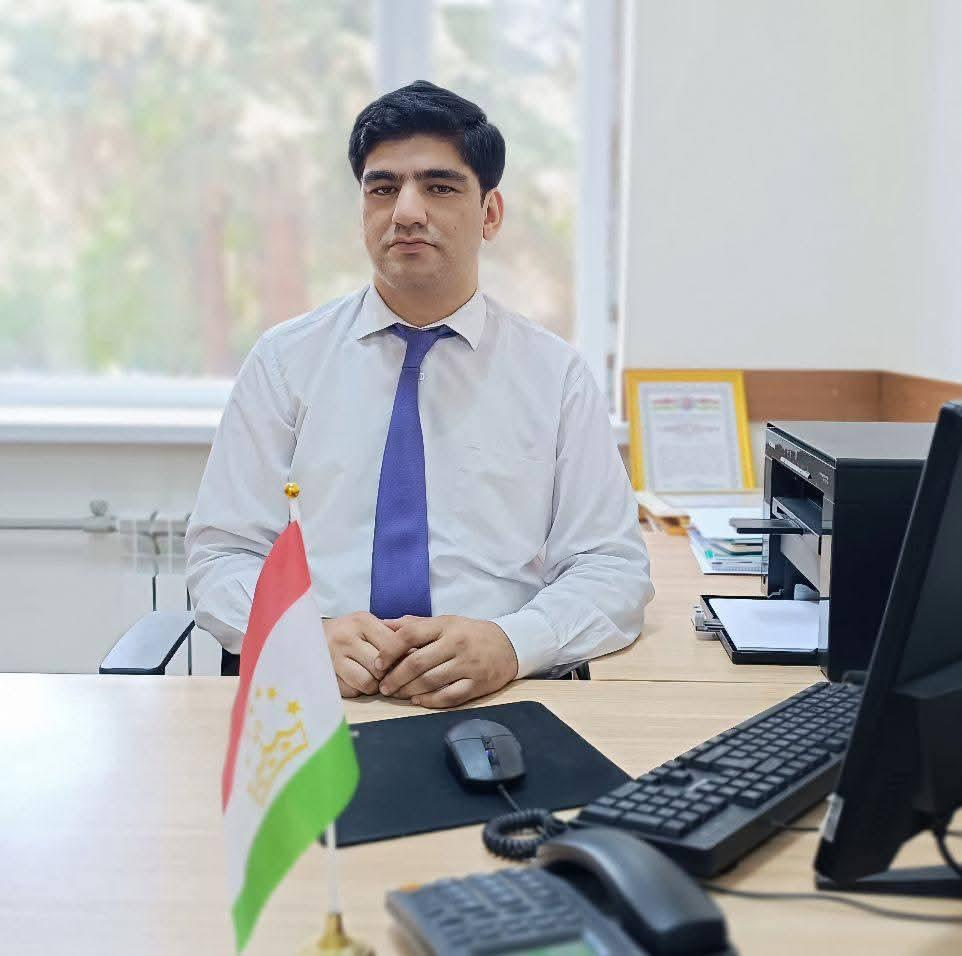
The writer is Sohibi Bahrulo, Senior Researcher at the Department for European Studies, Institute for the Study of the Problems of Asian and European Countries.