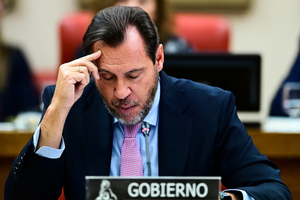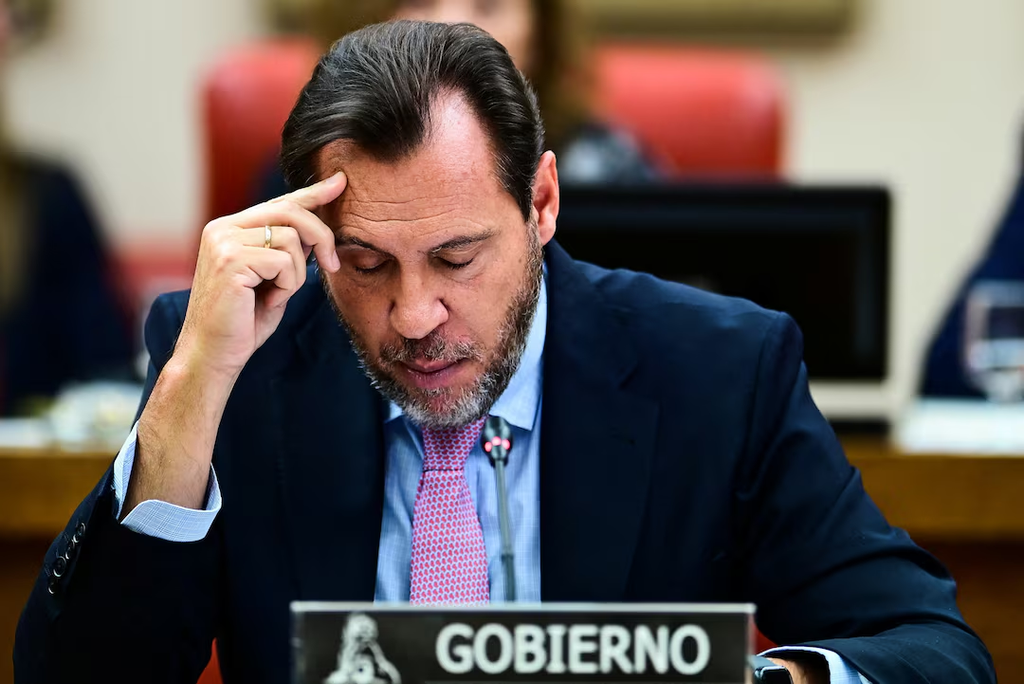
Madrid (GNP): Spain’s Transport Minister Óscar Puente has resigned six days after a high-speed train collision near the town of Urda, south of Madrid, in which at least 69 people were killed and dozens injured. He announced his decision in Congress on Tuesday evening, at the end of a long session on the 28 October disaster.
Puente had spent that session outlining new rail safety measures and answering tough questions from opposition lawmakers. He then said he was stepping down as minister and also withdrawing his name from the lists for the early legislative elections.
He explained his decision by pointing to the record. In his view, a transport minister cannot stay in office after two accidents of this seriousness in less than a year. He was referring to a January crash on the same line that left 46 people dead.
The latest crash is one of the worst rail disasters in modern European history and Spain’s deadliest since 2013. It happened when a train run by state-owned operator Renfe, carrying 397 passengers, struck the back of a stationary train run by private operator Iryo, which had 147 passengers on board. Iryo said its carriages were hit from behind.
According to reports, a computer failure in the automatic signalling system had forced all trains on the stretch to halt. Leaked audio recordings published in Spanish media soon after the crash then added to the pressure on the minister. They capture exchanges between train drivers and Madrid’s control centre in the minutes before the collision.
In one recording, a controller tells the Renfe driver to continue under the Lateral Signalling Block, a back-up system used when automatic signalling fails, at normal speed. The driver asks, “At normal speed?” and the controller answers, “Yes.”
In another, the Iryo driver reports that the train is stationary in front of the entry signal at Urda and cannot start. The recordings appear to show that the Renfe train was cleared to move while the other train sat on the track.
The minister’s position came under scrutiny immediately after the crash. The main opposition People’s Party and the far-right Vox called for his resignation, as did some allies of the government. They argued that he should take responsibility for a high-speed rail network that many Spaniards now see as unsafe, and which Prime Minister Pedro Sánchez himself admitted had a broken credibility.
Also Read: UN Committee Adopts Pakistan’s Three Arms Control Resolutions
The opposition also criticised Puente for appearing to blame human error, saying he was trying to shift attention away from his own failings. His resignation surprised many, because only days earlier he had said he would stay in his post.
The timing adds to the political weight of the decision. Spain heads to early general elections on 29 November, and many observers see the crash as a heavy blow to the Socialist-led government’s chances. Stepping down was a difficult choice, since staying could have looked insensitive after the tragedy and leaving could suggest the government was at fault.
Puente chose to go, saying his decision was driven by political dignity. Sánchez praised him for facing the situation, giving answers and solutions, and then stepping aside out of respect for the victims. The next transport minister will now face the task of restoring public confidence in Spain’s railways.
Óscar Puente said, “A minister cannot stay in office after two accidents this serious in under a year.”

Managing Editor at Global News Pakistan (GNP), with a Bachelor's degree in International Relations from Riphah International University, graduated with a Gold Medal. Reach out at sabahtareengnp@gmail.com