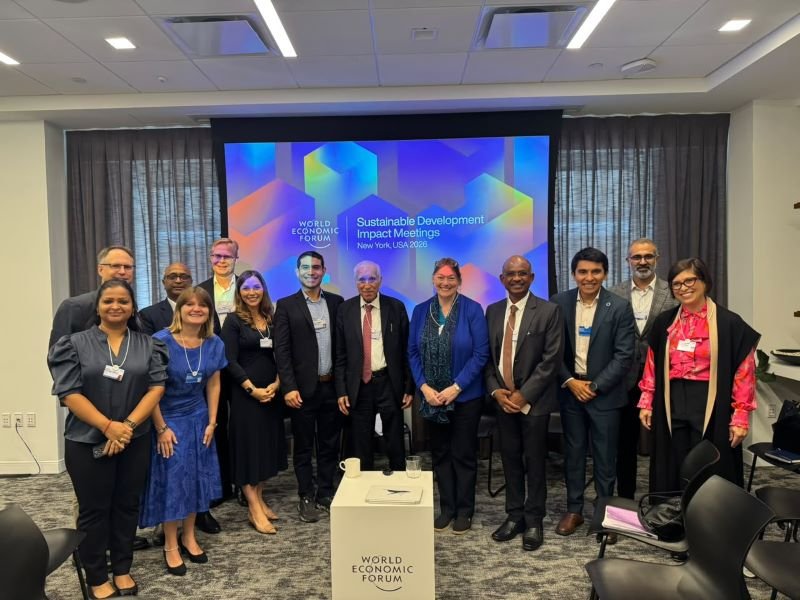
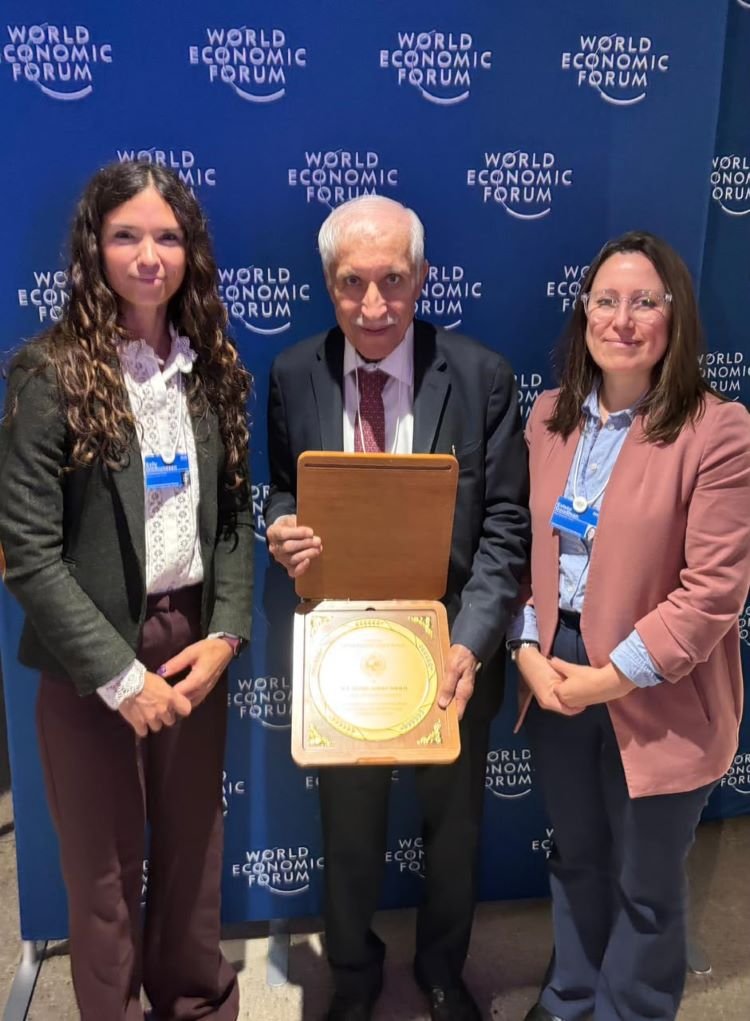
New York (GNP): Pakistan Federal Minister for Board of Investment, Qaiser Ahmed Sheikh, participated in the high-level dialogue of the World Economic Forum’s Sustainable Development Impact Meetings 2026 in New York,
highlighting Pakistan’s comprehensive regulatory reforms, investor facilitation measures and growing opportunities for sustainable, technology-driven and export-oriented investment.
Speaking at the Global Regulatory Innovation Platform — Opening Panel, “Regulating Through Uncertainty: Turning Innovation Into Implementation,” the Federal Minister said Pakistan was working to create a regulatory environment that protects public interest, builds investor confidence and enables innovation to move from ideas to implementation.
Qaiser Ahmed Sheikh said the government’s objective was to establish minimum, simple, clear and predictable regulation, while maintaining essential safeguards. He emphasized that the aim was better regulation that is clear enough for investors to plan, flexible enough to adapt to changing circumstances and strong enough to maintain public trust.
The Federal Minister highlighted the leading role of the Board of Investment in regulatory modernization, stating that more than 500 regulatory reforms had been implemented across around 30 sectors in coordination with approximately 90 federal and provincial departments.
He said the Pakistan Regulatory Modernization Initiative (PRMI) was providing a structured framework for reviewing, simplifying and digitising business-facing regulations. The Asaan Karobar Act 2025 had further institutionalised the regulatory modernization agenda, including mechanisms such as the Pakistan Regulatory Registry and Pakistan Business Portal.
The Minister said these initiatives were aimed at reducing unnecessary regulatory requirements, lowering compliance burdens, improving coordination among government institutions and making government services more accessible and predictable for businesses and investors.
Highlighting a practical example of translating reforms into implementation, Mr. Qaiser Ahmed Sheikh said the Board of Investment’s Business Facilitation Centre (BFC), Islamabad, had brought 22 federal agencies under one roof, providing businesses and investors with coordinated access to registrations, licences, certificates, permits, approvals and other regulatory services.
He said the BFC represented a practical one-window model for improving investor service delivery. During its first eight months, the Centre served 5,386 businesses, processed 4,555 approvals and NOCs, facilitated PKR 5.08 billion in investment and supported 15,680 jobs, while recording an investor satisfaction rating of 9.8 out of 10.
“Pakistan is moving from fragmented procedures towards coordinated, investor-focused service delivery. The Business Facilitation Centre is a practical example of how regulatory reform can be translated into implementation,” the Minister said.
Addressing the rapidly evolving landscape of artificial intelligence and emerging technologies, the Federal Minister said Pakistan was committed to encouraging innovation while maintaining human accountability, security, transparency and public trust.
He said Pakistan was pursuing an adaptive and proportionate approach to emerging technologies, including through controlled experimentation and regulatory sandboxes. He noted that institutions including the Securities and Exchange Commission of Pakistan and the State Bank of Pakistan had experience with sandbox mechanisms that allow innovative models to be tested in controlled environments before wider implementation.
Qaiser Ahmed Sheikh said Pakistan’s National AI Policy, together with wider regulatory modernization efforts, would support responsible AI development and adoption while creating space for investment and innovation.
“Moving quickly does not mean regulating less. It means creating regulation that can learn and adapt,” he said, stressing the importance of evidence-based policymaking, stakeholder consultation and periodic review as technology evolves.
The Federal Minister also highlighted Pakistan’s investment framework and said the country offered significant opportunities to international investors across a range of productive sectors. Under the Investment Policy 2023, foreign investors can hold up to 100 percent ownership in most sectors, subject to applicable sector-specific requirements, while profit and capital repatriation is available through applicable foreign-exchange procedures.
He said Pakistan’s 44 notified Special Economic Zones (SEZs) provided an important platform for industrialisation, export growth, technology transfer and employment generation.
Highlighting the incentives available under the SEZ framework, Qaiser Ahmed Sheikh said eligible zone enterprises can benefit from income-tax exemptions up to year 2035, subject to the applicable exemption period and legal provisions, while qualifying plant and machinery imported for installation in SEZs is eligible for one-time exemption from customs duties and taxes, subject to applicable conditions.
He said these incentives, together with improved investor facilitation and regulatory reforms, were intended to encourage productive investment, strengthen Pakistan’s industrial base and promote export-oriented growth.
The Federal Minister highlighted Pakistan’s growing international investment engagement, particularly citing the Pakistan-China B2B Investment Conference 2025, which brought together 623 Chinese companies and nearly 300 Pakistani companies and generated more than 3,500 B2B matchmaking meetings, 25 joint ventures and 142 MoUs, representing approximately US$9.5 billion in announced business value.
He said the experience demonstrated the potential of structured business-to-business engagement in converting investment interest into concrete partnerships.
Qaiser Ahmed Sheikh said that, building on the experience of the Pakistan-China B2B engagement, Pakistan now aimed to develop similar investment and business-to-business engagements with other countries and international markets, creating new opportunities for joint ventures, technology partnerships, exports and long-term investment.
The Federal Minister said Pakistan was particularly seeking investment in sustainable and export-oriented manufacturing, technology and digital services, renewable energy and energy efficiency, agribusiness and food processing, minerals, infrastructure and logistics, industrial clusters and SEZs, innovation and venture capital, and public-private partnerships.
He also underscored the importance of sustainability and climate resilience in Pakistan’s investment agenda, noting that investment in renewable energy, resilient infrastructure, climate-smart agriculture, efficient water systems and sustainable manufacturing could contribute to economic resilience, employment generation and long-term development.
Qaiser Ahmed Sheikh invited global companies, institutional investors, sovereign investors and development partners to explore investment and technology partnership opportunities in Pakistan and work with the country to develop productive capacity, exports, innovation and resilient economic growth.
He said Pakistan’s participation in the World Economic Forum dialogue reflected its commitment to learning from international regulatory experience while adapting relevant global practices to Pakistan’s own economic, institutional and development context.
Also read: Ethiopian Embassy, AIOU Launch Green Legacy
The Board of Investment remains committed to facilitating investors, strengthening regulatory coordination, reducing unnecessary regulatory requirements, improving the ease of doing business and positioning Pakistan as a competitive destination for sustainable, export-oriented and technology-driven investment.

Sohail Majeed is a Special Correspondent at The Diplomatic Insight. He has twelve plus years of experience in journalism & reporting. He covers International Affairs, Diplomacy, UN, Sports, Climate Change, Economy, Technology, and Health.