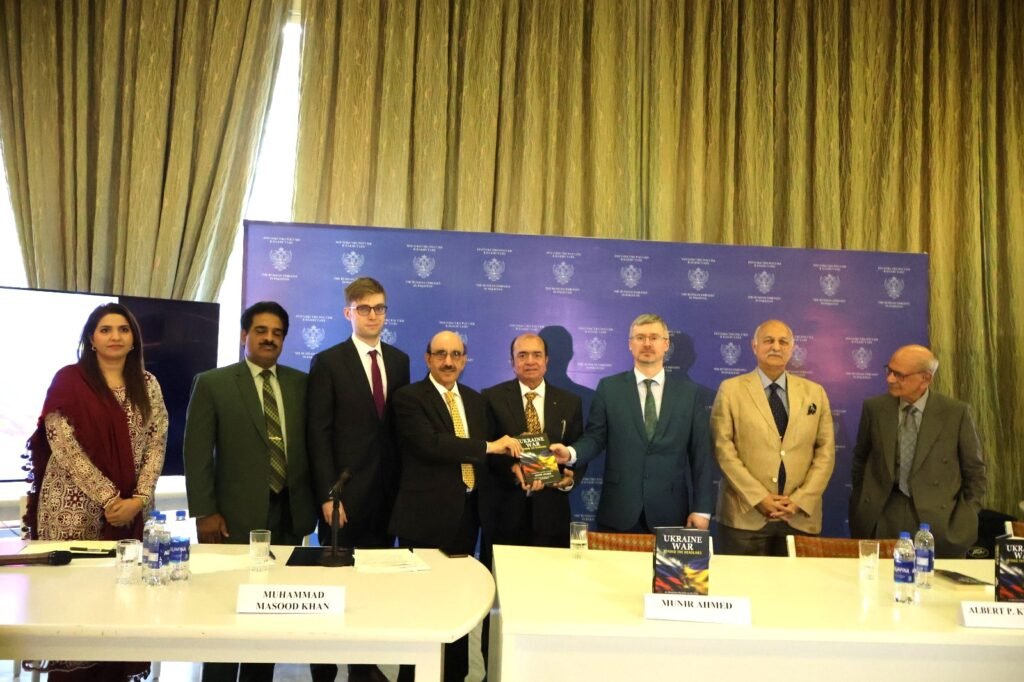
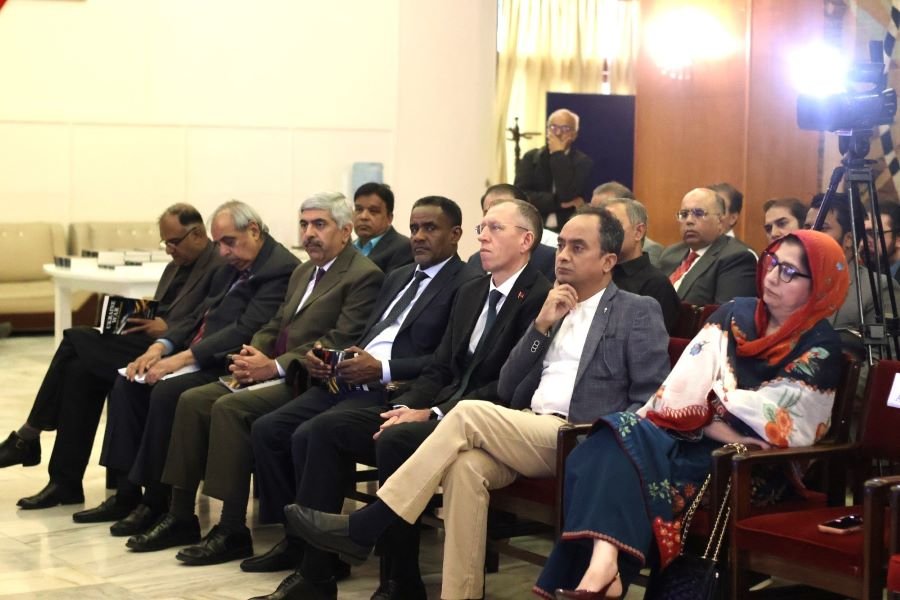
ISLAMABAD (GNP): Russian Ambassador to Pakistan Albert P. Khorev set out Moscow’s position on the Ukraine conflict at the launch of Ukraine War: Beyond the Headlines – An Alternative Narrative on the Russia–Ukraine Crisis.
He argued that the war must be understood through its historical roots, European security concerns and wider geopolitical effects. The views below are those of the ambassador and reflect Russia’s official position.
Written by Munir Ahmed, the book examines the background to the conflict, NATO’s role, European security, energy markets, food supplies and the rise of a multipolar world order. Khorev praised it for relying on official documents, UN reports and publicly available material, and said it challenges dominant Western accounts and invites readers to weigh competing interpretations.
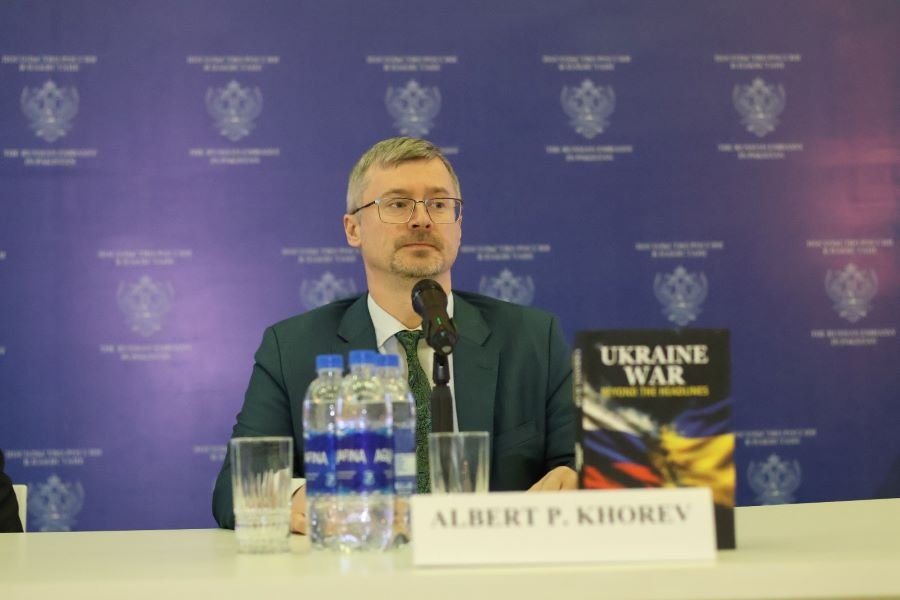
Khorev said the conflict cannot be explained by the events of February 2022 alone. In his view, NATO’s eastward expansion, the political upheaval in Ukraine in 2014 and the failure to implement the Minsk agreements all fed rising tensions. He criticised Western governments and media coverage, alleging that decisions by NATO members and their backing for Kyiv have prolonged the fighting, and that Russia’s security concerns were ignored for years. Russia, he said, wants a European security framework built on equal and indivisible security. He also blamed Western governments for the collapse of diplomatic efforts, including the 2022 talks in Istanbul.
While defending Russia’s military objectives, the ambassador said Moscow remains open to a political settlement. Any lasting deal, he said, must address the underlying causes of the crisis, give security guarantees acceptable to all sides and recognise realities on the ground. Peace, he added, must rest on justice and respect for the legitimate security interests of every party.
Khorev said debate over Ukrainian grain often overlooks Russia’s major role in agricultural markets. Citing 2025-26 figures, he put Ukraine’s share of global wheat trade at about 7 per cent against Russia’s 23 per cent, and its share of barley trade at 5 per cent against Russia’s 20 per cent. He claimed that around 70 per cent of Ukraine’s agricultural exports go to the European Union and other Western markets rather than to Africa or Asia, and said Kyiv’s contribution to global food security is overstated by Western media.
He said Russia took part in good faith in the Black Sea Grain Initiative, which he said collapsed because Western countries did not honour their commitments. He criticised Western sanctions and measures against the so-called “Russian shadow fleet,” a term he said has no legal definition in international law, arguing that they threaten global food supplies more than Russia’s own actions. He also called for stronger protection of commercial shipping in the Black Sea, describing attacks on civilian vessels carrying grain and oil as violations of international humanitarian law and the UN Convention on the Law of the Sea.
Khorev welcomed Pakistan’s approach to the conflict, which he called “positive neutrality,” saying Moscow values Islamabad’s independent assessment and its support for dialogue. Russia, he said, is ready to expand cooperation with Pakistan in energy, agriculture, fertilisers and other sectors, which could help address food security challenges, support regional stability and promote a more balanced international order.
He congratulated the author and said he hopes the book will encourage further research and informed debate.
Also read: Malik reaffirms commitment to strengthen partnership with Saudi Arabia
Ambassador Masood Khan lamented the humanitarian and economic costs of the war. Author Munir Ahmed gave introductory remarks, and other addresses were delivered by Senator Mushahid Hussain Syed, retired Lt Gen Asad Durrani, Dr Almas Haider Naqvi and Dr Gul-i-Ayesha Bhatti.

Sohail Majeed is a Special Correspondent at The Diplomatic Insight. He has twelve plus years of experience in journalism & reporting. He covers International Affairs, Diplomacy, UN, Sports, Climate Change, Economy, Technology, and Health.