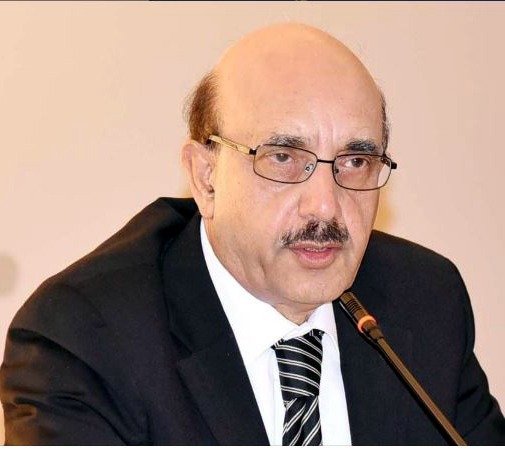
Islamabad (GNP) :- Sardar Masood Khan, former Ambassador to the United States, China and the United Nations, and former President of Azad Jammu and Kashmir, has stated that despite rapidly shifting developments and heightened tensions, Pakistan remains actively engaged in steering the United States and Iran toward a negotiated settlement, even as both sides adopt increasingly hardened positions.
Commenting on the evolving situation, Ambassador Khan described the current phase as a “coercive contest,” where diplomatic engagement is unfolding alongside intense military and economic pressure. He noted that while there have been intermittent positive signals—such as the temporary opening of the Strait of Hormuz—these gains have been undermined by continued maritime restrictions and renewed threats, creating an atmosphere of uncertainty and mistrust.
He observed that both Washington and Tehran are simultaneously preparing for negotiations and confrontation. “Iran has kept the option of dialogue open while signaling readiness for retaliation, whereas the United States is intensifying pressure to extract maximum concessions before any formal agreement,” he said. This dual approach, he added, has made the second round of talks more complex than the first, despite initial success in bringing both sides to the table.
Ambassador Khan emphasized that key sticking points continue to hinder progress, including Iran’s nuclear programme, sanctions relief, the future of the Strait of Hormuz, and the status of regional allies. He noted that the United States has adopted a maximalist stance, seeking far-reaching commitments, while Iran views many of these demands as excessive and incompatible with its sovereign rights.
Highlighting Pakistan’s role, he stated that Islamabad has completed all necessary preparations to host the next round of talks and continues to maintain close contact with both sides, as well as key regional stakeholders including Saudi Arabia, Turkey, Egypt, and China. Pakistan, he noted, is working diligently to bridge differences and sustain momentum toward dialogue, despite the volatile environment.
He further pointed out that internal dynamics in both countries are influencing their negotiating positions. While the US leadership seeks to maintain domestic and political confidence, Iran faces significant internal pressures to defend its strategic interests and justify any concessions at the negotiating table.
Ambassador Khan cautioned that recent developments, including the continuation of the US naval blockade despite partial easing measures by Iran, have contributed to growing skepticism. “There is a trust deficit, with fears that negotiations could be used as a cover for further escalation,” he remarked.
On the possibility of high-level political engagement, he suggested that any visit by President Donald Trump would likely occur only after substantial agreement has been reached, serving as a symbolic endorsement rather than a negotiating step.
Concluding his remarks, Ambassador Khan reiterated cautious optimism, stressing that while challenges remain significant, the existence of dialogue and continued mediation efforts by Pakistan provide a viable pathway forward. He underscored that sustained engagement and balanced diplomacy are essential to transforming this fragile moment into a durable peace.

Sohail Majeed is a Special Correspondent at The Diplomatic Insight. He has twelve plus years of experience in journalism & reporting. He covers International Affairs, Diplomacy, UN, Sports, Climate Change, Economy, Technology, and Health.