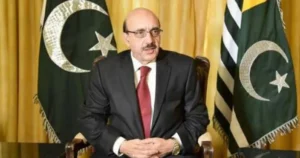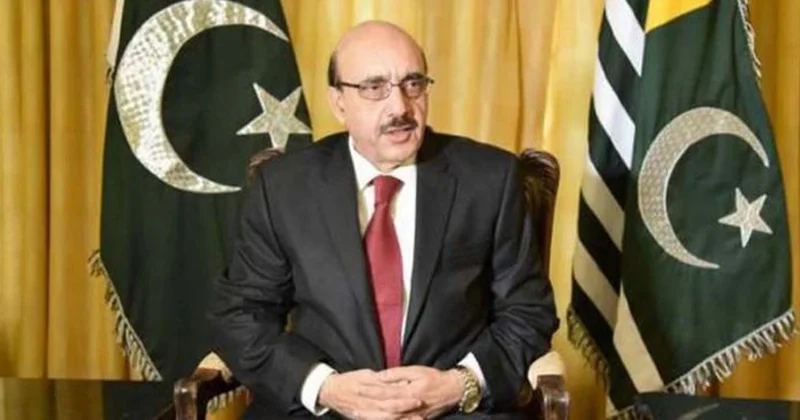
Islamabad (GNP): Pakistan should consolidate its diplomatic gains, keep its foreign policy balanced and multi-dimensional, protect its security interests and press ahead with economic reforms if it wants to turn its strategic importance into lasting national strength, according to Sardar Masood Khan, a former Pakistani ambassador to the United States, China and the United Nations, and a former President of Azad Jammu and Kashmir. He was speaking in an interview on regional security and the changing international order.
Khan said that although US and Israeli military preparations against Iran are continuing, Washington’s appetite for another war has shrunk since the Republican Party’s setback in the midterm elections. Economic pressure at home, public unhappiness over the cost of the conflict and growing political opposition, he argued, have strengthened the case for diplomacy. Pakistan, Qatar and Oman continue to facilitate diplomatic contacts, while China is also working to end the hostilities.
Khan said Beijing is taking a cautious diplomatic line and backing the principles of the five-point Pakistan-China initiative: ending hostilities, dialogue, protecting civilians and critical infrastructure, freedom of navigation and respect for the UN Charter. He described the emerging order as multipolar, shaped by the United States, China, the Global South and a growing set of middle powers such as Pakistan, Türkiye and Indonesia, and noted the transformative effect of artificial intelligence, blockchain, cloud computing and digitalisation.
Khan called the creation of the Makkah Alliance by Saudi Arabia, Pakistan and Türkiye a historic development, and said it could expand to include countries such as Qatar, Egypt, Bahrain, Kuwait, Indonesia, Malaysia and Jordan. Collective deterrence, he stressed, must go together with diplomacy, especially on tensions involving Iran and Saudi Arabia. He warned Pakistan against becoming directly involved in Yemen’s internal conflict, saying further escalation, particularly around the Bab al-Mandab Strait, would endanger the whole region, Pakistan included.
He urged a foreign policy that keeps close ties with the Muslim world, balances relations with China and the United States, and explores new openings with Russia and the developing world. He also stressed preserving Pakistan’s diplomatic gains in Washington and keeping channels of communication open with India.
Khan cautioned against neglecting security threats from India and from terrorism originating in Afghanistan, but said the economy must remain a national priority. He called for stronger intellectual property protection, easier business conditions, rationalised taxation, an end to rent-seeking and excessive subsidies, more private-sector participation and integration into international value chains.
Also read: TCL Powers Dakar Youth Olympic Village with Solar Display
He concluded that economic reform must go hand in hand with political stability and constructive cooperation among political parties. National unity, he said, does not require unanimity, but a minimum level of consensus is essential to advance national interests and realise Pakistan’s full potential.

Sohail Majeed is a Special Correspondent at The Diplomatic Insight. He has twelve plus years of experience in journalism & reporting. He covers International Affairs, Diplomacy, UN, Sports, Climate Change, Economy, Technology, and Health.