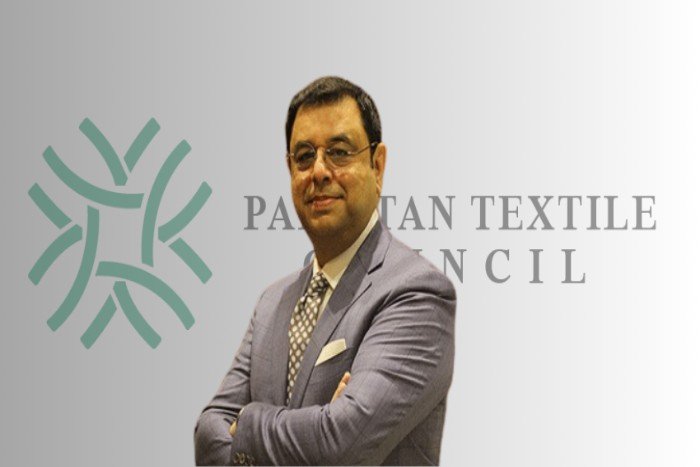
Islamabad (GNP): Pakistan risks letting slip one of its most significant export opportunities in recent memory if the upcoming Budget 2026-27 fails to deliver tangible relief to the export sector, Pakistan Textile Council (PTC) Chairman Fawad Anwar has warned in a letter to Prime Minister Shehbaz Sharif.
The caution comes at a moment when global buyers are actively restructuring their supply chains, moving away from established sourcing hubs and scouting alternative destinations across Asia.
Anwar acknowledged that Pakistan is well-positioned to capitalise on this realignment, pointing to its end-to-end cotton-to-garment production capability, a seasoned export industry, and long-established ties with leading international brands. Yet he warned that mounting production costs and structural policy distortions are steadily undermining these natural advantages.
The PTC Chairman drew attention to a troubling export performance gap, noting that Pakistan’s merchandise exports during the first eleven months of FY2025-26 trailed the same period of the previous year by USD 1.66 billion — despite an upturn in global demand.
“Global buyers are looking for alternatives and Pakistan is on their radar. The question is whether we will seize this opportunity or price ourselves out of the market,” Anwar said.
He also challenged the notion that macroeconomic stabilisation alone is sufficient to drive growth, arguing that while the government’s reform efforts have restored a degree of stability, that stability must now be converted into tangible economic momentum.
“Stabilization is not growth. Pakistan’s next economic chapter must be written through exports. Every successful economy that escaped recurring balance-of-payments crises did so by expanding exports, not by increasing taxation on its export sector,” he noted.
The Council outlined three priority measures it wants reflected in the forthcoming budget. First, the restoration of a competitive tax environment for exporters through the reintroduction of the Final Tax Regime (FTR). Second, a reduction in industrial energy tariffs to bring them in line with rates offered by regional competitors. Third, the prompt clearance of outstanding export refunds and withheld tax payments through a transparent and time-bound mechanism.
Also Read: President Zardari Felicitates Swedish Leadership on National Day
The PTC highlighted that Pakistani exporters are presently burdened with some of the steepest energy costs in Asia, while billions of rupees in pending refunds remain frozen, capital that could otherwise be channeled into investment and capacity expansion.
The Council described Pakistan’s textile and apparel industry as the country’s foremost export sector and one of the few capable of delivering swift export growth, large-scale job creation, and reliable foreign exchange inflows simultaneously.
“Pakistan has a narrow but real window of opportunity. If the right decisions are taken in this budget, exports can become the engine of growth. If not, competing countries will capture the business that could have come to Pakistan,” Anwar cautioned.
The PTC reaffirmed its readiness to engage closely with the government in crafting evidence-based reforms designed to enhance the global competitiveness of Pakistan’s textile industry and set the economy on a sustainable, export-driven growth trajectory.

Sohail Majeed is a Special Correspondent at The Diplomatic Insight. He has twelve plus years of experience in journalism & reporting. He covers International Affairs, Diplomacy, UN, Sports, Climate Change, Economy, Technology, and Health.