Islamabad (GNP): A high-level multi-institutional delegation from Somalia, led by Abdiwali Ali Abdulle, Director General of Somalia’s National Identification and Registration Authority (NIRA), has wrapped up a ten-day peer learning visit to Pakistan aimed at strengthening Somalia’s digital public infrastructure.
Organized by the UNDP country offices in Pakistan and Somalia, the mission brought together senior Somali officials from NIRA, the Ministry of Finance, the Central Bank of Somalia, and other financial and development institutions, who engaged with Pakistani counterparts working across digital identity, e-governance, social protection, taxation, digital payments, and citizen service delivery.
During the visit, the delegation toured the National Database and Registration Authority (NADRA) to study Pakistan’s national identity system and its institutional structure. Meetings at the Ministry of Information Technology and Telecommunication, along with related digital agencies, covered Pakistan’s digital public infrastructure, system interoperability, and the development of a national data exchange framework. The group also visited an e-Khidmat Centre in Lahore to see firsthand how multiple government services can be delivered through a single integrated platform.
At the Benazir Income Support Programme (BISP), the delegation examined the National Socio-Economic Registry and Pakistan’s digital approach to social protection payments. Discussions with the Federal Board of Revenue explored how digital identity systems and data integration can strengthen taxpayer registration, while the State Bank of Pakistan showcased Raast, the country’s instant payment system, along with the banking sector’s shared electronic know-your-customer (e-KYC) platform. A separate session with local civil society organizations focused on strategies for reaching women, displaced populations, and other groups facing barriers to registration.
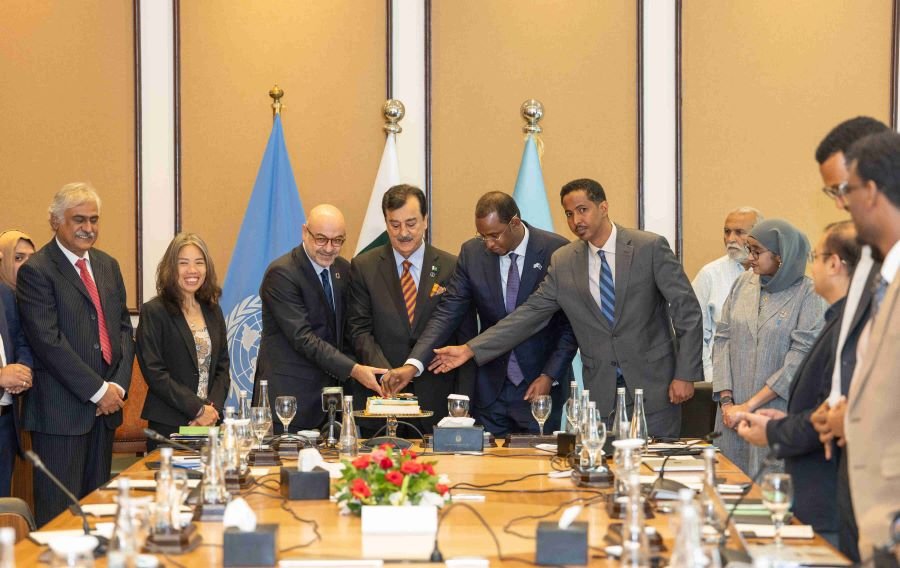
The mission concluded with a Somalia-Pakistan Technical Cooperation Roundtable, attended by Senate Chairman Syed Yousaf Raza Gilani as Chief Guest and supported by UNDP offices in both countries. The roundtable brought together senior representatives from participating institutions to discuss key takeaways, shared priorities, and pathways for continued collaboration.
In his remarks, Gilani described digital governance as a vital tool for improving public service delivery, institutional efficiency, accountability, and citizen inclusion, stressing that parliament has an essential role in ensuring digital transformation remains inclusive, secure, accountable, and grounded in rights. He noted that the Senate of Pakistan itself has been pursuing its own digital transformation through efforts to establish a paperless e-Parliament.
NIRA Director General Abdiwali Ali Abdulle said the mission offered valuable insight into Pakistan’s experience that could be adapted to Somalia’s own context, noting Pakistan’s strengths in digital identity, digital finance, social protection, and system interoperability. He added that Somalia’s own experience with mobile money and rapid digital adoption could similarly offer useful lessons for Pakistan, describing the collaboration as a genuine partnership built on mutual learning.
Participants at the roundtable endorsed the Somalia-Pakistan Partnership Action Matrix, outlining agreed areas of cooperation across three broad themes: foundational legal identity systems; digital public infrastructure and governance, including interoperability and secure data exchange; and financial inclusion and digital public financing, covering digital payments, e-KYC, social protection disbursement, and revenue administration.
Jama Hassan, Counsellor at the Embassy of Somalia, said the programme had provided valuable insight into Pakistan’s experience building a functional identity system and broader digital governance ecosystem, noting that one key lesson was that functional identity involves more than just numbers or databases.
Also read: Samsung Galaxy Tab S12+ and Ultra Specs Leak Ahead of Launch
Dr. Samuel Rizk, UNDP’s Resident Representative in Pakistan, emphasized that legal identity forms the foundation of inclusive governance, enabling access to services, social protection, and financial inclusion. He noted that UNDP’s partnership with NADRA has helped over one million women in Pakistan obtain identity documents, describing the mission as an effort to share these lessons and adapt them for Somalia’s needs while advancing trust, inclusion, and data protection alongside technological progress.

Sohail Majeed is a Special Correspondent at The Diplomatic Insight. He has twelve plus years of experience in journalism & reporting. He covers International Affairs, Diplomacy, UN, Sports, Climate Change, Economy, Technology, and Health.