Islamabad (GNP): Federal Minister for National Food Security and Research Rana Tanveer Hussain has underscored the need for rationalizing taxes and bringing about structural reforms in the dairy sector to improve affordability, ensure safe nutrition, and support farmers in the country.
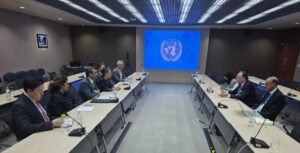
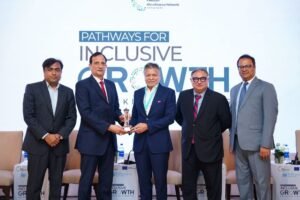
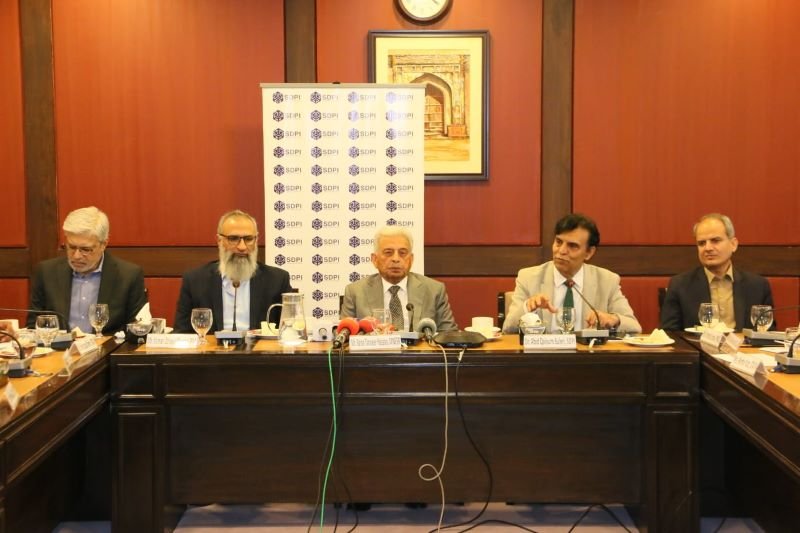
He was speaking at a pre-budget consultation jointly organized by Sustainable Development Policy Institute (SDPI) and Pakistan Dairy Association here.
The minister said livestock accounts for nearly 60 per cent of the agriculture sector and holds significant potential for both domestic nutrition and exports. He acknowledged that taxation policies, particularly sales tax on dairy products, have affected production and growth. “Softening of tax regime can help increase both production and revenue,” he suggested.
Rana Tanveer noted that reducing General Sales Tax (GST) on milk was not difficult, thus proposals like pilot projects for pasteurization and the establishment of “safe milk cities” are under consideration. He said improving milk quality and formalizing the sector would be key priorities going forward.
In his welcome remarks, SDPI Executive Director Dr Abid Qaiyum Suleri suggested multiple taxation scenarios and called for placing processed milk in a third schedule. He warned that rural milk collection centres were shutting down, since pricing of processed milk directly hits loose milk markets.
Usman Zaheer Ahmad, the Chairman of Pakistan Dairy Association, highlighted that 40 per cent children in Pakistan suffer from stunting due to malnutrition, despite milk being the most widely consumed animal protein. He said the sector remains 98 per cent informal, with limited quality controls. He warned that 18 per cent GST in 2024 caused 27 per cent decline in formal dairy sector. He proposed reducing GST to 10 per cent and bringing part of the informal economy into the tax net, which could generate up to Rs250 billion in revenue.
Earlier, SDPI Head of Ecological Sustainability and Circular Economy Unit, Zainab Naeem, said the consultation aimed to bring together government, private sector, and civil society to address food insecurity and link the dairy sector with nutrition. She emphasized that milk should be treated as a basic nutritional necessity rather than a luxury item. She called for strategies to enhance affordability and accessibility for low- and middle-income households.
Farrah Naz, the Country Director of Global Alliance for Improved Nutrition (GAIN), said malnutrition costs Pakistan around 03 per cent of GDP annually, with over 40 per cent of children under five stunted. She stressed that safe milk is essential for child development and advocated reducing GST on milk from 18 per cent to 05 per cent. She also stressed the need for strengthening formal dairy systems, expand processing capacity, and utilize by-products such as whey.
Naeem Hassan, the Director of Business Taxation Office, Ministry of Finance, said the recommendations shared by SDPI and the Pakistan Dairy Association are prudent and workable.
Sajid Mehmood Qazi, the Additional Secretary, Special Investment Facilitation Council (SIFC), pointing out structural weaknesses in the tax system, said that over-reliance on documented sectors is discouraging formal businesses and contributing to declining tax revenues in the dairy industry.
Eman Fatima from the Prime Minister’s Office Board of Investment, highlighting regulatory complexities that hinder new entrants in dairy farming, reiterated that 18 per cent GST had slowed sectoral growth.
Also Read: Middle East Crisis: ISSI-PRIME Flags Risks, Opportunities for Pakistan
Dr Ihtesham Khan of the Food and Agriculture Organization (FAO) raised concerns over public health, stating that loose milk often contains harmful micro-toxins due to poor feed quality and lack of testing, increasing the health burden.
Dr Sajid Amin Javed, Deputy Executive Director (Research), SDPI, emphasized a long-term, integrated policy framework combining fiscal, health, and rural development strategies. He called for incentivizing private sector investment and developing cooperative models to connect small farmers with markets.

Sohail Majeed is a Special Correspondent at The Diplomatic Insight. He has twelve plus years of experience in journalism & reporting. He covers International Affairs, Diplomacy, UN, Sports, Climate Change, Economy, Technology, and Health.