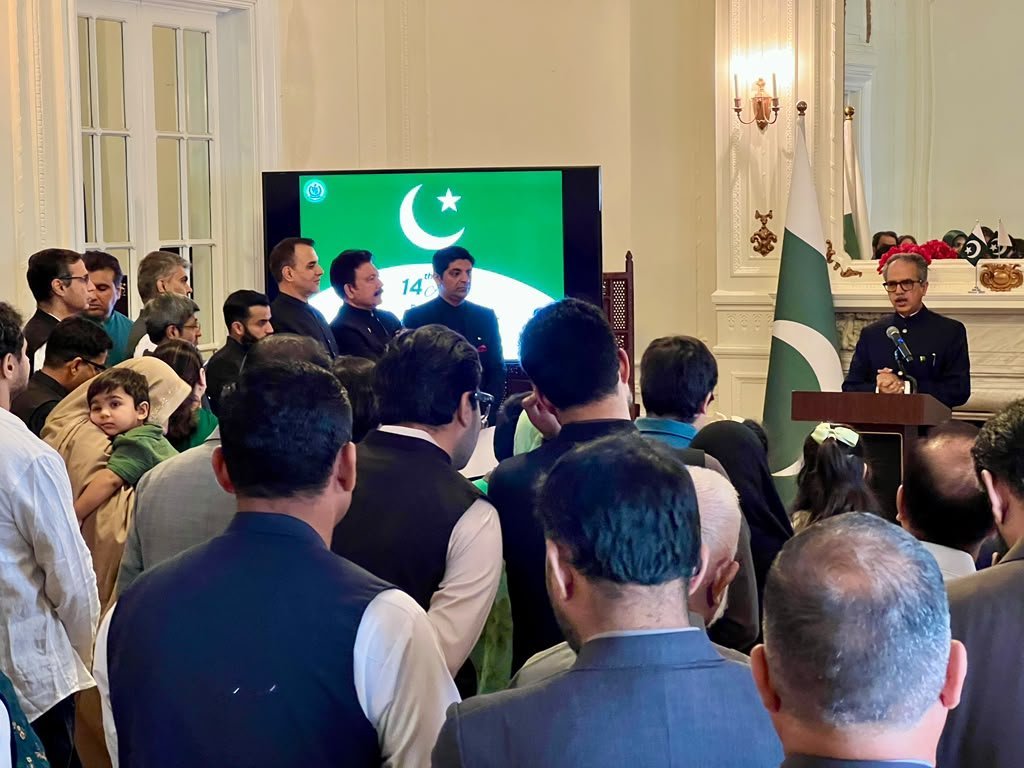
New York (GNP): Pakistan’s Independence Day was commemorated in New York with a flag-hoisting ceremony organized jointly by the Permanent Mission of Pakistan to the United Nations and the Consulate General of Pakistan in New York, reaffirming the nation’s enduring commitment to sovereignty, unity, peace, development and the principles upon which Pakistan was founded.
The ceremony was held at the Chancery building, where Pakistan’s Permanent Representative to the United Nations, Ambassador Asim Iftikhar Ahmad, hoisted the national flag.
The national anthem was also played on the occasion, marking the 79th anniversary of Pakistan’s independence with a renewed sense of national pride and responsibility.
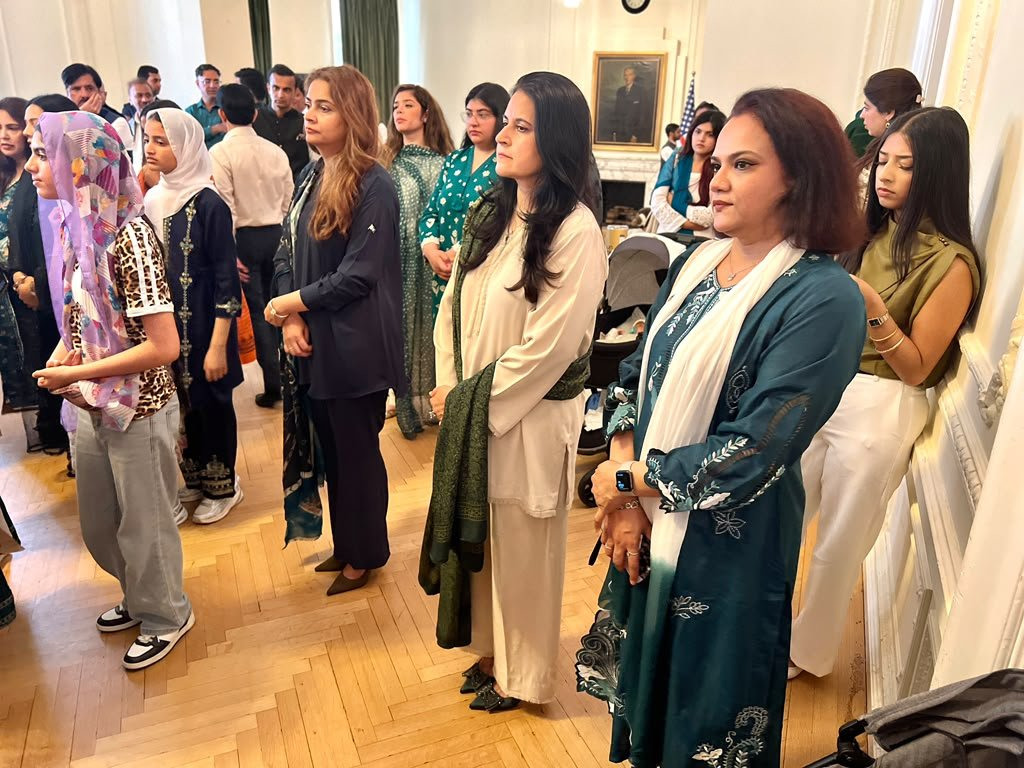
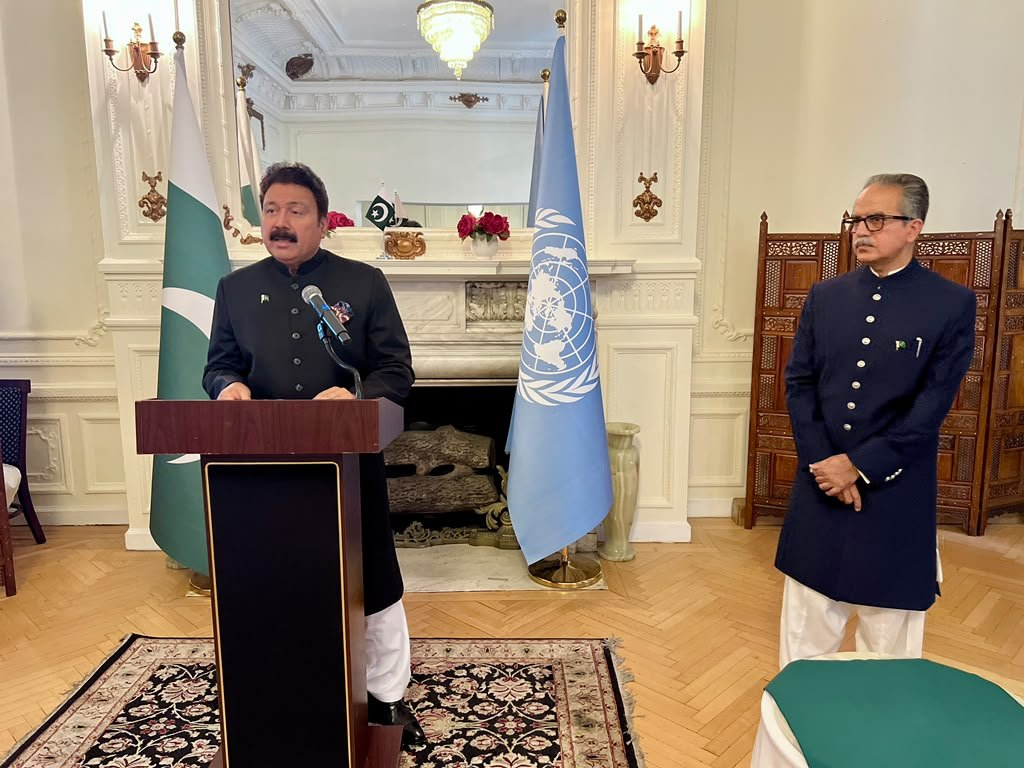
The ceremony was attended by Consul General of Pakistan in New York Ameer Ahmed Atozai, Deputy Permanent Representative Ambassador Usman Jadoon, officers and staff members of the Permanent Mission and Consulate General, as well as their families.
The event served not only as a celebration of Pakistan’s independence but also as an opportunity to reflect on the country’s journey since August 14, 1947, the challenges it has overcome, the contributions of Pakistanis around the world and the responsibilities that remain ahead.
Renewing Commitment to Pakistan’s Founding Ideals
Addressing the gathering, Ambassador Asim Iftikhar Ahmad emphasized that Independence Day should be viewed as more than a symbolic national celebration.
He called for a renewed commitment to Pakistan’s core ideology, national sovereignty, peace and security, social progress and economic development.
Paying tribute to Quaid-e-Azam Muhammad Ali Jinnah, Ambassador Asim described the Founder of Pakistan as an extraordinary leader, visionary statesman and architect of the country who transformed the political aspirations of the Muslims of the subcontinent into the establishment of an independent state.
Referring to historian Stanley Wolpert’s well-known assessment of Quaid-e-Azam, the Ambassador highlighted the exceptional historical significance of Jinnah’s leadership and his role in changing the political map of South Asia and creating a new national state.
For Pakistan, the legacy of independence therefore carries a responsibility that extends beyond remembering the past.
It requires each generation to understand the sacrifices that made freedom possible and to contribute toward strengthening the country’s institutions, economy, society and international standing.
A Journey of Resilience and Achievement
Reflecting on Pakistan’s journey from independence to the present, Ambassador Asim Iftikhar Ahmad highlighted the resilience, courage and determination of the Pakistani people.
Pakistan emerged as a new state in 1947 under extraordinarily difficult circumstances.
Over the decades, the country has faced political, economic, security and structural challenges, yet its people have continued to contribute in diverse fields, both nationally and internationally.
The Ambassador acknowledged the achievements of Pakistanis in areas including innovation, sports, arts, education and professional services.
He particularly highlighted the contributions of Pakistani women serving in international diplomatic settings, noting the inspiring presence and services of Madam Saima Saleem and Madam Aleena Majid at the Permanent Mission of Pakistan to the United Nations.
Their contributions, he noted, demonstrate how Pakistanis continue to represent their country with distinction on international platforms.
The Permanent Representative also paid tribute to the courage and sacrifices of Pakistan’s armed forces in defending the country and protecting its sovereignty.
He referred to the tensions between Pakistan and India in May 2025 as an important reminder of the significance of national unity, preparedness and responsible diplomacy in protecting Pakistan’s national interests.
Pakistan’s diplomatic engagement during periods of regional tension, he emphasized, also reflects the importance of dialogue and peaceful approaches to resolving disputes.
Pakistan’s Commitment to Peace and Diplomacy
A central theme of Ambassador Asim’s address was Pakistan’s commitment to peace and stability.
At a time when conflicts and geopolitical tensions continue to affect different parts of the world, Pakistan has sought to position itself as a country that supports dialogue, diplomacy and peaceful resolution of disputes.
The Ambassador referred to Pakistan’s diplomatic and mediatory engagement in relation to the Iran conflict, emphasizing that even amid international instability, Pakistan remains committed to seeking avenues that can contribute to peace and regional stability.
Pakistan’s approach, he suggested, should continue to combine the protection of national sovereignty with a constructive commitment to diplomacy and international cooperation.
This emphasis on peace is particularly significant for a country located in a strategically important region where developments in South Asia, the Middle East and Central Asia can have direct implications for Pakistan’s security and economic interests.
Kashmir and Palestine Remain Central to Pakistan’s Diplomatic Position
Ambassador Asim Iftikhar Ahmad also reaffirmed Pakistan’s longstanding political, diplomatic and moral support for the people of Jammu and Kashmir and the Palestinian people.
He reiterated Pakistan’s position that the legitimate rights and aspirations of these peoples must remain an important part of international discussions concerning peace, justice and self-determination.
Pakistan has consistently raised the Jammu and Kashmir issue at international forums, including the United Nations.
Ambassador Asim’s diplomatic work at the UN has also focused on regional security and peaceful conflict resolution.
Recent UN-related reporting has highlighted Pakistan’s continued engagement on the Kashmir question and its emphasis on the relevance of Security Council resolutions.
Also Read: President Zardari Confers Tamgha-e-Imtiaz on AIOU VC
The Ambassador also stressed the importance of continuing international efforts toward peace and justice for the Palestinian people.
The Continuing Challenge of TerrorismWhile celebrating Pakistan’s achievements, Ambassador Asim also emphasized that the country continues to face serious challenges.
Among these, terrorism remains a major concern . He called for continued efforts to combat terrorism and protect Pakistan’s people, institutions and national security.
The challenge requires not only security responses but also long-term investment in education, economic opportunity, social development and institutional capacity.
A secure Pakistan, he stressed, must also be a prosperous and socially stable Pakistan.
Pakistan’s international engagement on security issues has similarly emphasized the need for regional stability and political solutions.
Ambassador Asim has previously called at the United Nations for political processes and diplomacy to address regional conflicts rather than relying solely on military approaches.
Looking Toward Pakistan’s Centennial
Looking beyond the present, Ambassador Asim Iftikhar Ahmad urged Pakistanis to think about the country they want to build over the next two decades as Pakistan moves toward the centennial milestone of its independence.
The next 21 years will be particularly important. They will determine whether Pakistan can translate its demographic potential, human resources and strategic position into sustainable national development.
The Ambassador called for renewed attention to the responsibilities that remain unfinished, including strengthening the economy, improving development outcomes, combating terrorism, promoting social cohesion and ensuring that future generations inherit a stronger and more stable country.
This forward-looking message placed young Pakistanis at the centre of the country’s future.
Addressing the children present at the ceremony, Ambassador Asim described them as Pakistan’s future and emphasized the collective responsibility to build a country that remains “enlightened and radiant.”
The message was particularly significant because the future of Pakistan will depend not only on political and economic decisions made today but also on the education, opportunities and values provided to the next generation.
Independence as a Responsibility
Consul General Ameer Ahmed Atozai, in his address, similarly emphasized that independence should not be understood merely as a historical achievement or an annual celebration.
He paid tribute to Quaid-e-Azam Muhammad Ali Jinnah, Allama Muhammad Iqbal, the leaders and workers of the Pakistan Movement and all those who made sacrifices for the creation of Pakistan.
He stressed that the principles associated with Quaid-e-Azam — unity, faith and discipline —remain relevant to Pakistan’s national journey.
According to the Consul General, the country’s independence carries an enduring responsibility: to protect sovereignty, strengthen national unity and create a society where citizens can live with dignity and opportunity.
He emphasized Pakistan’s belief in peace, dialogue and diplomacy while underscoring the nation’s determination to safeguard its national interests.
Pakistani-American Community Recognized for Its Contributions
A significant part of the Consul General’s remarks focused on the Pakistani-American community and its contribution to both Pakistan and the United States.
Millions of Pakistanis and people of Pakistani heritage living abroad continue to maintain strong social, cultural and economic connections with their homeland.
Ameer Ahmed Atozai recognized the community’s contributions through remittances, investment, philanthropy, professional expertise and knowledge-sharing.
The Pakistani diaspora therefore represents an important bridge between Pakistan and the international community.
Its contributions extend beyond financial support, encompassing education, technology, entrepreneurship, healthcare, diplomacy, academia and numerous other fields.
The Consul General encouraged overseas Pakistanis to continue playing a constructive role in the country’s development and to represent Pakistan positively wherever they live.
Building a Pakistan Where Young People Can Dream
The Consul General further stressed that Independence Day should become an occasion to renew collective commitment toward building a peaceful, prosperous, inclusive and strong Pakistan.
He emphasized the importance of creating a country where young people can dream of a better future and, more importantly, have the opportunities and institutions necessary to turn those dreams into reality.
Pakistan’s young population represents one of its greatest potential strengths. However, that potential can only become a national advantage when young people have access to quality education, employment, skills development, entrepreneurship opportunities and meaningful participation in society.
The vision expressed during the New York ceremony therefore extended beyond patriotic celebration.
It placed national development and youth empowerment at the centre of Pakistan’s future.
Messages from Pakistan’s Leadership
At the beginning of the ceremony, messages from the President of Pakistan, the Prime Minister, and the Deputy Prime Minister and Foreign Minister were read out by Zulfiqar Ali, Umar Sheikh, and Muhammad Fahim.
The messages added a national dimension to the ceremony and connected the celebrations in New York with the wider Independence Day observances taking place across Pakistan and around the world.
The proceedings were conducted by Consul Jawad Ajmal . The ceremony concluded with a cake-cutting event attended by Ambassador Asim Iftikhar Ahmad, Consul General Ameer Ahmed Atozai, Deputy Permanent Representative Ambassador Usman Jadoon and children participating in the celebration.
From Celebration to CommitmentThe Independence Day ceremony in New York ultimately reflected a broader message: Pakistan’s 79th year of independence is not simply a moment to celebrate what has already been achieved, but an opportunity to consider what remains to be accomplished.
Pakistan’s history has been marked by resilience in the face of political, economic, and security challenges. Its people have continued to make their mark in diplomacy, science, sports, arts, business, and countless other fields.
Yet the country’s future will depend on how effectively it can transform resilience into sustainable progress.
As Pakistan moves toward its centennial in 2047, the challenge is to build a country that is economically stronger, socially inclusive, secure, diplomatically influential and capable of providing meaningful opportunities for its citizens.
The ceremony in New York brought together diplomats, officials, families and children under the national flag, but its message extended far beyond the walls of the Chancery.
It was a reminder that independence is both a privilege and a responsibility — a responsibility to protect sovereignty, uphold national unity, pursue peace, strengthen development and create opportunities for generations yet to come.
For Pakistanis at home and abroad, the 79th Independence Day therefore offered both a moment of pride and a call to action, to honour the sacrifices of the past, confront the challenges of the present and work collectively toward a more peaceful, prosperous and dignified future for Pakistan.