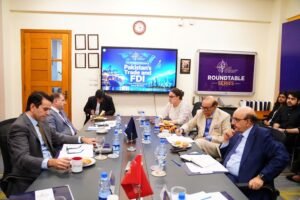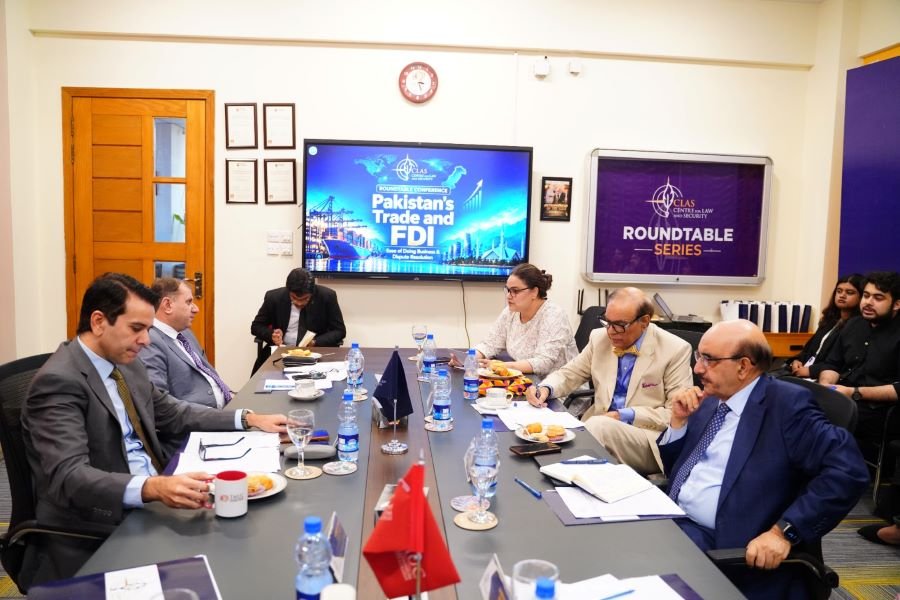
Islamabad (GNP): Sardar Masood Khan, former Pakistani Ambassador to the United States, China, and the United Nations, and former President of Azad Jammu and Kashmir, said Pakistan must tackle the systemic obstacles affecting foreign investment, exports, ease of doing business, and technological progress in order to realize its economic potential.
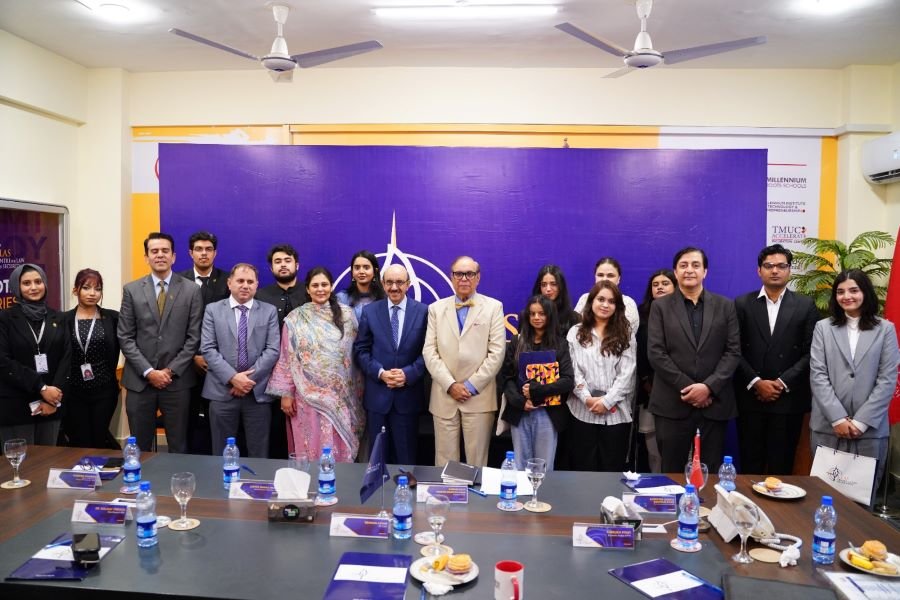
Speaking at the Center for Law and Security (CLAS) on Pakistan’s economic and investment landscape, Khan said declining foreign direct investment (FDI) remains a major concern, especially when compared to regional peers like Bangladesh, India, and Sri Lanka, which have shown stronger investment trends. He said Pakistan continues to face structural challenges that require sustained attention.
He pointed to weaknesses in industrial production and value chains as significant constraints on exports, noting that without adequate domestic output and exportable surpluses, Pakistan cannot meaningfully grow its export base. He also flagged intellectual property protection and the broader business environment as areas urgently needing improvement.
Khan said frequent turnover in top institutional leadership can create problems when officials lack sufficient understanding of the sectors they oversee, stressing the need for institutional expertise and leadership with genuine knowledge of trade, commerce, investment, and economic policy.
He noted that Pakistan’s international image has suffered over several decades, particularly due to the fallout from the war on terror and the conflict in Afghanistan. During this same period, he observed, regional economies including India, China, Malaysia, and Indonesia made substantial economic gains. He said Pakistan needs to rebuild its economic reputation and more effectively present its investment potential to global businesses.
Khan also pointed to the presence of international and multinational companies already operating in Pakistan as evidence that opportunities exist despite the country’s challenges, stressing the need to better reflect this activity in the broader narrative around Pakistan’s investment climate.
On technology and startups, he referenced the growth of Pakistan’s tech ecosystem since 2018, including a sharp rise in startup investment around 2020 followed by a subsequent decline. He said the country holds considerable potential in freelancing and the digital economy, provided the right infrastructure and policy support are put in place.
He identified corruption, complicated taxation, political and policy instability, limited access to finance, inadequate education, bureaucratic red tape, and governance weaknesses as key factors undermining competitiveness and investment.
Also read: Tehran Honours Sadequain With Tribute and Art Exhibition
Khan concluded that despite these challenges, Pakistan’s environment also holds significant opportunity, arguing that raising awareness, strengthening institutions, building relevant expertise, and encouraging informed policy debate could help address the country’s economic difficulties and lay a stronger foundation for sustainable growth.

Sohail Majeed is a Special Correspondent at The Diplomatic Insight. He has twelve plus years of experience in journalism & reporting. He covers International Affairs, Diplomacy, UN, Sports, Climate Change, Economy, Technology, and Health.