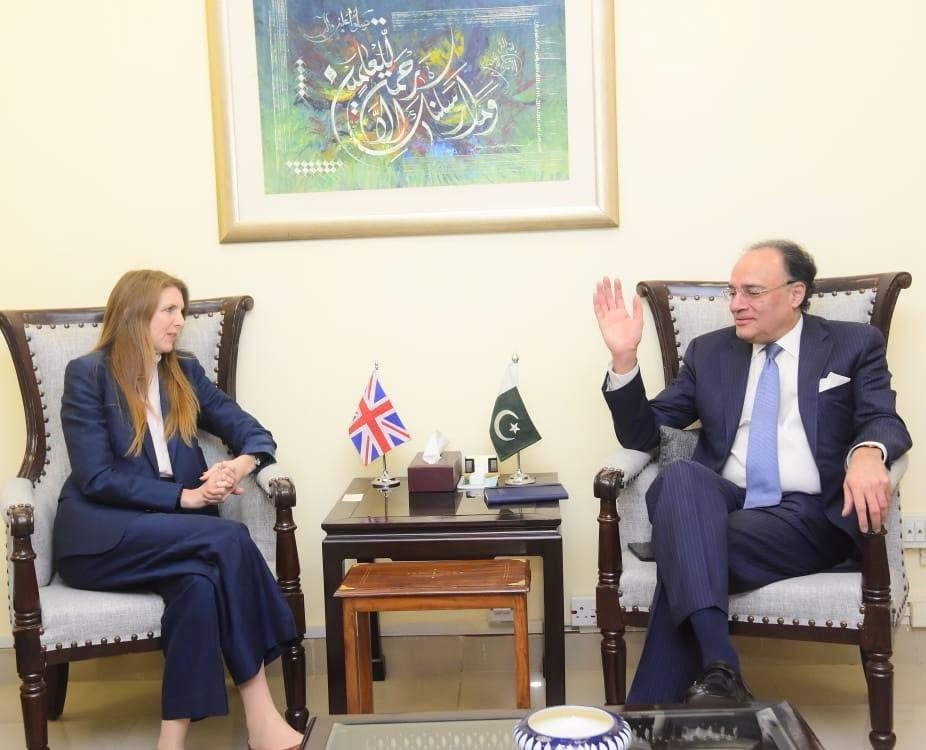
Islamabad (GNP): Federal Minister for Finance and Revenue Senator Muhammad Aurangzeb met with British High Commissioner to Pakistan Jane Marriott at the Finance Division to discuss Pakistan’s macroeconomic outlook, ongoing reform efforts, and opportunities to deepen economic cooperation between the two countries.
Aurangzeb acknowledged the UK’s continued support for Pakistan’s economic reforms, highlighting the long-standing partnership between the two nations across sectors including fiscal reform, economic governance, climate resilience, public finance, and health.
Macroeconomic Progress and Fiscal Reforms
The discussion covered Pakistan’s recent economic developments, including the passage of the Federal Budget 2026-27 and continued fiscal consolidation efforts aimed at supporting sustainable growth while preserving macroeconomic stability. Aurangzeb reaffirmed the government’s focus on structural reform, expanding the tax base, strengthening public financial management, and building investor confidence.
Population and Public Health Cooperation
Both sides also discussed Pakistan’s approach to population management and public health, with Aurangzeb welcoming continued UK technical support, particularly around population stabilization efforts. He stressed the importance of building a coordinated national framework with measurable targets, informed by international best practices, to advance women’s education, workforce participation, and public awareness — noting that sustained cooperation in these areas would be key to improving long-term human development and economic outcomes.
Capital Markets and Debt Management
Aurangzeb outlined the government’s strategy for expanding access to international capital markets and diversifying financing sources, referencing ongoing work on sovereign bonds, Sukuk, Panda Bonds, and newer financing tools such as sovereign debt tokenization under the Medium-Term Debt Management Strategy. He emphasized that continued engagement with global investors and financial institutions remains central to strengthening Pakistan’s external financing position.
Tax Administration and Structural Reforms
The meeting also touched on reforms within the Federal Board of Revenue, with Aurangzeb highlighting efforts to modernize tax administration through technology-driven, AI-enabled, and risk-based systems designed to improve transparency, reduce discretionary interference, and boost revenue collection.
Discussions further covered the government’s broader reform agenda, including energy sector changes, privatization of select state-owned enterprises, and efforts to improve governance and service delivery across public institutions. Aurangzeb described these reforms as essential to strengthening Pakistan’s economic resilience and improving its business environment.
UK’s Continued Support
Marriott welcomed Pakistan’s progress in restoring macroeconomic stability and reaffirmed the UK’s ongoing support for the country’s reform efforts. Both sides discussed deepening cooperation in trade, investment, financial markets, and climate resilience, emphasizing the value of continued engagement between the public and private sectors of both nations.
Also read: US, Iran Exchange Fresh Military Strikes As Regional Tensions Escalate
Aurangzeb reaffirmed the government’s commitment to strengthening economic ties with the UK through continued reform, investment facilitation, and engagement with international partners, with both sides agreeing to maintain close coordination going forward.

Sohail Majeed is a Special Correspondent at The Diplomatic Insight. He has twelve plus years of experience in journalism & reporting. He covers International Affairs, Diplomacy, UN, Sports, Climate Change, Economy, Technology, and Health.