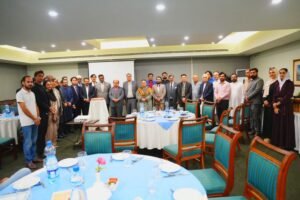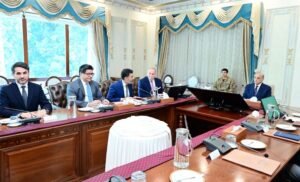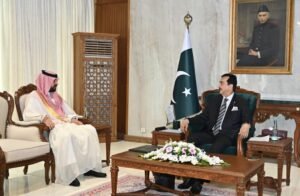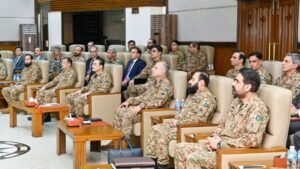
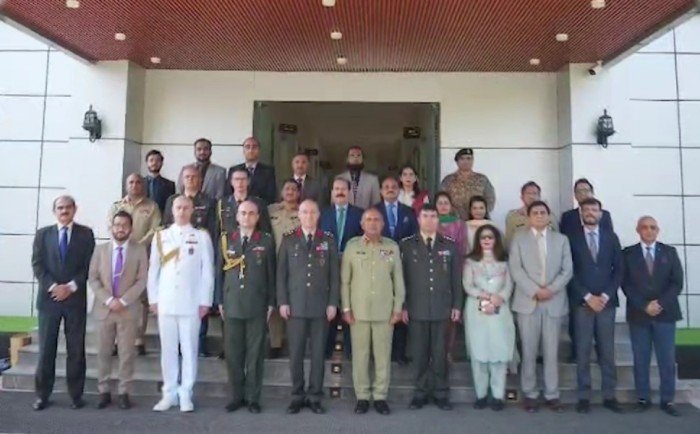
Islamabad (GNP): A senior Turkish military delegation, headed by Lieutenant General Fedai Ünsal, Vice Chief of Staff of the Turkish Armed Forces, toured the National Emergencies Operation Center (NEOC) at the headquarters of Pakistan’s National Disaster Management Authority (NDMA). The visiting team comprised several senior Turkish military officers.
At the NEOC, hosts walked the delegation through NDMA’s technology-focused disaster management framework, covering multi-hazard early warning systems, live data integration, risk assessment tools, the Pakistan Disaster Lens platform, and the country’s broader readiness mechanisms for climate-related and natural emergencies.
NDMA Chairman Lieutenant General Inam Haider Malik received the delegation and outlined the Authority’s growing mandate as Pakistan’s primary body for managing disaster risk. He described how NDMA has moved away from a purely reactive posture toward a forward-looking strategy centered on cutting risk, building preparedness, taking anticipatory action, and strengthening community resilience. The two sides discussed how institutions can better coordinate on disaster readiness, emergency response, and crisis management.
Talks centered on expanding cooperation across disaster risk reduction, emergency management, humanitarian aid, and resilience-building efforts, with both delegations trading insights on using technology, data analysis, and integrated command systems to manage disasters more effectively.
The Turkish delegation also stopped at NDMA’s Center of Excellence, its Humanitarian Logistics Yard and Logistics Yard, and the Mobile National Emergencies Operation Center. These visits highlighted NDMA’s training programs, humanitarian logistics operations, emergency-response support tools, and mobile command infrastructure built to keep operations running and coordinated during crises.
Also Read: UNICEF Children Climate Threats 2026 Affect Half World
Members of the delegation commended NDMA’s disaster management capabilities and signaled Türkiye’s intent to keep building on this partnership through shared expertise, technical support, training, and capacity-building efforts. Both sides agreed that closer institutional ties are essential to tackling the growing risks posed by climate change and increasingly complex disasters.

Sohail Majeed is a Special Correspondent at The Diplomatic Insight. He has twelve plus years of experience in journalism & reporting. He covers International Affairs, Diplomacy, UN, Sports, Climate Change, Economy, Technology, and Health.