Kathmandu (GNP): Nepal’s rescue teams, supported by experts from China and India, worked through the night to reach hundreds of people believed trapped inside blocked hydropower project tunnels following last week’s devastating Himalayan flood that struck the Nepal-Tibet border region.
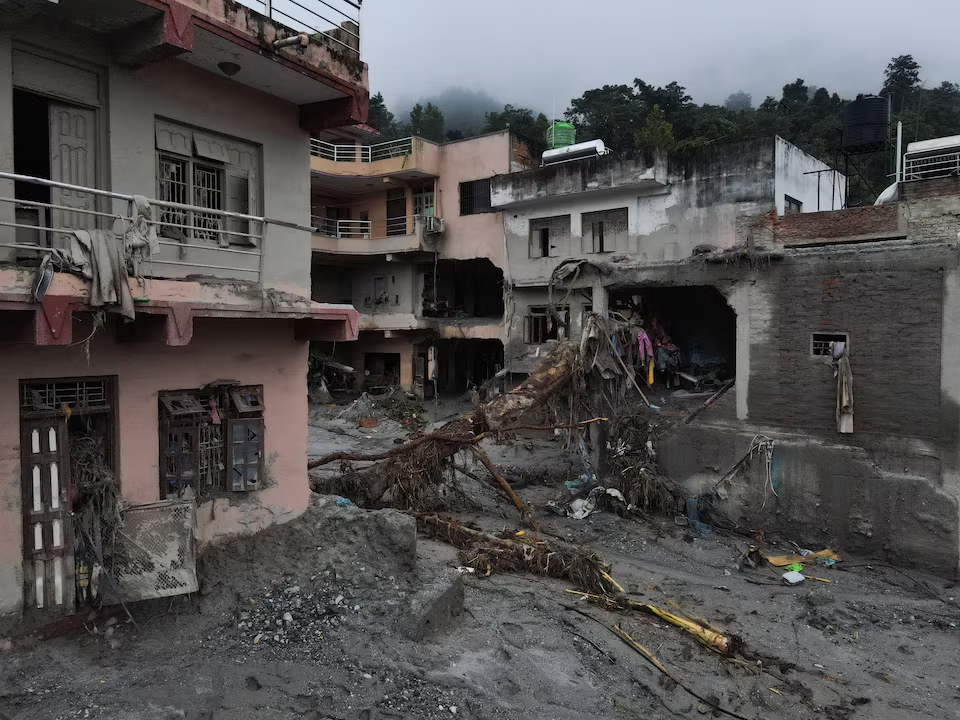
The flood, triggered by a glacier collapse on Wednesday, sent a massive deluge of ice, rock, mud and debris through valley towns and villages in Nepal and across the border into China. The disaster has killed more than 900 people, with nearly 5,000 still missing across both countries.
Hundreds of bodies, many unidentified, have already been buried in shallow graves as decomposition set in amid humid weather in Nepal’s plains after victims were swept down from the mountains. Nepali authorities said Monday that 903 people had died and 4,247 remained missing, including 933 workers unaccounted for at hydropower projects in the flood-hit region.
Rescue efforts are now centred on roughly half a dozen hydropower tunnels blocked by mud and rock debris, where hundreds of workers are believed to be trapped. Teams have used earth-moving equipment through the night to clear pathways into the tunnels, while soldiers have dug pits with torchlight to locate entry points.
Nepal army spokesperson Raja Ram Basnet said a large amount of debris deposited at the tunnel sites was posing a significant challenge to reopening them, adding that clearing the tunnels remained the army’s main focus. The Red Cross has estimated that more than 90,000 people are likely to have been affected by the disaster overall.
Prime Minister Balendra Shah described the flood as an unprecedented and devastating natural disaster, noting that compiling a complete damage assessment remained difficult given the scale of destruction. He said nearly 21,000 security personnel, alongside civilian workers and volunteers, were involved in the ongoing rescue operations despite adverse weather and difficult terrain.
On the Chinese side of the border, authorities reported 16 deaths in Gyirong County and 546 people missing, while Beijing said 261 foreign nationals from 23 countries remained unaccounted for in Tibet near a key crossing with Nepal. Chinese state media reported that Beijing had mobilised more than 2,100 rescue workers and allocated roughly 220 million yuan, or about $33 million, toward relief efforts, including airdropped equipment and life-detection technology for frontline rescuers.
Also Read: Nepal Seeks Foreign Technical Aid as Flood Toll Hits 626
Rescue operations have been suspended several times since Friday due to poor weather and growing concern over a lake that formed across the Nepal-China border, which has begun overflowing into Nepal’s rivers and raised fears of fresh flooding. A separate lake formed upstream by a landslide has since largely drained, according to Chinese state broadcaster CCTV.
Authorities are also closely monitoring an impact crater near the site of the glacier collapse on the Nepalese side, which had expanded to 174,000 square metres by Saturday evening and held an estimated reservoir of 2.5 million cubic metres. Officials warned that a breach at the crater could trigger a chain reaction affecting lakes further downstream, with investigators identifying eight additional high-risk locations for geological disasters in the region.
Chinese authorities have attributed the disaster to glacier instability linked to long-term global warming, describing it as an emerging feature of cryosphere-related disasters on the Tibetan plateau. Meanwhile, Nepali officials said China had shared limited information on glacier risks and water levels following an earlier cooperation meeting this year, raising concerns that gaps in data sharing could hinder future disaster preparedness efforts.

Managing Editor at Global News Pakistan (GNP), with a Bachelor's degree in International Relations from Riphah International University, graduated with a Gold Medal. Reach out at sabahtareengnp@gmail.com