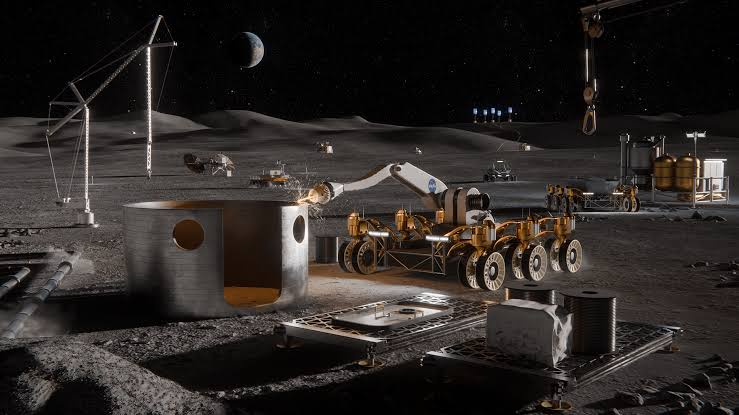
WASHINGTON (GNP): NASA’s lunar technology development entered a new phase after the U.S. space agency issued a draft solicitation to accelerate critical lunar and cislunar technologies supporting future Moon exploration missions.
According to NASA, the proposal seeks industry participation in developing advanced technologies required for long-term operations on and around the Moon. The initiative is designed to strengthen capabilities that will support the Artemis program and future sustained human presence in lunar environments.
NASA said the draft solicitation focuses on several priority areas, including vertical solar array systems, in-situ resource utilization (ISRU) for oxygen production, Stirling radioisotope power generators, in-space manufacturing, and advanced nanomaterials. These technologies are intended to improve mission sustainability while reducing operational risks during extended lunar exploration.
The space agency stated that advancing these technologies will help close existing capability gaps and prepare essential systems for future demonstration and operational missions. NASA also emphasized that innovation in energy generation, resource utilization, and manufacturing is necessary to establish reliable infrastructure beyond Earth.
One of the major objectives is improving the ability of astronauts to produce essential resources directly on the Moon. Through ISRU technologies, future missions may generate oxygen from lunar materials instead of transporting all life-support resources from Earth. Such capabilities could significantly reduce mission costs and increase operational efficiency.
NASA further highlighted the importance of advanced power systems capable of supporting lunar habitats during extended periods of darkness. Reliable energy generation remains one of the primary engineering challenges for sustained human exploration of the lunar surface.
The agency also identified in-space manufacturing as a strategic priority. Manufacturing components in space could reduce dependence on Earth-based supply chains while enabling astronauts to repair or produce equipment during long-duration missions.
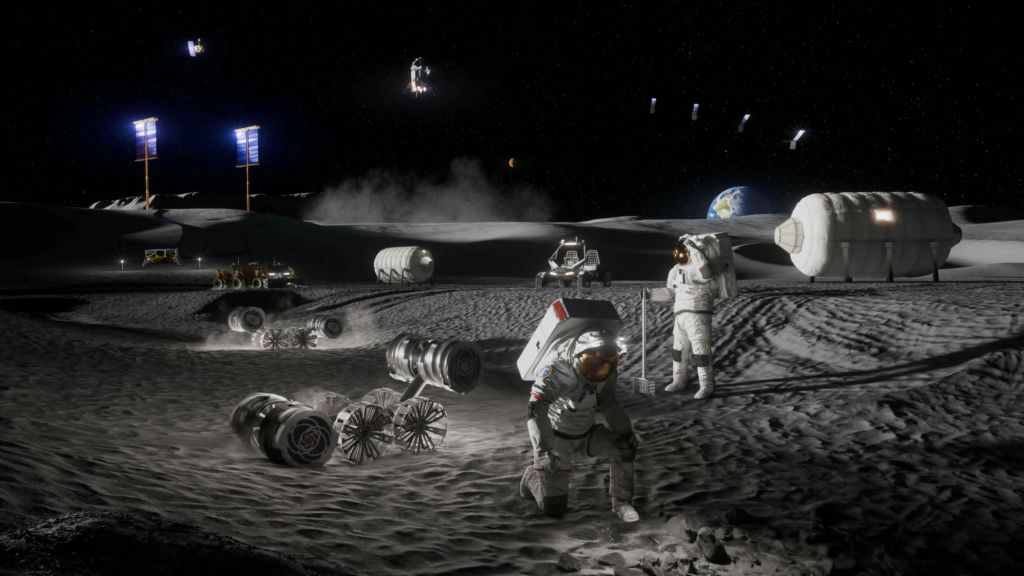
The draft solicitation forms part of NASA’s broader strategy to encourage collaboration with private industry, research institutions, and technology developers. By engaging commercial partners early in the development process, NASA aims to accelerate innovation while supporting the long-term objectives of the Artemis program.
NASA officials said the proposed technologies will contribute to future lunar infrastructure and strengthen preparations for eventual human exploration of Mars. Experience gained through lunar operations is expected to provide valuable scientific and engineering knowledge for deep-space missions.
NASA’s Artemis program seeks to return astronauts to the Moon while establishing a sustainable human presence for scientific research and technological development. The program serves as a foundation for future crewed missions beyond the Earth-Moon system.
The cislunar region, which includes the space between Earth and the Moon, has become an increasingly important area for international space exploration. Advanced technologies supporting power generation, resource utilization, and autonomous operations are considered essential for maintaining long-term missions in this environment.
Also Read: Europe Records 10,000 Excess Deaths From Heatwave
As global interest in lunar exploration continues to grow, NASA’s investment in emerging technologies is expected to strengthen international cooperation, commercial participation, and scientific discovery throughout the coming decade.
NASA noted that the draft solicitation is intended to gather feedback from industry partners before releasing a final request for proposals. This approach allows the agency to refine technical requirements, identify innovative solutions, and encourage broader participation from commercial companies, universities, and research organizations. By seeking early input, NASA aims to ensure that future investments support technologies capable of meeting the operational demands of long-duration lunar exploration and future deep-space missions.