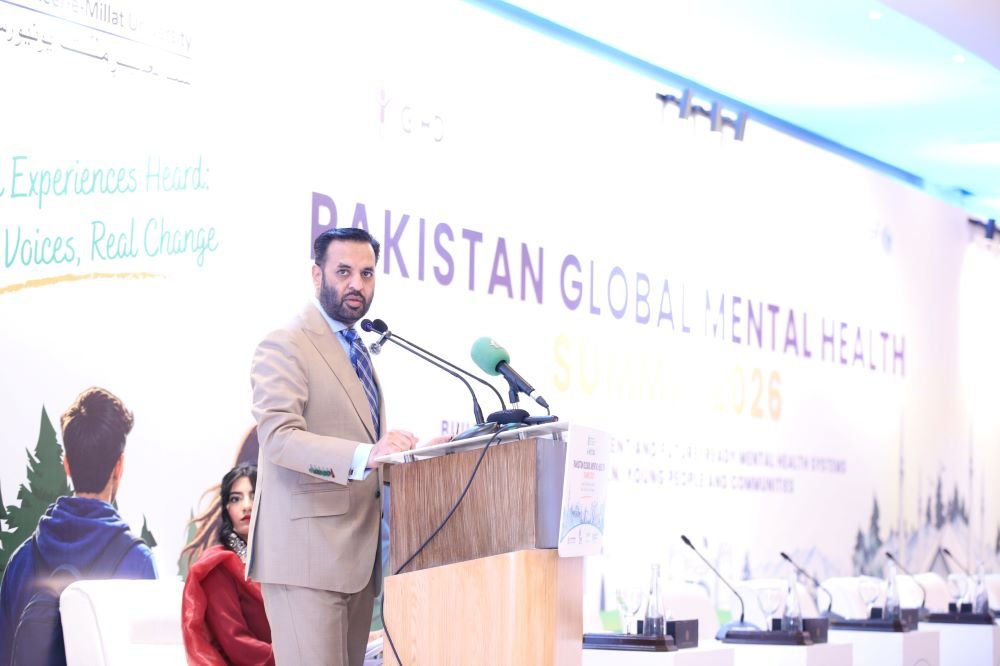
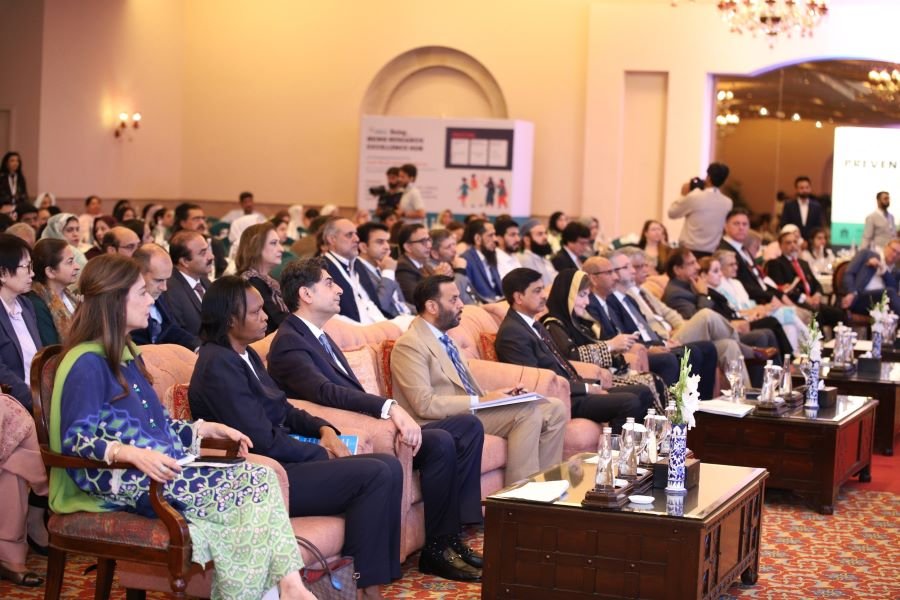
Islamabad (GNP): The Pakistan Global Mental Health Summit 2026 opened in Islamabad with the launch of the National Mental Health Policy, marking a key step toward strengthening mental health services and expanding access to care across the country.
Addressing the Summit’s opening session, Federal Minister for Health Syed Mustafa Kamal said the new policy was developed with one clear goal: bringing mental healthcare closer to every family in Pakistan. He stressed that mental health is not solely a healthcare issue but a shared national responsibility requiring coordinated action across health, education, communities, and other sectors.
Kamal cited estimates suggesting that around 24 million people in Pakistan require psychiatric care, while the country has fewer than one psychiatrist per 500,000 people. He noted that mental health disorders also represent a significant burden in terms of years lived with disability, adding that behind these statistics are children struggling in school, parents unable to work, and families searching for help — and that everyone deserves care, dignity, and respect.
He explained that the National Mental Health Policy establishes a shared national direction while allowing provinces, along with Gilgit-Baltistan and Azad Jammu and Kashmir, to tailor their responses to local needs. He said the government’s approach spans the full continuum of care — from promotion and prevention to early identification, treatment, rehabilitation, and recovery.
Kamal highlighted several policy priorities, including integrating mental health into primary healthcare, strengthening community-based services, and ensuring access to specialist care when needed. He emphasized that children and young people must remain central to the national response, with schools, families, and health services working together to identify and address mental health needs early.
He also pointed to the need for stronger mental health support during floods and other emergencies, enhanced training for healthcare workers, and expanded use of digital health services to reach underserved communities.
The Minister announced that Letters of Understanding would be signed with provincial health and education departments, alongside the Islamabad Declaration for Mental Health, to help translate policy commitments into concrete action. He noted that all provinces had been involved in the policy development process from the start, and that the federal government would provide technical support to help provinces create implementation plans suited to their specific needs — plans that would include clear priorities, responsibilities, timelines, and measurable outcomes.
Kamal said the ultimate goal is to turn national commitments into accessible mental health services within communities themselves. He thanked provincial leadership, health and education departments, and partners including the Global Institute of Human Development, Shifa Tameer-e-Millat University, WHO, UNICEF, and others for their continued collaboration.
He stressed that people with lived experience of mental health challenges, along with young people and families, must remain central to the process, since their input is essential to developing services that genuinely meet community needs. He called on all stakeholders to leave the Summit committed to collective action in building stronger, more accessible, people-centred mental health services across Pakistan.
Also read: ILO, NPO Strengthen Climate Action Through Green Productivity
The Pakistan Global Mental Health Summit 2026 is being held in Islamabad under the theme “Building Climate-Resilient and Future-Ready Mental Health Systems for Children, Young People and Communities in Pakistan.”

Sohail Majeed is a Special Correspondent at The Diplomatic Insight. He has twelve plus years of experience in journalism & reporting. He covers International Affairs, Diplomacy, UN, Sports, Climate Change, Economy, Technology, and Health.