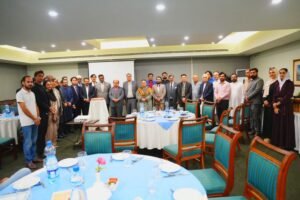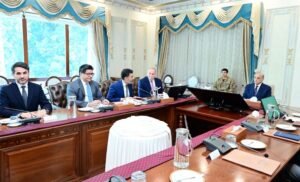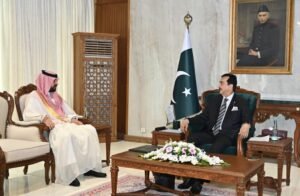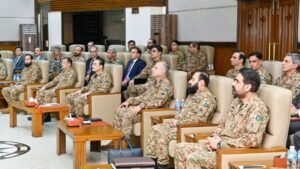
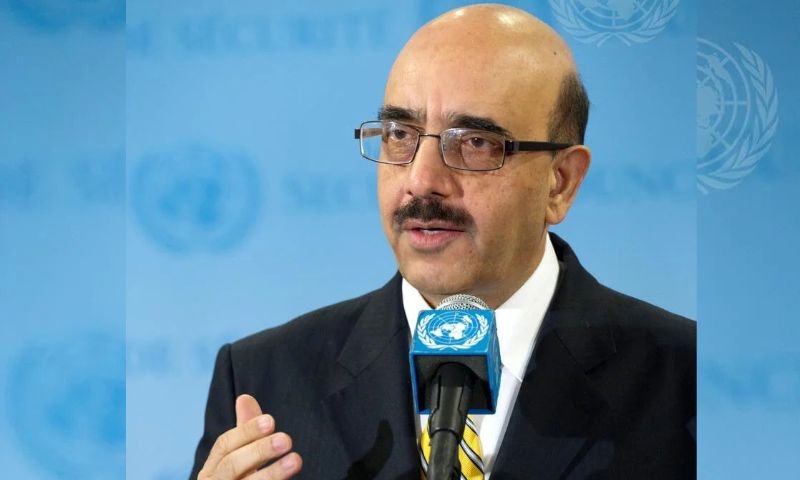
Islamabad (GNP) :- Sardar Masood Khan, former Ambassador of Pakistan to the United States, China and the United Nations, has stated that the ongoing Iran–U.S. crisis has reached a critical juncture where both sides are under intense military, economic and political pressure, making a negotiated settlement inevitable but complex.
He noted that despite the absence of formal face-to-face dialogue, sustained backchannel communication between Abbas Araqchi and Steve Witkoff, along with repeated assertions by Donald Trump of ongoing contact, indicate that diplomacy remains active, albeit indirect. He emphasized that Pakistan has emerged as a credible and trusted intermediary, with Iran expressing reservations about direct engagement with the United States.
Sardar Masood Khan underscored that both countries are incurring heavy costs. Iran’s economy has been severely impacted due to the blockade of its ports and disruption of oil exports, while global markets are experiencing volatility, with oil prices surging sharply. He added that the crisis is no longer confined to bilateral tensions but has become a global economic concern affecting energy security and financial stability.
Highlighting regional dynamics, he observed that the evolving posture of United Arab Emirates, including its recalibration within OPEC and exploration of alternative financial mechanisms such as currency swaps, reflects the broader stress within Gulf economies. While Gulf states remain aligned with Western security frameworks, they are simultaneously reassessing economic strategies in response to the conflict’s fallout.
On the diplomatic front, Sardar Masood Khan pointed out that Iran’s proposal seeks a synchronized resolution—calling for the simultaneous removal of blockades and lifting of economic sanctions before progressing to more complex issues such as the nuclear programme. He noted that while initial reactions from Washington suggest hesitation, the absence of outright rejection signals that the proposal is under serious consideration.
He further explained that both sides are gradually moving toward a “middle ground,” where sequencing, guarantees, and verification mechanisms—potentially involving international stakeholders—will be key. However, he cautioned that domestic political pressures in the United States and strategic constraints in Iran continue to shape negotiating positions.
Referring to Iran’s engagement with Vladimir Putin, he stated that discussions likely encompassed nuclear stockpiles, strategic cooperation, and post-war reconstruction. While Russia has shown willingness to facilitate technical solutions, Iran has so far resisted transferring sensitive materials, indicating its intent to retain strategic leverage.
Addressing perceptions of internal divisions, Sardar Masood Khan remarked that while differences exist within both Iran and the United States, they are a natural feature of policymaking in complex crises rather than signs of systemic instability.
He concluded that the path to peace lies in calibrated, simultaneous concessions and sustained mediation, with Pakistan continuing to play a pivotal role in bridging gaps and steering both sides toward a negotiated settlement.

Sohail Majeed is a Special Correspondent at The Diplomatic Insight. He has twelve plus years of experience in journalism & reporting. He covers International Affairs, Diplomacy, UN, Sports, Climate Change, Economy, Technology, and Health.