Islamabad (GNP): Most women in Pakistan’s prisons on drug charges are not there because of a verdict. They are there because they are waiting for a lawyer who shows up, for a bail hearing that gets scheduled, for a system that sees them as more than a case number.
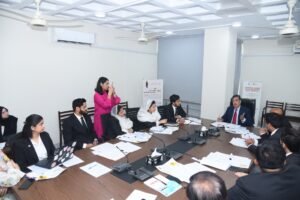
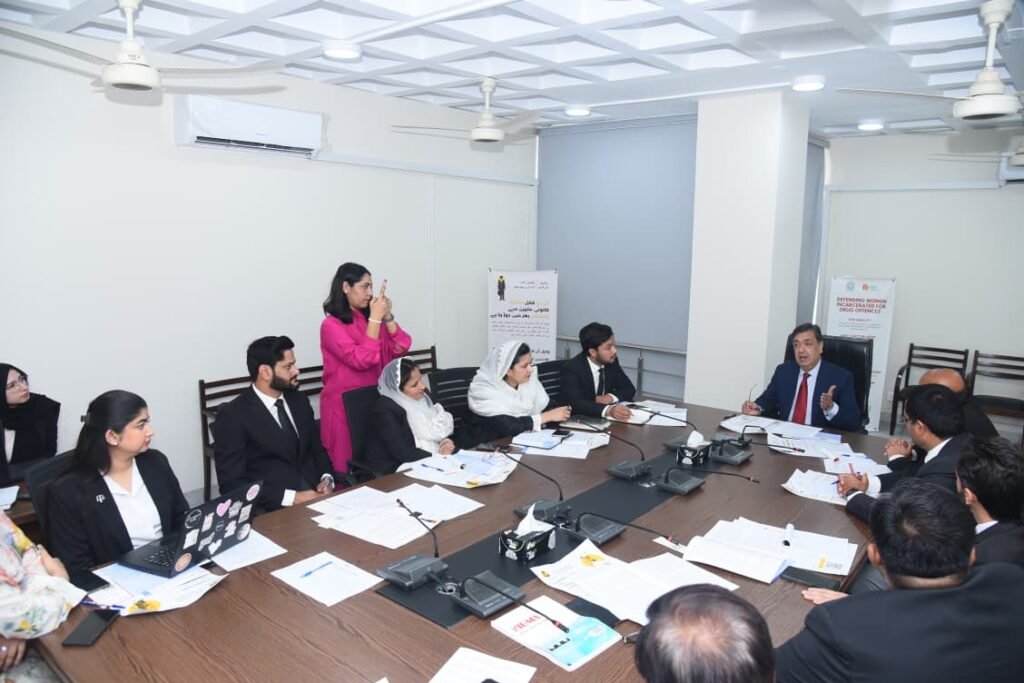
Legal Aid and Justice Authority (LAJA), in collaboration with Justice Project Pakistan (JPP), trained the first cohort of lawyers under its Digital Legal Aid Pilot for Women Incarcerated under Drug offences, a programme designed to place trained, gender-responsive lawyers directly into these cases in Islamabad and Rawalpindi, and to track outcomes through a digital platform so that the system can, for the first time, learn from what it does.
Adil Anwar, Director General of LAJA, addressed the training session:
“For thousands of women imprisoned under drug laws in Pakistan, access to quality legal representation can determine whether justice is realized. This pilot marks a shift from ad hoc legal aid to a system that is structured, accountable, and responsive to vulnerability, strengthening both the quality of defense and public confidence in the justice system.”
Most women detained under drug laws are first-time or low-level offenders who entered these situations through poverty, coercion, or dependent relationships. Many have children at home. The training, led by JPP, equipped lawyers with harm reduction principles, trauma-informed client interaction, and practical strategies for bail and mitigation alongside the Bangkok Rules, the UN’s international standards for the treatment of women prisoners.
“In many of these cases, the facts are only part of the story,” said Ayesha Saleem, Team Lead, Data and Research, Justice Project Pakistan (JPP). “When lawyers understand their clients’ realities, health, dependency, and caregiving, they are better positioned to advocate for fairer outcomes.”
Also Read: Commerce Minister Kamal Consults PBC on Tariff Reforms
Case outcomes will be monitored through Vakeel Online, a digital platform that tracks lawyer-client interaction and results, generating the evidence base to improve every training cycle that follows. It is the first time legal aid for women in drug cases in Pakistan will be systematically measured.
Thursday’s session is the first of several planned trainings. For the women still waiting in detention today, it is a beginning.